
1723534562.png)

NIFT CAT Syllabus 2027 PDF Download Important Topics here
August 21, 2026
The exact topic-by-topic syllabus for the NIFT CAT 2027 exam is not officially made available for candidates applying for B.Des and M.Des, but by analyzing the question set from previous year NIFT CAT papers, it can be seen that the exam always includes five major areas:
- sketching and illustration
- creative or imaginative thinking
- use of color
- visual storytelling and composition, and
- design-based problem solving.
The test is conducted offline (on paper), lasts about three hours, usually contains 3 to 4 subjective drawing questions from the NIFT CAT syllabus, and has no negative marking.
Key Highlights: NIFT CAT Questions 2027
- NIFT CAT is compulsory only for B.Des and M.Des applicants - B.FTech candidates skip it entirely
- No official topic list exists; the syllabus below is built from analyzing past NIFT CAT papers
- No negative marking in CAT, unlike GAT
- Quality of idea and concept matters more than drawing perfection
- CAT is followed by a hands-on Situation Test for shortlisted B.Des candidates
What Does the NIFT CAT Really Assess?
The official definition of CAT that describes testing ‘intuitive ability’, ‘power of observation’, ‘concept development’, ‘design ability’ sounds abstract because it can actually cover every possible design-thinking scenario. There can’t be a fixed list of topics or subjects.
In reality, the examiners check three things through each NIFT CAT question-
- whether you can produce an original idea swiftly
- whether you can express that idea clearly and visually, an
- whether you can use colour and composition with purpose instead of merely for decoration.
Each of the topics listed below is just a different situation in which those same three skills are being tested.
NIFT CAT Exam Pattern 2027: Duration, Format & Question Count
Following are the highlights of CAT paper structure as per official NIFT exam pattern:
|
Detail |
NIFT CAT |
|
Mode |
Offline, pen-and-paper |
|
Duration |
Approx. 3 hours |
|
Number of questions |
Usually 3 (occasionally varies by year) |
|
Negative marking |
None |
|
Applicable for |
B.Des and M.Des only |
|
Evaluated by |
NIFT jury/faculty panel |
Section-Wise NIFT CAT Syllabus for 2027: The Topics You Must Cover
This is the CAT NIFT syllabus breakdown based on recurring patterns across past papers - treat it as your practice roadmap, not an official checklist.
|
Topic |
What It Tests |
Example Question Style (from past papers) |
|
Sketching & Illustration |
Line quality, proportion, object rendering, perspective |
Draw and detail a given object/scene from a specific viewpoint |
|
Imaginative/Creative Thinking |
Original idea generation under constraints |
"Draw an imaginary creature using parts of 3 different animals" |
|
Colour Application |
Colour theory, mood-building through colour, not just filling |
Depict a scene showing a transition (e.g., "dawn to dusk") using colour alone |
|
Visual Storytelling & Composition |
Sequencing, layout, narrative clarity |
"Create a story in 4 frames based on: you miss your train" |
|
Design-Based Problem Solving |
Applying design thinking to a real-world object |
"Redesign a toothbrush for elderly users" |
|
Poster/Concept Communication |
Communicating a message visually with minimal text |
"Create a poster on 'Save Water' using only visuals" |
Sample Questions with Solutions from NIFT CAT Syllabus 2027
Q) Design and color umbrella, as you imagine it to be in the year 2050. Support your design with tagline. 1. Umbrella – TITLE- Aegis Tec Shade
Solution:
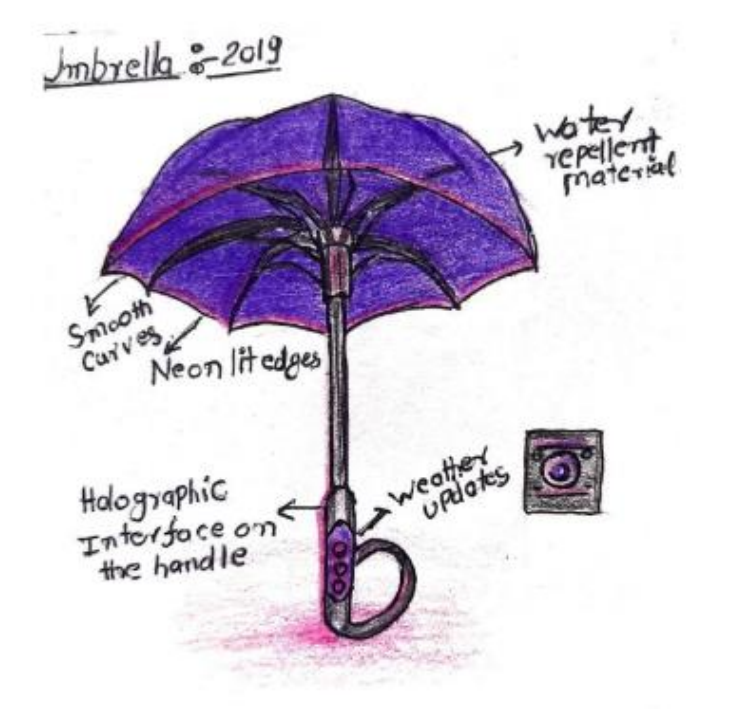
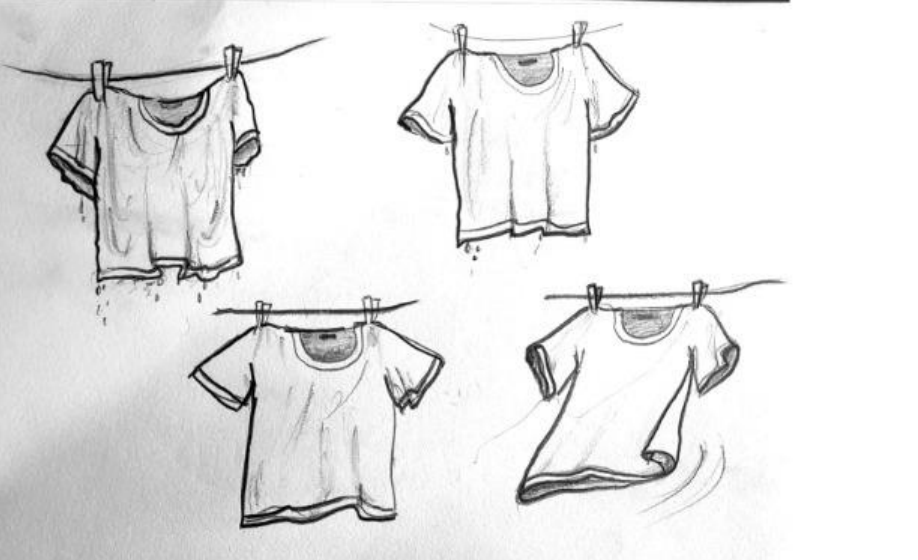
Q) Show the process in 4 different steps. Drying a t-shirt on clothesline –wet to dry.
Solution:
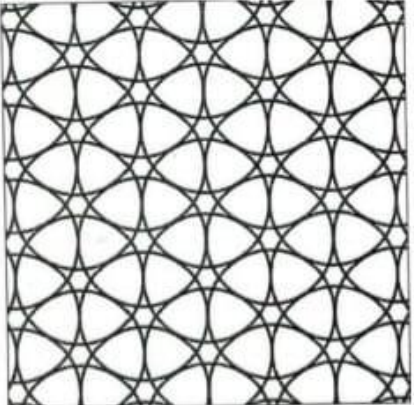
Q) Design a fabric pattern by filling colours in the given pattern based on any ONE of the following themes: A. Winter Season B. Yoga C. Travel Use colours thoughtfully to represent the chosen theme. After colouring, write a brief explanation (60-80 words) describing why you chose those specific colours and how they relate to the theme.
Solution:
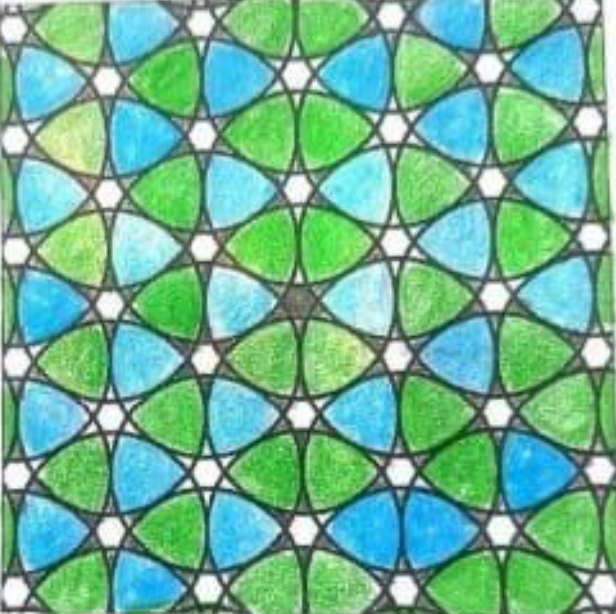
For a Winter Season fabric pattern, consider using cool and soothing colors that evoke thefeeling of winter.
- Shades of Blue: Sky blue, icy blue, navy, or teal to represent the cold, crisp air.
- White and Silver: To symbolize snow and frost.
- Gray and Charcoal: For a misty, cloudy effect.
- Emerald Green or Pine Green: Inspired by winter foliage.
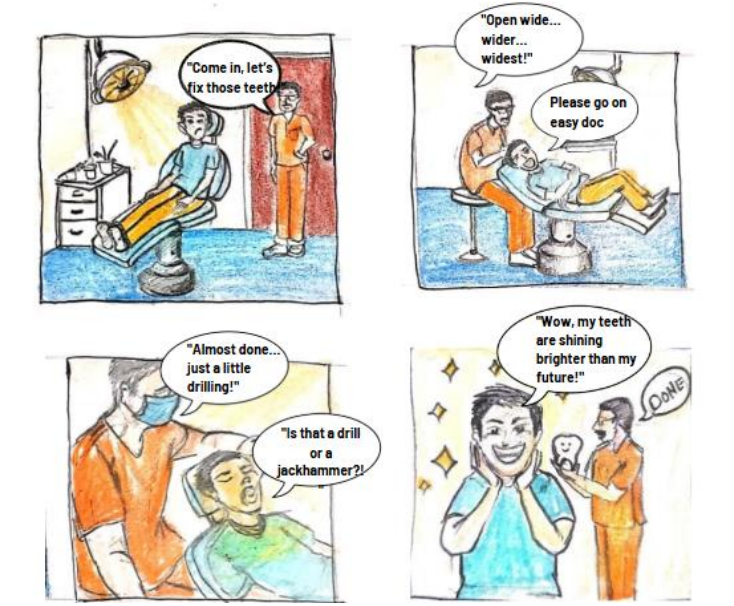
Q) Design a Comic Strip on topic A Visit to Dentist.
Solution:
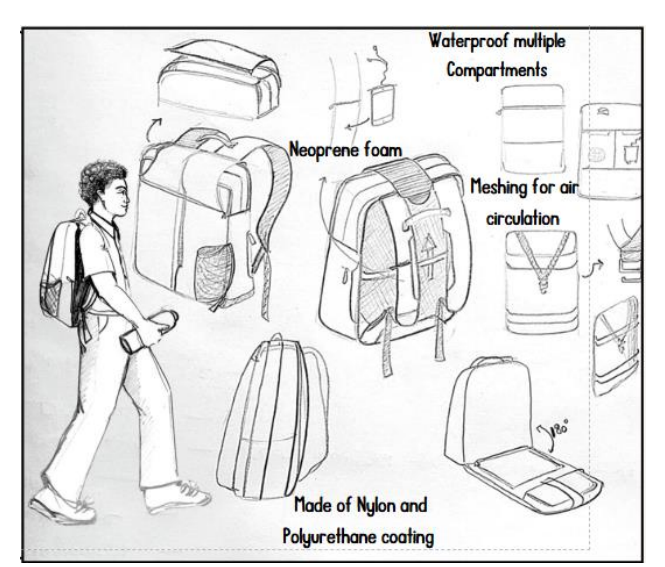
Q) Design a school bag suitable for rainy days, capable of holding multiple items, and featuring numerous compartments for organized storage.
Name: Aqua Guard Carry
Pro Features:
- Waterproof Material: The backpack is made of high-quality, waterproof material with sealed seams, providing a reliable shield against rain and water splashes. Polyurethane coating inside and made of nylon.
- Multiple Compartments: The backpack is equipped with various compartments designed to fit specific items securely. There's a padded laptop compartment with a waterproof zipper, ensuring your laptop stays dry and safe.
- File Organizer Section: An organized file section keeps your important documents neat and dry, preventing any damage due to water exposure.
- Comfortable Straps and Back Padding: The backpack is designed for comfort with padded shoulder straps and a breathable back panel, ensuring a comfortable and dry commute. Nylon meshed.
Solution:
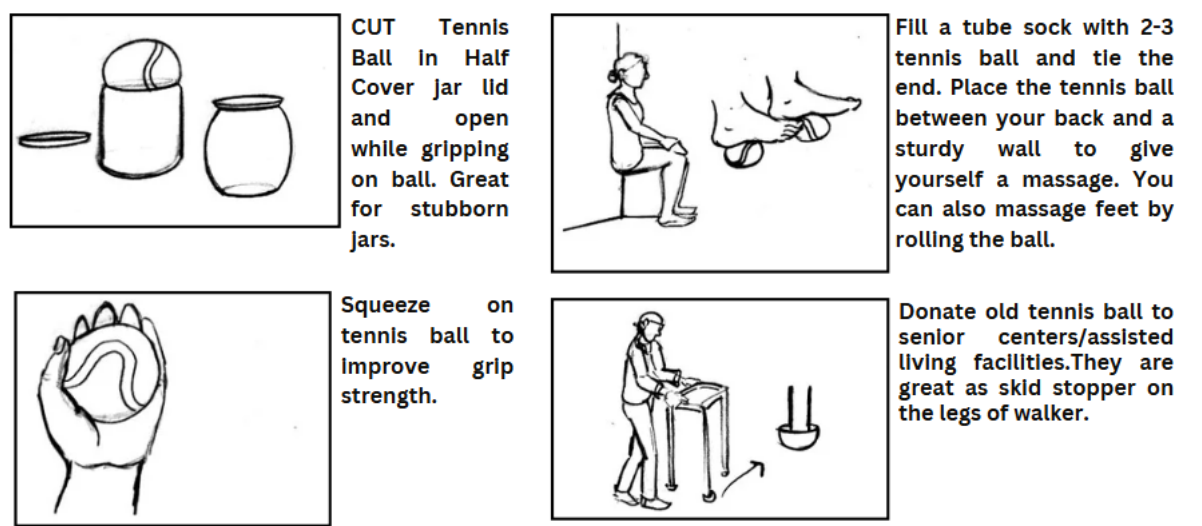
Q) Draw 4 different uses (other than their intended use) for the object listed below. - Tennis Ball
Solution:
Which NIFT CAT Topics Get Asked Most? (Trend Analysis, Not Official Weightage)
NIFT never releases how many marks or weightage each type of CAT topic carries. Below data is purely based on trends observed by experts on how frequently each topic has appeared in recent CAT papers.
You should use it only to prioritize which topics to practice first rather than treating it as a confirmed or guaranteed weightage split.
|
Topic |
Approx. Frequency in Past Papers |
Priority |
|
Sketching & Illustration |
Appears almost every year |
High |
|
Creative/Imaginative Thinking |
Appears almost every year |
High |
|
Colour Application |
Frequent, often combined with storytelling |
High |
|
Visual Storytelling & Composition |
Frequent |
Medium-High |
|
Design-Based Problem Solving |
Occasional, increasing in recent years |
Medium |
|
Poster/Concept Communication |
Occasional |
Medium |
A strong CAT score will have more impact if you have a strong portfolio to showcase as well - start early with our portfolio preparation guide so your creative work stands out in the interview stage.
Previous Year NIFT CAT Topic Analysis for 2027 Prep
Year-by-year question breakdown:
|
Year |
Q |
Task set |
Options given |
Core skill tested |
|
2018 |
1 |
Draw a 4-step process sequence |
Folding paper boat / Replacing a bulb |
Process visualization, sequential thinking |
|
2 |
Design & colour a handbag for an occasion |
Wedding / Picnic / Shopping |
Product design, context awareness, color |
|
|
3 |
Pick a geometric shape that describes your personality; colour + title it |
- |
Abstract self-expression, concept + copy |
|
|
2019 |
1 |
Design & colour an object "as in 2050" + tagline |
Umbrella / Door lock / Lunch box |
Futuristic imagination, innovation, colour |
|
2 |
Design an object using given shapes (100-word write-up) |
Letter box / Wind chime / PC |
Shape-based construction, design rationale |
|
|
3 |
Draw an object in 4 stages + colour |
Bird flight / Rose bud→bloom / Shirt drying |
Sequential/transformation illustration |
|
|
2022 |
1 |
Design using 5 given lines/shapes |
Automobile / Utility item / Weighing scale |
Constrained shape-based design |
|
2 |
Black-&-white comic strip, Covid-era plot |
Tenali Rama / Vikram Betal / Akbar Birbal |
Storytelling, panel composition, character |
|
|
3 |
Design using given shapes (70-word write-up) |
Wind chime / Jug / PC / Letter box / Nail cutter |
Shape-based design + articulation |
|
|
2024 |
1 |
Turn 3 chosen numerals (0-9) into a space |
Entertainment zone / Play school / Public park |
Typography-to-form, spatial imagination |
|
2 |
Illustrate 4 creative uses of an object |
Leaking teacup / Dead wall clock / 4 CDs |
Lateral thinking, creative reuse |
|
|
3 |
Imagine a future "artificial" organism; name it + 3 properties |
Insect / Bird / Fruit |
Conceptual innovation, illustration + writing |
|
|
2026 |
1 |
Design a birdfeeder from given shapes for a setting |
Rooftop restaurant / Meditation centre / Office / Old-age home |
Shape-based design + user context |
|
2 |
Render a festive scene in pencil colour only |
Village market / Forest retreat / Riverside |
Scene composition, rendering, colour control |
|
|
3 |
Transform an inspiration object into a product for a user |
Watertap/Stool/Bicycle → vendor/elderly/corporate |
Design thinking, "object in use", empathy |
Key Observations:
1. Shape-based design is most asked question type - it shows up in four of five papers (2019, 2022, 2026, plus the line-set in 2022). You should practice it like – ‘build a recognizable object from given shape without changing it’s basic form’.
2. Drawing rarely stands alone. From 2019 onward almost every paper requires a written element with sketches. It can be a 70-100 word rationale, a tagline, or properties. Sketching skill alone isn't enough anymore, candidates need to explain the idea behind their design clearly.
3. The questions are shifting from "draw an object" toward "solve for a user."
Questions now mirror real design-thinking language including user centric elements like empathy, context, and usage. So recent prep should emphasize on ‘who’ the design will serve, and not just how it looks.
4. Color handling is tested on purpose, sometimes with constraints - Example is 2026's "pencil color only" for the festive scene. Students should practice drawing under restricted medium as well.
5. Time/marks skew heavily to a few high-weight questions (the 2024 BDES CAT was just 3 questions across 100 marks, 30-40 each), so each answer carry substantial weightage of their own - there's no room for a weak sketch to get balanced somehow.
Remember that NIFT CAT is just a stepping stone towards your design dreams, it's not the final destination - explore what a career in fashion designing actually looks like after NIFT.
How Is NIFT CAT Different From GAT?
While both NIFT GAT and NIFT CAT are part of the NIFT Entrance Exam (Stage 1), they evaluate completely different skill sets. And one common doubt students usually express is how NIFT entrance exam cat syllabus actually differ from GAT beyond the obvious ‘CAT is creative and GAT is aptitude’ fact.
|
Aspect |
NIFT CAT |
NIFT GAT |
|
Purpose |
Tests creativity, imagination, and visual communication skills |
Tests analytical, language, mathematical, and general awareness skills |
|
Question Type |
Drawing and design-based questions |
Objective (MCQ) questions |
|
Exam Mode |
Offline drawing paper |
Computer-based test (CBT) |
|
Negative marking |
No |
Yes (-0.25 per wrong answer) |
|
Skills Assessed |
Idea generation, Creativity, observation, visualization, storytelling, color sense, design thinking, composition |
Quantitative Ability, English Comprehension, Communication Ability, Analytical Ability, General Knowledge & Current Affairs |
|
Applicable to |
B.Des, M.Des only |
All programs |
|
Preparation Focus |
Sketching, perspective, human figures, object drawing, design problems, visual storytelling |
Aptitude practice, vocabulary, reasoning, mathematics, and GK + current affairs |
Which Test is More Important for NIFT 2027 Exam?
The NIFT 2027 CAT syllabus carries significant weight for design programs because it tests the creative abilities that are essential for anyone who wants to become a designer. A strong CAT score can substantially improve your overall result, especially if you perform well in idea generation, composition, and innovative thinking.
At the same time, you should also not ignore the GAT paper. Since the final selection considers performance in both these tests (weightage varies by program), balanced preparation is the best strategy.
Mentor’s Tip: You should start by mastering each topic from the NIFT CAT syllabus through regular sketching practice and previous year CAT questions. Alongside, dedicate time each week to preparing for the GAT aptitude questions to ensure you're well-prepared for every section of the NIFT entrance exam.
If you're still confused about NIFT CAT & GAT, get detailed clarity on the difference between CAT and GAT for NIFT before you plan your preparation.
Most Repeated Concepts in NIFT CAT Over the Years
There is a pattern in the type of CAT questions that show up so consistently that they're worth naming directly instead of listing them under any topic:
- Perspective + narrative combined - It’s observed that you are rarely asked to simply draw an object. Usually you’ll have to draw it within a given situation, as before/after or in a way that’s part of a story.
- Color used as meaning, not decoration - You’ll be asked to use color to show mood, time, or emotion rather than just coloring a sketch or a given pattern neatly.
- Everyday objects reimagined - Another most frequently asked are redesign-style prompts or imaginative/unconventional uses of everyday objects like spectacles, chairs, toothbrushes, etc. These appear repeatedly because they test design thinking without requiring any special design knowledge.
- Constraint-based creativity - Such questions almost always include a specific condition to follow like "using only 3 animals," "in 4 frames," "using visuals only", etc. specifically to prevent memorized drawing styles from scoring well.
Clearing CAT is only the first step for B.Des aspirants- the next challenge is the NIFT Situation Test, where your material handling skills are tested.
Common Mistakes Students Make While Preparing for NIFT CAT Syllabus 2027
Treating it like a fine-arts exam
Students who try to render perfect sketches instead of practicing fast, clear concept communication usually end up struggling with idea presentation and time management.
Ignoring the "no official syllabus" reality
Searching for a fixed topic list and stopping preparation once a five-topic list feels "covered," instead of practicing breadth across constraint types
Under-practicing color
Many students focus 80% of practice time on line sketching and treat color as an afterthought, despite it being one of the most consistently tested skills.
Never timing themselves
Practicing single drawings without the 3-hour, multi-question pressure of the real exam Copying reference drawings instead of practicing original ideation - this shows immediately to evaluators trained to spot templated concepts.
Make sure you actually qualify before you start preparing for NIFT CAT and GAT papers- check the complete NIFT eligibility criteria for your course.
How to Prepare for NIFT CAT Syllabus 2027: A Month-Wise Study Plan
|
Timeline |
Focus |
|
Months 1-2 |
Fundamentals - line quality, proportion, basic color theory, daily 20-minute quick sketches |
|
Months 3-4 |
Topic-wise practice- one full question per topic category above, timed individually |
|
Month 5 |
Full timed mocks (3-hour, multi-question), portfolio review, feedback loops |
|
Month 6 (final) |
Weak-area drilling, revision of constraint-based prompts, light daily practice only |
NIFT CAT Preparation Timeline: 6 Months vs 3 Months vs 1 Month
- 6 months: Follow the full month-wise plan above - ideal, allows actual skill building required to ace CAT
- 3 months: You’ll have to compress fundamentals into 3 weeks and will have to spend most time on topic-wise timed practice. Plus do at least 4 full mocks.
- 1 month: Skip fundamentals entirely (too late to build from scratch). Rather focus only on high-priority topics (sketching, creative thinking, colour). Must do 6-8 single-question drills with a timer, and 2 full mocks in the final week.
Which Books Cover the NIFT CAT Syllabus Best?
|
Book |
USP |
|
NIFT Previous Year Question Papers Book by Creative Edge (11 years of solved papers) |
QR-based step-by-step video solutions for all NIFT drawing questions. |
|
NIFT sample papers book by Creative Edge with over 100s of practice questions (Solved) |
A comprehensive practice bank that gives direct exposure to real question patterns |
|
A basic color theory reference (any design-fundamentals book) |
Strengthening the most-tested, most-neglected skill |
Will the NIFT CAT Syllabus be altered in 2027?
The fundamental abilities that are being assessed through CAT (such as sketching, creativity, use of color, composition, and concept development) have remained the same over the years and are not expected to change in structure.
Instead, the way the CTA questions are framed might change going forward.
For example, NIFT might introduce new types of constraints or different themes, which is precisely the reason why it is more important to practice a variety of previous year or sample questions than to memorize any one 'syllabus list', whether official or not.
Conclusion: Your Next Steps for NIFT CAT Syllabus 2027 Preparation
Since there's no official topic-wise NIFT CAT syllabus, it's important that you follow a trend-based approach for practice that is based on past year papers rather than a fixed checklist. Cover major areas like sketching, creative thinking, colour, storytelling, and design-based problem solving.
Here's how to move from reading this to actually preparing:
1. Pick your strategy based on how much time you have left- 6, 3, or 1 month and start practicing NIFT CAT important topics daily/weekly.
2. Practice one question per topic under timed conditions- starting with sketching and color since they're the highest of priority and most recurring areas.
3. Run at least one full 3-hour mock- Most students discover their real weakness is speed, not skill.
4. Get your sketches reviewed- It's important that someone evaluate your sketches the same way as NIFT does - concept and communication weighed more than polished sketches.
If you're serious about turning this NIFT CAT syllabus breakdown into an advantage, the fastest next step is to get experts of NIFT to check your practice work rather than self guessing whether you're improving.
Preparing for NIFT 2027? We can help you with exact strategic roadmap, study material and crucial feedback required to ace NIFT exam.
Join the best NIFT Online Coaching by Creative Edge and get expert guidance on all subjects.


1764684691.webp)
Attempt a Free NIFT Mock Test
Fill your details
Frequently Asked Questions
Does NIFT release an official CAT syllabus PDF?

Is there negative marking in NIFT CAT syllabus topics?
How many questions come from the NIFT CAT syllabus in the actual exam?
Is drawing skill more important than idea in NIFT CAT?
Can I crack NIFT CAT without formal art training?
What is the difference between NIFT CAT syllabus and NID/UCEED syllabus?

Vineeta Agrawal
Communications Executive


SHARE