
1723534562.png)

Creative Edge Portfolio Preparation - How it Works & Why it Matters?
September 16, 2026
Quick Answer: Creative Edge portfolio preparation helps design aspirants build a strong, structured, and concept-driven portfolio for final selection rounds like NID DAT Mains (Studio Test + Interview), NIFT interview, and design college admissions.
It includes portfolio strategy, project development, mentor feedback, presentation training, and interview preparation, helping students showcase their creativity, design thinking, and problem-solving ability more effectively.
Key Highlights: Creative Edge Portfolio Preparation
- Creative Edge portfolio preparation helps students build concept-driven, structured design portfolios for NID exam, NIFT, and other design admissions
- Includes portfolio strategy, idea generation, project creation, and presentation training
- Personal mentorship & detailed feedback to continuously improve portfolio quality
- Strong focus on design process (idea → iterations → final output), which top colleges evaluate
- Includes mock portfolio reviews & interview preparation to boost confidence in final rounds
- Helps create portfolios for both NID/NIFT and international design programs, increasing selection opportunities
Check All About Creative Edge - Courses, Fees, Reviews & Results
If you're preparing for design entrance exams like NID, NIFT, UCEED, or other design colleges, you've probably heard that portfolio preparation plays a crucial role in final selection - especially for NID Mains, studio test, and in-person sensitivity or interview rounds.
But many students still wonder:
- What is a design portfolio?
- Do I need a portfolio for NID or NIFT?
- How do I prepare a strong portfolio?
- Does Creative Edge help with portfolio preparation?
This guide answers everything about Creative Edge portfolio preparation, how it works and why it matters.
What is a Design Portfolio?
A design portfolio is a curated collection of your creative work, sketches, ideas, and projects that showcases your design thinking, creativity, and problem-solving skills.
Design institutes use portfolios to evaluate:
- Creativity
- Visual thinking
- Observation skills
- Design process
- Problem-solving approach
- Communication skills
Unlike written exams, a portfolio reflects how you think as a designer.
Check: Creative Edge Review 2026 - Results, Faculty, & Student Experience
Why Portfolio Preparation Matters for Design Entrance Exams
Portfolio preparation plays a crucial role in the final selection stages of design entrance exams. While written exams evaluate your aptitude and creativity, your portfolio showcases your thinking process, originality, and design potential, factors that top design institutes value highly.
Here’s why portfolio preparation matters:
1. Final Selection Often Depends on Portfolio & Interview
For exams like NID DAT Mains, NIFT Situation Test, and design college interviews, institutes assess candidates based on creative thinking, ideation, and presentation skills — all of which are reflected in your portfolio.
2. Demonstrates Your Design Thinking Process
Design institutes don’t just evaluate final sketches, they want to see:
- How you approach problems
- Your thought process
- Your creativity and originality
- Your ability to generate ideas
A well-prepared portfolio helps you demonstrate these skills clearly.
3. Helps You Stand Out from Other Candidates
Many students have similar written scores. A strong portfolio can help you differentiate yourself and improve your chances of selection.
4. Builds Confidence for Interviews & Studio Tests
Portfolio preparation helps you:
- Explain your ideas clearly
- Present your work confidently
- Handle interview questions effectively
This significantly improves performance in final rounds.
5. Reflects Your Passion for Design
A thoughtfully prepared portfolio shows your interest, dedication, and creativity, which are important qualities design institutes look for in candidates.
Because of these reasons, portfolio preparation is not just an additional step, it's often a deciding factor in getting into top design colleges.
Also Check: How to Prepare for NID Studio Test
What is Creative Edge Portfolio Preparation?
Creative Edge Portfolio Preparation is a structured mentorship program designed to help design aspirants build, refine, and present a strong portfolio for the final selection stages of design entrance exams.
It focuses on developing creative thinking, design process, and presentation skills, which are essential for rounds like NID Studio Test, portfolio review, and personal interviews.
Unlike random portfolio preparation, Creative Edge follows a guided, step-by-step approach where students work on curated projects, receive expert feedback, and continuously improve their work.
What Does Creative Edge Portfolio Preparation Include?
Creative Edge portfolio preparation typically focuses on:
- Idea generation and concept development
- Design thinking and problem-solving exercises
- Portfolio project creation and refinement
- Sketching and visual storytelling
- Presentation and explanation skills
- Mock portfolio reviews and feedback
- Interview preparation and confidence building
Who is Creative Edge Portfolio Preparation For?
Creative Edge portfolio preparation is especially helpful for:
- NID aspirants preparing for studio test and interview
- Students applying to design colleges requiring portfolio submission
- Students Planning to Apply to International Design Schools
- Students who need guidance in presenting their creative work
- Beginners unsure about what to include in their portfolio
- Students Preparing Late for Portfolio Rounds
- Students Who Want to Stand Out in Final Selection Rounds
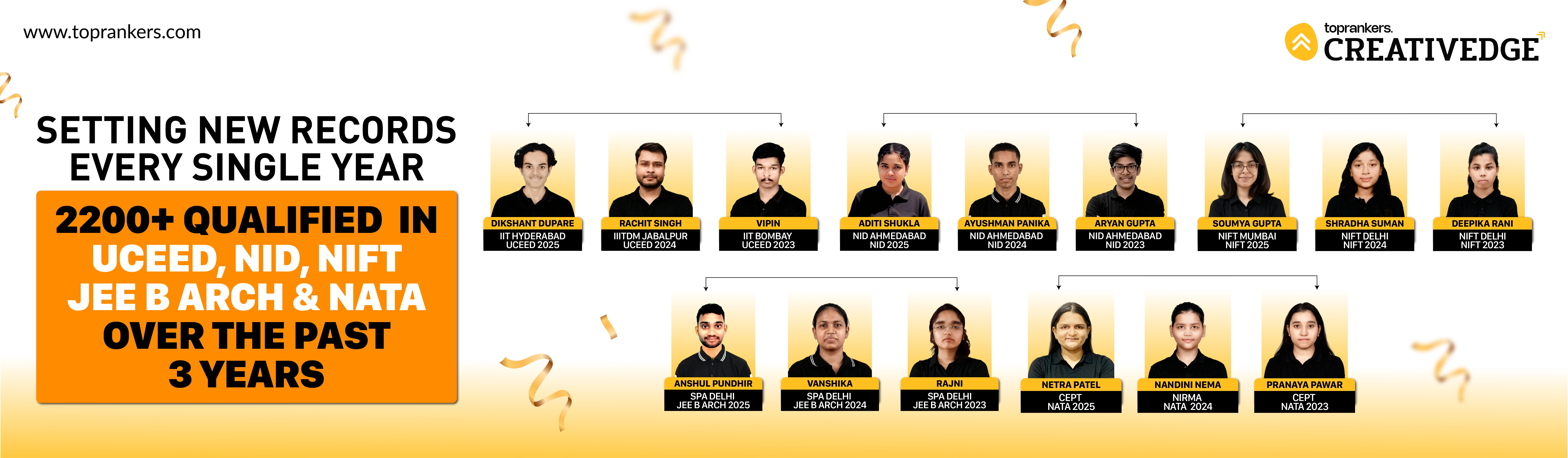
By focusing on creativity, process, and presentation, Creative Edge portfolio preparation helps students stand out in final selection rounds and improve their chances of getting into top design colleges.
_(1)1764330056.webp)
How Creative Edge Portfolio Preparation Works
Creative Edge follows a structured, step-by-step portfolio preparation process to help students build strong, well-organized portfolios for final selection rounds. Here's how Creative Edge portfolio preparation works:
Creative Edge Portfolio Preparation Process
|
Step |
Stage |
What Happens |
How It Helps |
|
Step 1 |
Portfolio Orientation |
Understanding portfolio requirements, evaluation criteria, and expectations |
Builds clarity about what colleges look for |
|
Step 2 |
Idea Generation |
Brainstorming exercises and concept development sessions |
Improves creativity and originality |
|
Step 3 |
Project Selection |
Identifying strong themes and portfolio ideas |
Ensures meaningful and relevant work |
|
Step 4 |
Portfolio Project Creation |
Working on design projects, sketches, and concept-based tasks |
Builds portfolio content |
|
Step 5 |
Design Process Development |
Documenting idea evolution and design thinking |
Shows creative thinking and problem-solving |
|
Step 6 |
Review & Feedback |
Mentor evaluation and improvement suggestions |
Refines portfolio quality |
|
Step 7 |
Portfolio Structuring |
Organizing projects and improving presentation |
Improves clarity and impact |
|
Step 8 |
Mock Portfolio Reviews |
Simulated portfolio review sessions |
Builds confidence and readiness |
|
Step 9 |
Interview Preparation |
Practicing portfolio explanation and storytelling |
Improves communication skills |
|
Step 10 |
Final Portfolio Refinement |
Final improvements and polishing |
Ensures strong final presentation |
This structured approach helps students develop creativity, refine ideas, and confidently present their portfolios during final selection rounds.
Join the Creative Edge Studio Test / Situation Test / Portfolio / Interview Prep Batch Now!
How They Cracked It! - Creative Edge Toppers' Journey Inside
What Does Creative Edge Portfolio Preparation Include?
Creative Edge portfolio preparation is designed to provide end-to-end guidance for students preparing for final selection rounds like NID Studio Test, portfolio review, and interviews.
Instead of leaving students to figure things out on their own, Creative Edge offers structured mentorship, guided practice, and expert feedback throughout the portfolio-building process.
Here’s what Creative Edge portfolio preparation typically includes:
1. Portfolio Strategy & Planning
Students first learn how to approach portfolio preparation strategically:
- Understanding what top design colleges look for
- Identifying strong portfolio themes
- Planning portfolio structure
- Avoiding common portfolio mistakes
2. Idea Generation & Creative Thinking Sessions
Creative Edge focuses heavily on improving creativity through:
- Brainstorming exercises
- Design thinking activities
- Concept development sessions
- Innovation-based assignments
These sessions help students develop original ideas and stand out during evaluation.
3. Guided Portfolio Projects
Students work on curated projects such as:
- Product design concepts
- Problem-solving design challenges
- Observation-based sketches
- Storytelling and scenario-based projects
- User-focused design exercises
4. Sketching & Visual Communication Training
Creative Edge helps students improve:
- Sketching skills
- Visual storytelling
- Composition and layout
- Concept illustration
This ensures students can communicate ideas visually, which is essential for design portfolios.
5. Design Process Documentation
Students learn how to show:
- Idea development
- Rough sketches
- Iterations
- Final outcomes
This is important because design institutes evaluate thinking process, not just final results.
Also check: Placements Statistics for NID 2026
6. Personal Mentorship & Expert Feedback
One of the biggest advantages of Creative Edge portfolio preparation is personalized feedback:
- One-on-one portfolio reviews
- Detailed improvement suggestions
- Continuous mentor support
- Performance tracking
This helps students improve consistently.
7. Mock Portfolio Reviews
Creative Edge conducts:
- Simulated portfolio reviews
- Mock interview sessions
- Realistic evaluation exercises
8. Portfolio Presentation Training
Students learn:
- How to present portfolio confidently
- How to explain concepts clearly
- How to answer interview questions
- How to structure explanations
9. Interview Preparation
Creative Edge also prepares students for final interviews:
- Personal interview guidance
- Portfolio-based questions
- Communication training
- Confidence-building sessions
This helps students perform better in final selection stages.
10. Continuous Support & Doubt Solving
Students receive:
- Dedicated mentor support
- Doubt-solving sessions
- Regular guidance
- Continuous improvement feedback
Also Check: NIFT Previous Year Question Papers With Solution
Learn More About Lighthouse Mentorship Program by Creative Edge
Major Faculty & Mentors for Portfolio Preparation
Creative Edge portfolio preparation is guided by experienced mentors and alumni from top design institutes, who help students develop creativity, improve projects, and refine their portfolios.
|
Mentor Type |
Background |
Role in Portfolio Preparation |
|
Rajendra Bhatia Sir |
|
|
|
Konark Bhatia Sir |
|
|
|
Sonali Bhatia Ma'am |
|
|
|
Parvati Tandilkar Mam |
|
Help with creative projects and presentation |
|
Deepika Sharma Mam |
|
Support concept development and ideation |
|
Yash Sir |
|
Provide real-world design insights |
|
Muskaan Dhanotiya Mam |
Experienced admission mentors |
Help students 1:1 across their Portfolio Prep journey |
|
Vaishali Mam |
Experienced admission mentors |
Help students 1:1 across their Portfolio Prep journey |
|
Guest Creative Coaches |
|
Idea generation and creativity training |
How Mentors Support Students
Creative Edge mentors help students with:
- Project selection
- Idea development
- Portfolio review
- Design feedback
- Presentation improvement
- Interview preparation
This mentor-led approach ensures students receive continuous guidance and improvement, making their portfolios stronger and more competitive.
Also Check: Know All About Creative Edge Faculties - Names, Experience & Achievements
International Portfolio Preparation for Global Design Programs
Creative Edge portfolio preparation is not limited to Indian design entrance exams. Students aiming for international design programs also receive guidance to build global-standard portfolios suitable for admissions to top international design schools.
Many international design institutes place significant weight on portfolio quality, creative thinking, and design process. Creative Edge helps students align their portfolios with international admission expectations.
What Creative Edge International Portfolio Preparation Includes
- Portfolio strategy aligned with international universities
- Concept-driven project development
- Personal brand and creative identity building
- Design process documentation and storytelling
- Project diversity across multiple design domains
- Statement of Purpose (SOP) guidance
- Interview preparation for international admissions
- Portfolio presentation and structuring
Why Creative Edge Portfolio Preparation is Different
Portfolio preparation for design admissions requires more than just collecting sketches, it requires structured guidance, creative development, and expert mentorship. This is where Creative Edge portfolio preparation stands out from typical portfolio preparation approaches.
1. Structured, Step-by-Step Portfolio Building
Unlike random portfolio preparation, Creative Edge follows a structured process that includes:
- Portfolio planning and strategy
- Idea generation and concept development
- Project creation and refinement
- Portfolio structuring and presentation
This ensures students build purpose-driven portfolios instead of scattered work.
2. Focus on Design Thinking, Not Just Drawing
Many students assume portfolio preparation is only about drawing. Creative Edge focuses on:
- Design thinking
- Problem-solving
- User-centered design
- Concept development
This helps students showcase how they think, not just how they draw.
3. Personalized Mentorship & Feedback
Creative Edge provides:
- One-on-one portfolio reviews
- Individual feedback sessions
- Continuous mentor guidance
Learn more: Lighthouse CreativEdge Mentorship Program by Toprankers
4. Real Exam & Interview Preparation
Creative Edge prepares students for:
- Portfolio review rounds
- Studio test
- Situation test
- Interviews
Students practice explaining their ideas and presenting confidently.
5. Portfolio Preparation for Both Indian & International Programs
Creative Edge supports students preparing for:
- NID portfolio preparation
- NIFT portfolio preparation
- International design school portfolios
This makes it suitable for students targeting global design programs as well.
6. Experienced Mentors from Top Design Institutes
Creative Edge portfolio preparation is guided by:
- NID alumni
- NIFT alumni
- IIT design graduates
- Industry professionals
This ensures students receive expert-level guidance.
Must Check: CreativEdge from Our Students' Lens: Real Testimonials, Real Emotions
What Should a Good Design Portfolio Include?
A strong design portfolio should showcase creativity, design thinking, problem-solving, and visual communication skills. Here’s a simplified table to understand what to include and why it matters.
|
Component |
What to Include |
Why It Matters |
|
Concept-Based Projects |
Product redesigns, problem-solving ideas, user-based concepts |
Shows creativity and design thinking |
|
Sketches & Visual Exploration |
Observation sketches, perspective drawings, object studies, concept sketches |
Demonstrates visual thinking and drawing skills |
|
Design Process |
Brainstorming, rough sketches, iterations, final output |
Shows how you think and develop ideas |
|
Problem-Solving Projects |
Problem identification, user analysis, design solutions |
Highlights analytical and design ability |
|
Variety of Work |
Product design, storytelling, communication design, conceptual work |
Reflects versatility and range of skills |
|
Personal Projects |
Independent work, creative experiments, observational ideas |
Shows originality and passion for design |
|
Presentation & Layout |
Organized, neat, visually clear portfolio structure |
Improves overall impact and readability |
|
Concept Explanations |
Problem statement, idea development, final outcome |
Helps evaluators understand your thinking |
Also Check: How to Create Graphic Design Portfolio (for Beginners)
Common Mistakes Students Make in Portfolio Preparation
|
Mistake |
What It Means |
Why It’s a Problem |
What You Should Do Instead |
|
Starting Too Late |
Beginning portfolio prep just before exams |
Leads to rushed, low-quality work |
Start at least 3-6 months early |
|
Random Sketches |
Adding drawings without concept |
Shows lack of thinking and purpose |
Include concept-driven projects |
|
Focusing Only on Neatness |
Prioritizing clean drawings over ideas |
Creativity is more important than perfection |
Focus on originality and ideas |
|
No Design Process |
Showing only final designs |
Institutes want to see your thinking |
Include ideation, rough work, iterations |
|
Overcomplicating Projects |
Making designs too complex |
Hard to explain and understand |
Keep ideas simple but strong |
|
Lack of Variety |
Repeating similar work |
Doesn’t show full skillset |
Include diverse project types |
|
Poor Presentation |
Messy layout and structure |
Reduces impact of good ideas |
Organize work clearly and neatly |
|
No Feedback |
Preparing without guidance |
Limits improvement |
Seek mentor feedback regularly |
|
Copying Ideas |
Using internet references directly |
Reduces originality |
Create your own concepts |
|
Poor Explanation Skills |
Unable to explain portfolio in interviews |
Affects final selection performance |
Practice explaining your work clearly |
Check: List of NID Courses across india
_(1)1754636837.webp)
1756536783.webp)
When Should You Start Portfolio Preparation?
Ideally, students should start portfolio preparation at least 3-6 months before the final selection rounds. Building a strong design portfolio takes time, from idea generation and project development to refinement and presentation. Starting early allows you to create thoughtful, concept-driven projects instead of rushing at the last minute.
Recommended Timeline for Portfolio Preparation:
|
Timeline |
What You Should Focus On |
|
6 Months Before |
Idea generation, exploring themes, starting projects |
|
4-5 Months Before |
Working on portfolio projects and design concepts |
|
2-3 Months Before |
Refining projects and improving presentation |
|
1 Month Before |
Mock portfolio reviews and interview preparation |
|
Final Weeks |
Final edits and presentation practice |
Read more: NID DAT Drawing Tips
Creative Edge Portfolio Preparation: NID vs NIFT
|
Aspect |
Creative Edge Portfolio Preparation for NID |
Creative Edge Portfolio Preparation for NIFT |
|
Focus Area |
Design thinking, creativity, problem-solving |
Creativity, material handling, presentation |
|
Portfolio Emphasis |
Concept-based projects & ideation |
Creative execution & visual presentation |
|
Type of Projects |
Product design, user-based problems, conceptual design |
Situation-based projects, creative exercises |
|
Design Process |
Strong focus on ideation and concept development |
Focus on creative output and execution |
|
Sketching Practice |
Observation drawing, ideation sketches |
Creative sketches and presentation drawings |
|
Mock Sessions |
Mock portfolio reviews and studio simulations |
Mock situation test and creative exercises |
|
Interview Preparation |
Portfolio explanation and design thinking questions |
Personal interview and creative discussion |
|
Presentation Training |
Concept explanation and storytelling |
Visual presentation and material explanation |
|
Mentor Feedback |
Detailed project-level feedback |
Execution and presentation feedback |
|
Final Preparation |
Studio test + portfolio + interview readiness |
Situation test + portfolio + interview readiness |
Also Read: List of Colleges Accepting NID Scores in 2026
Why Portfolio Matters More Than You Think
Many students focus heavily on written exams, but in design admissions, your portfolio can often be the deciding factor. While entrance exams test your aptitude and creativity, your portfolio showcases your thinking process, originality, and design potential, the qualities that design institutes value the most.
1. Final Selection Focuses on Creative Potential
In exams like NID and NIFT, the final rounds evaluate your creativity, ideation, and problem-solving skills. A strong portfolio helps you demonstrate these abilities more effectively than written scores alone.
2. Helps You Stand Out Among Similar Scores
Many candidates perform similarly in written exams. A well-prepared portfolio helps you differentiate yourself and leave a stronger impression during the final selection rounds.
3. Shows Your Design Thinking Process
Design institutes want to understand:
- How you approach problems
- How you generate ideas
- How you develop solutions
A portfolio allows you to showcase your complete design journey, not just final outcomes.
4. Builds Confidence During Interviews
A strong portfolio gives you content to talk about during interviews. It helps you:
- Explain ideas clearly
- Communicate your thought process
- Present your work confidently
5. Reflects Your Passion for Design
A thoughtfully prepared portfolio demonstrates your interest, dedication, and curiosity, which are highly valued by design institutes.
Because of these reasons, portfolio preparation is not just an additional step, it is often one of the most important factors in getting selected into top design colleges.
Read more: Admission process at NID institute
Student Testimonials (Creative Edge Portfolio Preparation)
Students often report:
- Improved creativity
- Better presentation
- Confidence in interviews
Conclusion
Portfolio preparation plays a crucial role in design entrance exam success. Creative Edge provides structured portfolio preparation, helping students improve creativity, presentation, and confidence. If you're aiming for top design colleges, Creative Edge portfolio preparation can help you stand out and improve your chances of selection.
If you’re ready to build strong portfolios and work toward admission in top design colleges, this is the right place to start. Join CreativeEdge by Toprankers, explore its guided learning ecosystem, and take your first step toward turning creative potential into real results.
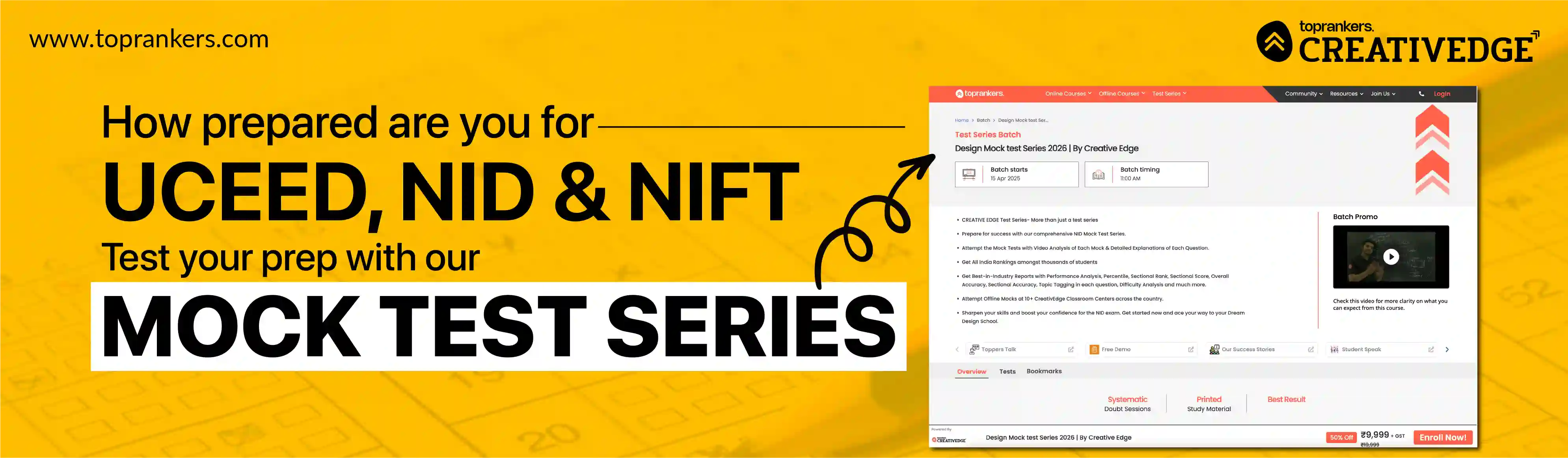
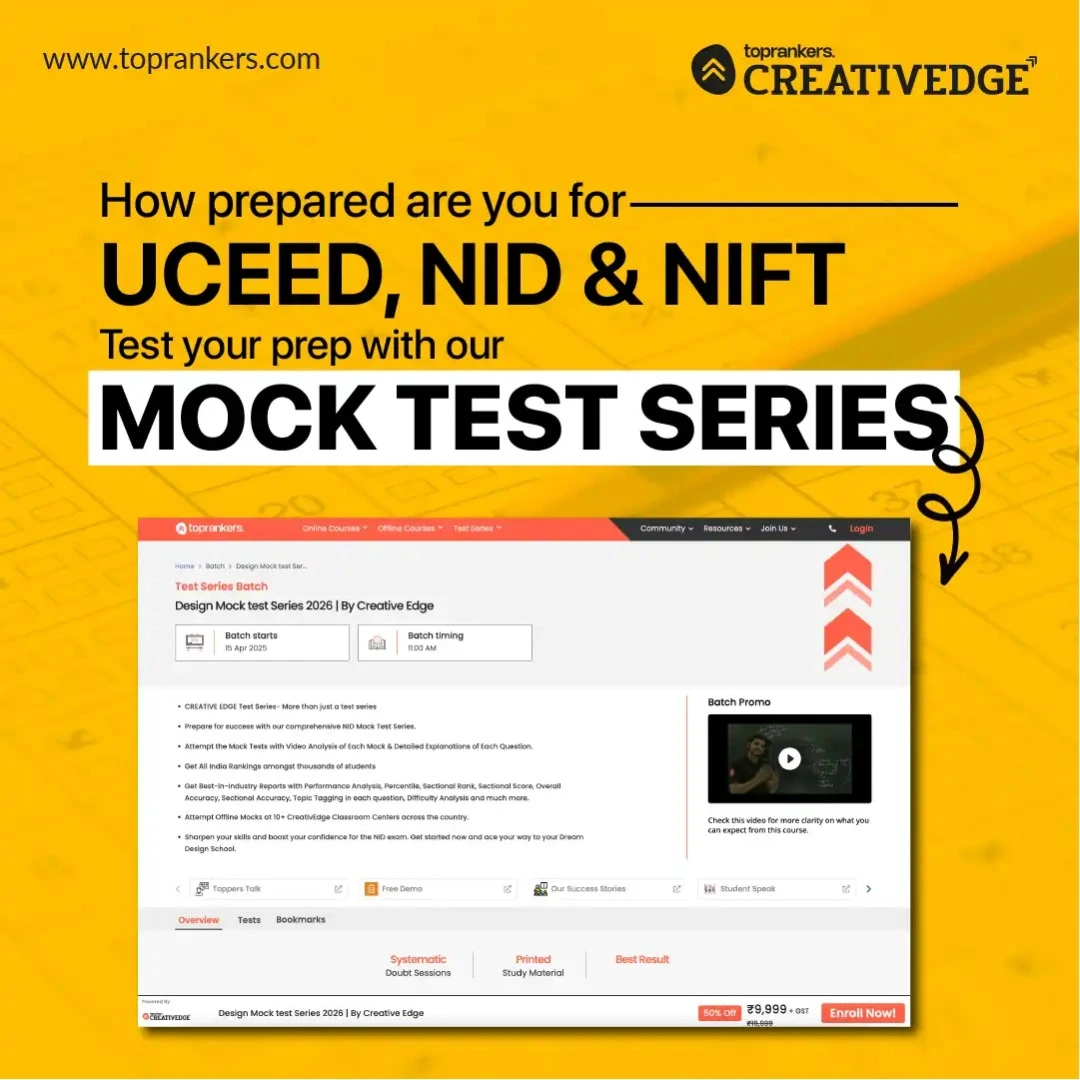
Join CreativEdge, India’s leading NID online coaching and get expert guidance for Prelims & Mains (Studio Test/Situation Test + Interview + Portfolio Preparation).
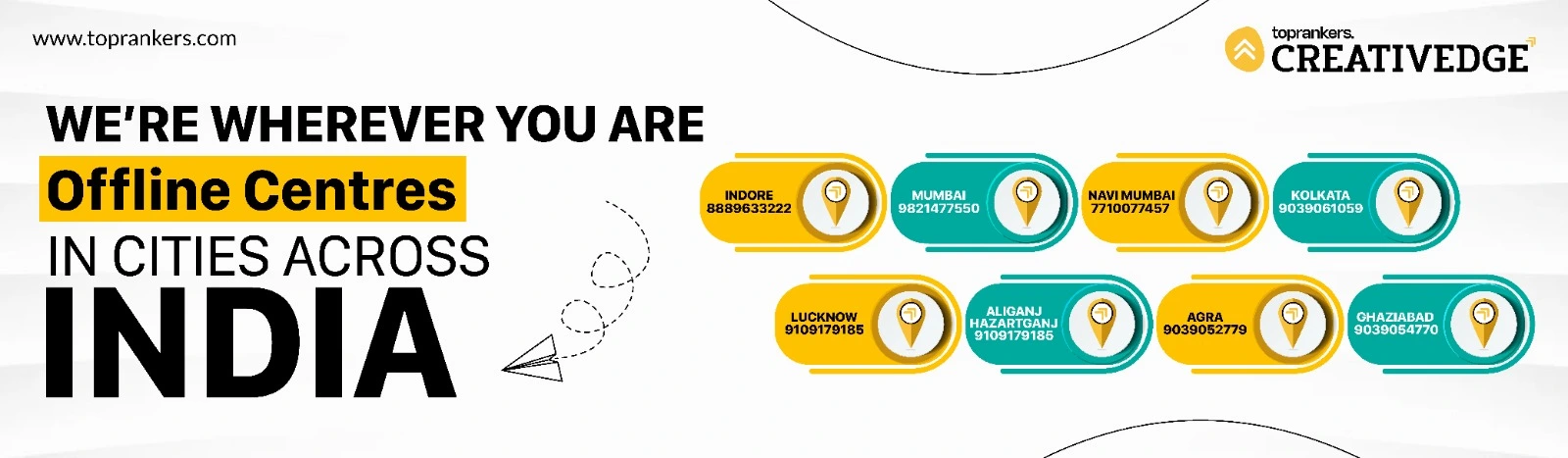
You can enroll in offline batches at your nearest centres also!

Frequently Asked Questions
What is Creative Edge portfolio preparation?

When should I start portfolio preparation at Creative Edge?
Does Creative Edge help with NID and NIFT portfolio preparation?
Do I need prior drawing skills to build a portfolio at Creative Edge?
What kind of projects are included in Creative Edge portfolio preparation?

Vineeta Agrawal
Communications Executive
SHARE