
1723534562.png)

NID Important Topics 2027: Subject wise NID Topics, Sectional Weightage
July 2, 2026
Quick Answer: The NID important topics mainly include creative drawing, visualization, observation skills, storytelling, and design thinking for CAT, along with logical reasoning, GK, and design awareness for GAT.
After NID 2026 removed the GAT section and focused entirely on CAT, students should prioritize CAT preparation (80%) while still preparing basic GAT topics (20%), as the NID exam pattern is highly unpredictable and GAT may reappear in future exams.
Key Highlights: NID Important Topics 2027
- NID exam tests CAT (Creative Ability Test) and GAT (General Ability Test) skills
- NID 2026 removed GAT completely, focusing only on CAT drawing questions.
- CAT preparation should be the primary focus for NID 2027 and 2028
- Recommended preparation strategy: 80% CAT and 20% GAT
- NID exam pattern is highly unpredictable and may change again. Avoid ignoring GAT completely despite 2026 pattern changes
- Most important CAT topics include visualization, observation, creativity, and storytelling
- High-weightage CAT topics include storyboarding, perspective/scene creation, and design thinking
- Frequently asked CAT topics include problem-solving and scenario-based questions
- Important GAT topics include logical reasoning, visual reasoning, GK, and design awareness
- Multi-part creative questions are becoming more common in NID exams
- Practicing previous year questions helps identify high-weightage topics
- Focus more on idea generation and concept clarity for CAT preparation
- Balanced preparation helps manage pattern unpredictability
Preparing for the National Institute of Design (NID) Design Aptitude Test (DAT) becomes much easier when you know exactly what to study and how much to focus on each area. Many aspirants spend months studying aimlessly, without clarity about what NID exam really tests. This guide focuses on the NID 2027 important topics list, how to cover them effectively, where to put more effort, and how to build scoring confidence.
This blog covers:
- NID 2027 important topics topics for both Prelims and Mains (subject-wise)
- Topic difficulty level based on previous years’ trends
- Smart practice approach for each topic
- Example question formats
Table of Contents
1. NID Important Topics for Prelims (CAT) 2027
2. NID DAT Important Topics for Prelims (GAT)
- NID GK Important Topics for 2027
- NID Important Logical Reasoning Topics (with sample questions + analysis)
- Important Visual & Spatial Reasoning Topics
- Important Quantitative Aptitude Topics
- Verbal Ability Important Topics for NID
- Design & Visual Awareness Important Topics
3. How to Prepare Both GAT & CAT NID Important Topics Together
4. NID DAT Mains Important Topics 2027
NID DAT Important Topics for Prelims (CAT)
The CAT section of NID Prelims is the exam's subjective part and it evaluates how you see, think, imagine, and communicate visually. It is not about how beautiful your drawing looks. It is about how clear, meaningful, and creatively thoughtful your ideas are.
This section includes NID subjective questions and it's where top rankers stand out, because NID values concept clarity + visual storytelling + problem sensitivity, not decorative art.
NID Important Topics for NID DAT (High-Weightage NID Drawing Topics List)
|
Area |
NID Drawing Topics |
What Examiners Look For |
How to Practice |
|
Observation Drawing |
Human gestures, daily-use objects, real-life scenes |
Accuracy + proportion + clarity |
Sketch 10-15 real objects daily, study light + shadow |
|
Story-based Composition |
Story narration through visuals, human expressions, environment context |
Clarity of idea, not perfection of art |
Create 4-6 frame stories from everyday incidents |
|
Product Sketching & Redesign |
Object structure, form, usability improvements |
Purposeful design thinking, not decoration |
Choose any object → ask: How can this work better? → Sketch solution |
|
Scene Creation / NID Perspective Questions |
Depth, foreground–mid–background, viewpoint change |
Spatial clarity & visual storytelling |
Practice public spaces, markets, stations, parks |
|
Imagination + Creativity Problems |
Unusual combinations, metaphors, creative characters |
Originality over “beauty” |
Try “Draw X as Y” prompts (e.g., A chair that feels safe) |
|
Analytical Visualization |
Transform shapes, object breakdown, exploded view diagrams |
Clarity & communication of thought |
Redraw everyday products in parts |
Sample NID Drawing Questions with Solutions:
Q.1) Create a drawing of a fair as seen from your own point of view, capturing the crowd, stalls, rides, and overall atmosphere.
Solution:
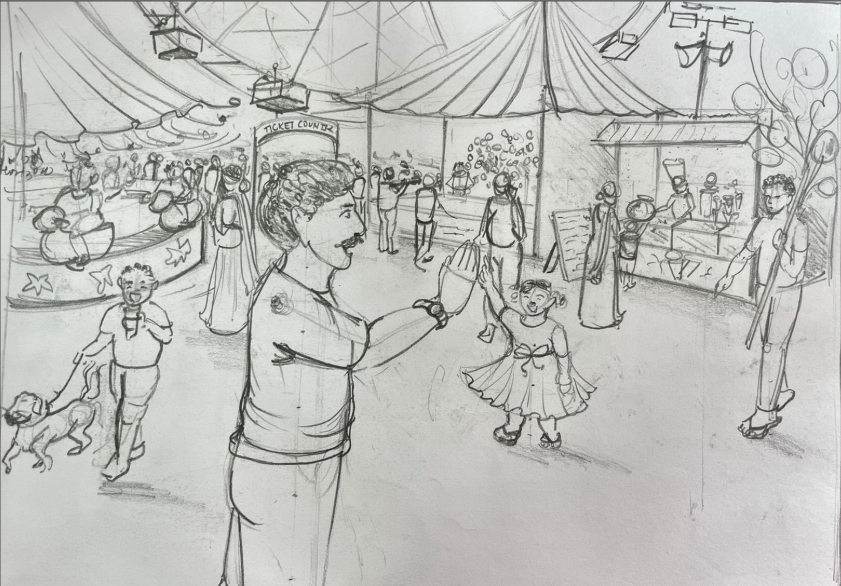
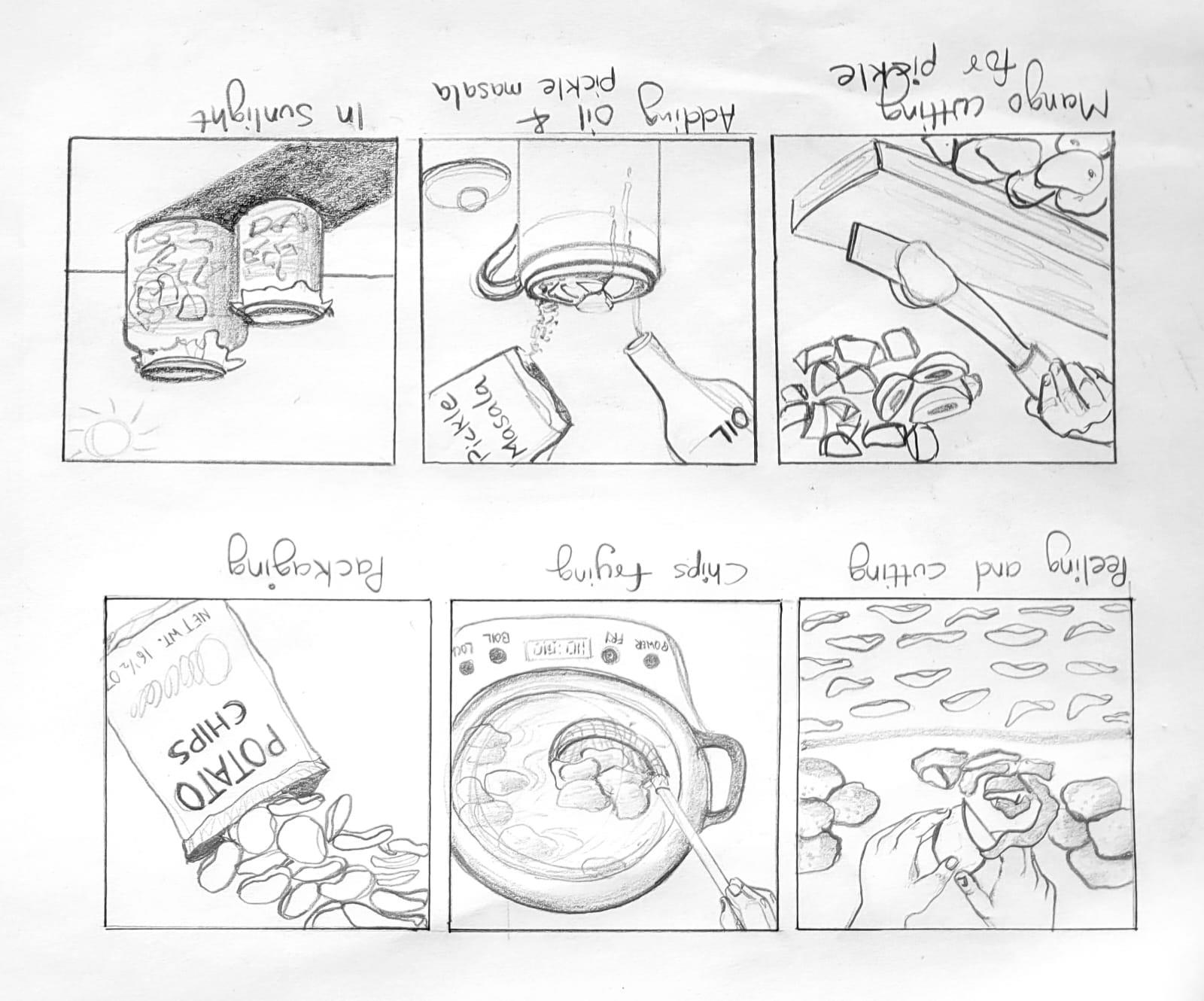
Q.2) Draw 3 key steps for the process. Given below:
- Potato to chips
- Mango/fruit to pickle
Solution:
NID CAT Important Topics 2027 - Example Questions
Here are sample NID sketching questions you can use or create similar prompts for daily practice.
|
Category |
Example Prompt |
What It Tests |
|
Storyboard |
“Create a 4-frame comic showing ‘A misunderstanding turned into friendship.’” |
Emotional clarity + storytelling |
|
Product Redesign |
“Redesign a kettle to make it safer for children to use.” |
Empathy + purpose-focused design |
|
Scene Sketching |
“Illustrate a marketplace scene from a child’s eye level.” |
Viewpoint + scale + perspective |
|
Object Transformation |
“Convert a bicycle into a street food vendor stall.” |
Creativity + function reinvention |
|
Gesture Drawing |
“Sketch a person trying to catch a falling glass.” |
Body dynamics + moment capture |
Check: List of Important NID CAT Questions With Solution


NID Important Topics for Prelims (GAT) 2027
The NID DAT Prelims is divided into GAT (General Ability Test) and CAT (Creative Ability Test).
Both sections test different thinking skills, so your NID preparation strategy must treat them separately.
Here’s an overview of Subject-wise Important Topics for the NID DAT exam 2027 GAT (general ability section) - Logical, Verbal, Quant & GK
NID GAT Important Topics 2027 Overview:
|
Section |
NID Important Topics |
Why It Matters |
How to Practice |
|
General Knowledge (GK) |
Indian art & crafts, cultural heritage, GI-tagged crafts, museums, textiles, architecture & monuments, design movements, famous designers, festivals, sustainability & innovation, full-forms of imp. government organizations, government policies |
Highest scoring area with repeatable theme patterns |
|
|
Practical & Scientific Knowledge |
Basic civics, basic geography, basic scientific principles |
High scoring if you have basic NCERT-level knowledge |
|
|
Sports, environment & sustainability, awards in art/design fields |
Highest scoring area with repeatable theme patterns |
|
|
|
Logical Reasoning |
Pattern series, analogy, classification, coding-decoding, direction sense, seating arrangement, syllogisms, venn diagrams |
Strengthens analytical clarity, quick scoring |
Solve 15-20 questions/day, focus on accuracy before speed |
|
Visual & Spatial Reasoning |
Cube & net folding/unfolding, mirror images, rotation flips, figure completion, isometric views, 2D to 3D transformation, odd-shape identification, figure counting, top/side views, folding + cutting |
One of the most important scoring areas in NID Prelims; directly relates to design thinking |
Practice mental rotation drills, solve visual puzzles, sketch simple 3D objects from angle variations |
|
Quantitative Aptitude |
Percentages, ratio-proportion, averages, speed-distance, basic arithmetic |
Tested in a basic, non-theory-heavy manner - scoring if practiced |
Practice quick mental math, reduce rough-work dependence |
|
Verbal Ability |
Sentence completion, synonym-antonym context, basic reading comprehension, and idioms used in daily language |
Tests clear communication sense, which carries into CAT & Mains |
Read simple, well-written articles, learn vocabulary through usage not memorisation |
|
Design & Visual Awareness |
Iconic logos, famous product silhouettes, color scheme, everyday object use-cases |
Tests how well you observe everyday design |
Practice noticing objects in context, sketch products + label use/purpose |
Improve your Drawing: Tricks to Improve drawing skills for NID 2027 Exam
1. NID Important Topics List 2027 - General Knowledge (GK)
GK is a high-return and low-effort scoring area in NID DAT Prelims 2027, especially for B.Des. Unlike what many students believe, NID does not test random trivia. The NID GK questions are visual, cultural, design-aware, and context-based. This is usually the most high-scoring section of NID. No calculation, no formulas required, just awareness of facts.
High-Weightage GK Areas (NID High-Weightage Topics)
|
Category |
Subtopics to Focus On |
|
Indian Art & Craft |
Madhubani, Warli, Kalamkari, Channapatna toys, Blue pottery and so on. |
|
Famous Designers & Movements |
Charles & Ray Eames, Dieter Rams, Bauhaus, Indian Design Icons |
|
Architecture & Public Spaces |
Famous buildings, architects, and public installations |
|
Brand Logos & Identity |
Symbolic logos of well-known brands, government entities, important campaigns |
|
Innovation & Sustainability |
Green packaging, biomaterials and their uses in design/art/culture fields, national/international initiatives for global warming, birds and other species. |
|
Basic scientific principles |
Basic physics principles (for ex, boiling points, human eye interaction with light, working of prisms, etc.) basic scientific principles |
|
Awards & Recognition |
Musicians, Grammys, Oscars, Peace Prize, Nobel Prizes |
|
Sports |
Events, famous Athletes, Trophies, Governing Organizations, and winners of tournaments in the past 3 months. |
|
Socio-Cultural Matters |
Paintings, Music, Dance, Musicians, and Instruments |
Also Check: 25+ Important NID Reasoning Questions and Answers
Past Years Sample NID Important Questions on GK - How GK Appears in NID DAT?
Q.1) The human eye understands lightness and darkness by using rods and distinguishes colors by use of cones. Which parts of the eye help to control the amount of light entering it?
(a) Pupil
(b) Retina
(c) Eyelashes
(d) Iris
Ans: Pupil
Q.2) What does diversity in a society primarily refer to?
(a) The similarity in people's opinions, beliefs, and practices
(b) The existence of variations in cultural, social, and individual characteristics
(c) A unified and standardised way of living
(d) The absence of any differences among individuals
Ans: B (The existence of variations in cultural, social, and individual characteristics)
Q.3) The basic form of a Hindu temple comprises of:
1. Sanctum 2. Mandapa 3. Shikhar
Select the correct answer from the codes given below: (a) Only 1 and 2 (b) Only 1 and 3 (c) Only 2 and 3 (d) All of the above
Ans: C (Only 2 & 3)
Q.4) In which year was the National Education Policy recently updated
(a) 2019
(b) 2020
(c) 2021
(d) 2018
Ans: B (2020)
NID GK Important Topics - Analysis (Last 5 Years)
GK generally contributes to 15-30% of NID GAT questions. In tie-breaker situations, GK scores can make a big difference.
Number of NID GK questions asked in last 3 NID past year papers (2023-2025):
- In 2025 NID question paper, there were 10 questions based on GK from 19 total questions in the GAT section.
- In 2024, there were 7 questions out of total 19 questions in GAT section.
- While in 2023, there 11 out of total 28 questions in GAT.
Which means that neglecting GK could cost you as high as half the marks in GAT section, as NID's paper pattern & total number of questions asked might change year on year.
What Not to Study for NID GK 2027?
- Political current affairs
- Sports statistics
- Deep history dates
- Random world trivia
- News headlines memorization
NID is a Design Aptitude Test, not UPSC. Focus on design, culture, visual & spatial awareness only.
2. NID Important Topics List 2027 - Logical Reasoning
The Logical Reasoning part of the NID GAT section tests your ability to analyse patterns, interpret relationships, and think structurally. You are not being tested on speed alone. You are being assessed on whether your thinking is organized, sequential, and observant.
NID reasoning questions are also often high scoring in GAT because the question patterns are predictable and improve quickly with practice.
|
NID Topics |
What It Tests |
Example Question Style (Original Format) |
|
Series & Pattern Recognition |
Identifying the logic behind sequences in numbers or shapes |
Find the next figure in the sequence. |
|
Analogy (Verbal + Visual) |
Relationship between objects, concepts, or patterns |
A is to B as C is to? (visual or word-based) |
|
Classification / Odd One Out |
Spotting which element does not follow the rest |
Which image does not belong to the group? |
|
Direction & Position Sense |
Understanding spatial direction and relative positioning |
If facing north, a 90° right turn faces which direction? |
|
Blood Relations / Family Logic |
Understanding relationship chains |
A is B’s sister. B is C’s mother. How is A related to C? |
|
Syllogisms (Simple Logic Statements) |
Drawing conclusions from statements |
If all cups are containers, and some containers are glass, then… |
|
Matrix & Grid Puzzles |
Arranging items by clues to fill grids |
Assign each student one craft, one material, and one tool. |
Sample Questions: NID Logical Reasoning
Q.1) Select the related figure from the given answer figures
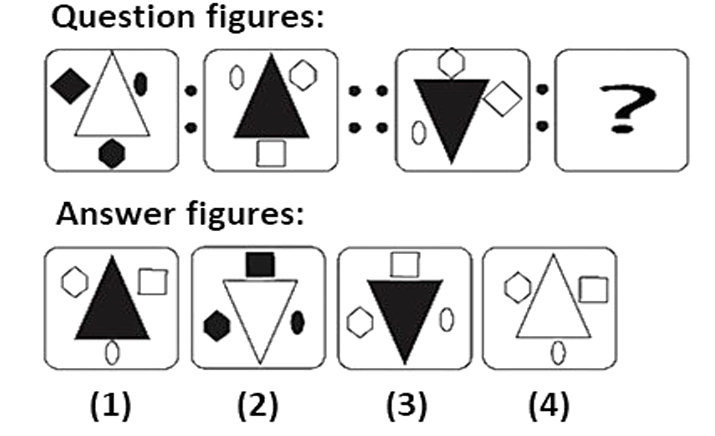
(a) 1
(b) 2
(c) 3
(d) 4
Ans: B (2)
Q.2) In a study Circle, eight friends P, Q, R, S, T, U, V and W are sitting around a circular table, facing the centre. P sits third to the right of W and third to the left of Q. S sits second to the right of T. V sits second to the left of R. T is not the neighbour of Q while U is neither a neighbour of T nor of W. Starting from P’s position, if all the eight are arranged in alphabetical order in clockwise direction, the seating position of how many members (excluding P) would not change?
(a) None
(b) One
(c) Two
(d) Three
Ans: B
Q.3) In a certain code language, ‘MINT’ is coded as ‘224’ and‘ FANCY’ is coded as ‘245’. How will ‘CONTOUR’ be coded in that language?
(a) 259 (c) 301 (b) 597 (d) 742
Ans: D
3. NID Important Topics List 2027 - Visual & Spatial Reasoning
Many aspirants either skip visual reasoning or practice it randomly, but NID asks these questions every year because a design aspirant should understand:
- Mental rotation
- Form understanding
- Structural awareness
- Ability to imagine in 3D
- Proportion & perspective intuition
NID 2027 important topics for visual and spatial reasoning:
|
NID Topics |
What It Means |
Example Question Style (Original Format) |
|
Cube Folding & Unfolding (Cube Nets) |
Visualizing how 2D nets convert to 3D cubes |
Which of the following cube nets can form the shown cube? |
|
Mirror & Water Reflections |
Understanding flipped views horizontally/vertically |
Find the mirror image of the given sign. |
|
3D Object Rotation (Mental Rotation) |
Imagining objects when rotated |
Which view represents the object after a 90° clockwise rotation? |
|
Isometric View Recognition |
Relating 2D drawings to 3D objects |
Match the isometric object to its top view. |
|
Shape Assembly & Disassembly |
Breaking objects into simpler shapes |
Which shapes combine to form the object shown? |
|
Perspective Interpretation |
Understanding viewpoint shifts (top/side/front) |
Which option shows the same table from a bird’s-eye view? |
|
Net & Pattern Completion |
Completing symmetrical or rotational designs |
Fill the missing block in the rotating pattern sequence. |
|
Odd Object / Visual Outlier |
Spotting the shape that doesn’t follow the logic |
Identify the object that cannot exist in 3D space. |
Past Years Trend Analysis of NID Important Topics for Visual Reasoning:
|
NID Topics |
Frequency |
Scoring Ease |
Notes |
|
Cube Nets & Rotations |
Very High |
High |
Appears almost every year |
|
Mirror & Lateral Inversion |
High |
High |
Visual practice improves speed |
|
Object Views (Top/Side) |
Medium-High |
Medium |
Practice from household objects |
|
Pattern & Symmetry |
Medium |
High |
Good for fast scoring |
|
Impossible Objects / Optical Illusions |
Increasing |
Medium |
Tests conceptual observation |
Sample Questions: NID Visual Reasoning
Q.1) Which of the following figures shown below, when folded along the dotted lines, will form a pyramid shaped box with a rectangular base?

Ans: D
Q.2) The solid so formed by joining unit cubes is rotated to obtain different positions, which of these cannot be the shape after it has turned?
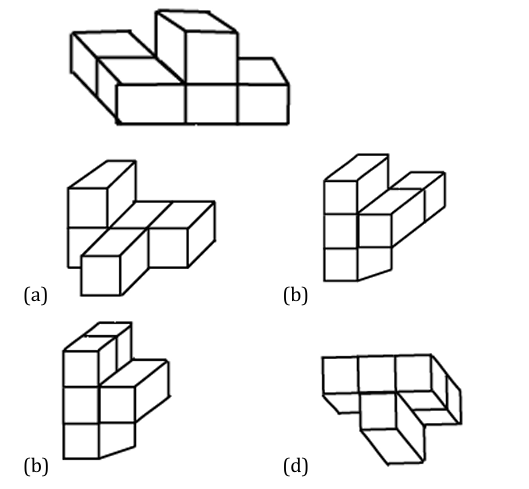
Ans: B
Q.3) The 3-D problem figure shows the view of an object. Identify its correct top view from amongst the answer figures.
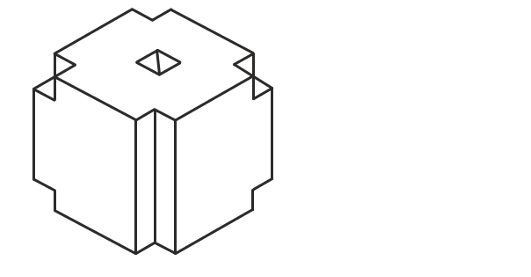
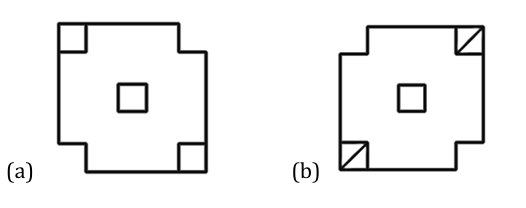

Ans: A
4. NID Important Topics List 2027 - Quantitative Aptitude
Quantitative Aptitude in NID DAT Prelims is not like competitive exam math. It is simple, basic, logic-driven, and application-based, not theory-heavy.
Also, as per the past year trends, the weightage of quantitative Aptitude in overall GAT is pretty low. Not even a single question has been asked at least for the past 5 years from 2020 to 2025.
Practicing a few basic questions to test your understanding on the topic should be enough for NID 2027 maths questions preparation.
|
Topic |
What It Covers |
Example Question Style (Original Format) |
|
Ratio & Proportion |
Sharing quantities, comparison, scaling dimensions |
A chair model is scaled from 10 cm to 25 cm height. What is the scale ratio? |
|
Percentages |
Percentage increase/decrease, discounts, value comparisons |
A material costs ₹400 and becomes ₹500. What is the % increase? |
|
Averages |
Mean calculation, weighted averages |
Average weight of 4 objects is 250g. If 3 weigh 200g each, find the 4th. |
|
Profit & Loss |
Basic cost-price situations |
A seller sold a product for 20% profit. CP = ₹250. Find SP. |
|
Time, Speed & Distance |
Travel, movement-based reasoning |
A bus travels 180 km in 3 hours. Find its speed. |
|
Basic Geometry & Mensuration |
Area, perimeter, volume of simple shapes |
What is the area of a circle with radius 7 cm? |
|
Number System Basics |
Factors, multiples, odd-even logic |
Which of these numbers is divisible by 9? |
Check: List of Important NID GAT Questions With Solution
5. NID Important Questions 2027 - Verbal Ability
The Verbal Ability part of NID DAT Prelims checks your ability to understand, interpret, and communicate meaning clearly.
|
Topic |
What It Tests |
Example Question Style (Original Format) |
|
Synonyms & Antonyms (Context-Based) |
Word meaning based on sentence usage |
Choose the word closest in meaning to “refined” in the sentence. |
|
Fill in the Blanks (Meaningful Language Use) |
Understanding tone, clarity, and correct fit |
Select the option that makes the sentence meaningful. |
|
Sentence Completion & Reordering |
Logical flow of ideas |
Arrange the sentences to form a coherent paragraph. |
|
Error Detection (Basic Grammar & Structure) |
Identifying incorrect word usage / tense / agreement |
Choose the sentence without grammatical error. |
|
Short Reading Comprehension (Inference-Based) |
Ability to extract meaning, interpret tone, summarize |
Answer questions based on a short passage. |
|
Idioms & Everyday Expressions |
Understanding metaphorical meaning |
Identify the meaning of the phrase used. |
Check: Best Books For NID 2027 Preparation [Subject-Wise List]
How to Prepare NID 2027 Important topics on Verbal Ability (Simple & Effective):
|
What to Do |
Time Needed |
Why It Works |
|
Read 10-15 mins daily from newspapers, blogs, essays |
15 mins/day |
Builds thinking clarity + vocabulary naturally |
|
Learn vocabulary through usage, not lists |
5 mins/day |
You remember words when you see them in context |
|
Practice 5-10 verbal questions daily |
10 mins/day |
Helps develop pattern recognition & speed |
|
Explain your design sketches out loud or in written captions |
Anytime |
Trains clear, purposeful communication - key NID skill |
Sample Questions: NID Verbal Ability Questions
Q.1) In the 16th century, an age of great marine and terrestrial exploration, Ferdinand Magellan led the first expedition to sail around the world. As a young Portuguese noble, he served the king of Portugal, but he became involved in the quagmire of political intrigue at court and lost the king’s favor. After he was dismissed from service by the king of Portugal, he offered to serve the future Emperor Charles V of Spain.
A papal decree of 1493 had assigned all land in the New World west of 50 degrees W longitude to Spain and all the land east of that line to Portugal. Magellan offered to prove that the East Indies fell under Spanish authority. On September 20, 1519, Magellan set sail from Spain with five ships. More than a year later, one of these ships was exploring the topography of South America in search of a water route across the continent. This ship sank, but the remaining four ships searched along the southern peninsula of South America. Finally they found the passage they sought near 50 degrees S latitude. Magellan named this passage the Strait of All Saints, but today it is known as the Strait of Magellan.
One ship deserted while in this passage and returned to Spain, so fewer sailors were privileged to gaze at that first panorama of the Pacific Ocean. Those who remained crossed the meridian now known as the International Date Line in the early spring of 1521 after 98 days on the Pacific Ocean. During those long days at sea, many of Magellan’s men died of starvation and disease.
Later, Magellan became involved in an insular conflict in the Philippines and was killed in a tribal battle. Only one ship and 17 sailors under the command of the Basque navigator Elcano survived to complete the westward journey to Spain and thus prove once and for all that the world is round, with no precipice at the edge.
Q) The 16th century was an age of great ______
(a) cosmic (c) mental (b) land (d) common man
Ans: B
Q) Magellan lost the favor of the king of Portugal when he became involved in a political ________. (a) entanglement
(b) discussion
(c) negotiation
(d) problem
Ans: A
Q.2) What does the idiom “break the ice” mean?
(a) To break something into pieces (b) To start a conversation and make people feel comfortable (c) To make a situation more difficult (d) To cool down an argument
Ans: B
6. NID Important Topics List 2027 on Design & Visual Awareness
Design & Visual GK tests how well you notice, understand, and interpret the design world around you. This is not about art. It is about seeing like a designer, which means observing:
- Objects
- Environments
- Visual culture
- User behavior
Analysis of NID paper pattern over the years reveals that this section forms a major part of the NID important topics, especially because it connects directly to CAT & Mains performance later.
High-Weightage Design & Visual Awareness Topics for NID 2027 exam:
|
Topic |
What It Covers |
Example Question Style (Original Format) |
|
Famous Product Designs |
Iconic furniture, Indian household products, everyday tool designs |
Identify which object is ergonomically better for children. |
|
Brand & Logo Recognition |
Minimalist & well-known brand identities |
Which logo evolution order is correct? |
|
Indian Handicrafts & Folk Art Forms |
Warli, Madhubani, Pattachitra, Kalamkari, Dhokra, Blue Pottery |
Match the art form with its region. |
|
Architectural & Public Space Awareness |
Famous buildings, landmarks, and civic layouts |
Identify the architect/designer of this structure. |
|
Form + Function Understanding |
Why objects are shaped the way they are |
Which handle design improves grip comfort the most? |
|
Color, Pattern & Visual Harmony |
Color contrast, pattern repetition, visual rhythm |
Which color combination creates strongest contrast? |
|
Design Movements & Key Designers |
Bauhaus, Minimalism, Postmodern, and Indian design pioneers |
Which designer is associated with “less, but better” philosophy? |
How to prepare for NID Visual GK Questions:
|
Daily Habit |
What to Do |
Why It Works |
|
Object Observation Journal |
Draw or photograph 1 everyday object + note its usability |
Builds design sensitivity |
|
Brand Logo Recall Game |
Look up logos → draw from memory later |
Strengthens visual memory |
|
Craft & Culture Sundays |
Learn 1 Indian craft each Sunday (location + pattern style) |
Makes GK + Visual Awareness overlap → double benefit |
|
Public Space Mapping |
Next time you're outside, observe signage, handrails, seating, movement flows |
Teaches user-centric thinking |
|
Re-Design 1 object weekly |
Modify a mug/spoon/bag/shoe with a better user experience |
Prepares you for CAT + Mains redesign tasks |
Read More: NID GK Syllabus: Know Exactly What Type of GK to Study for NID


NID Sample Questions on Logo/Visual Awareness:
Q.1) Which is the correct Logo of the Olympics?

Ans: B
Q.2) Match the visuals with its creator/architecture style.

(a) 1-S, 2-G, 3-N, 4-J
(b) 1-N, 2-S, 3-J, 4-G
(c) 1-S, 2-G, 3-J, 4-N
(d) 1-J, 2-S, 3-G, 4-N
Ans: C
Q.3) Which of the following sets of colors represents an analogous color scheme?
(a) Red, Green, Blue
(b) Blue, Green, Yellow
(c) Red, Orange, Yellow
(d) Purple, Red, Green
Ans: C
How to Prepare Both GAT & CAT NID Important Topics Together (Balanced Approach)
|
Daily Focus |
Time |
Outcome |
|
GK + Design Awareness |
10-20 mins |
Slow & steady retention |
|
Visual Reasoning + Logical |
20-30 mins |
Strong GAT accuracy |
|
Sketching + Observation Practice |
40-60 mins |
CAT clarity + confidence |
|
Story / Product Sketch once every 2 days |
30-45 mins |
Idea-building and communication |
NID DAT Mains: Important Topics 2027 (B.Des & M.Des)
Once you clear NID DAT Prelims, the focus shifts from paper-based thinking to NID Studio Test, which evaluates your hands-on design ability.
The NID Mains evaluates:
- Observation & awareness
- Craft + material handling skills
- Problem-solving process
- Communication clarity
- Sensitivity + empathy
- Ability to explain decisions, not just draw them
This stage is where real designers stand out. Even though the structure varies, the core expectation is the same: How well you translate thinking into hands-on execution.
|
Task Type |
What It Tests |
Strategy |
|
Model Making |
Material handling + structural thinking |
Practice with paper, tape, thread, cardboard |
|
Observation Sketching |
Real-life proportion & perspective |
Draw from real objects daily |
|
Storyboard/Sequential Depiction |
Visual communication clarity |
Keep frames simple and clear |
|
Problem Redesign |
Empathy + usability + creativity |
Always identify a user first |
|
Interview + Portfolio Discussion |
Personality + clarity of purpose |
Speak about your decisions, not just result |
Check: How to Prepare for NID Studio test
How to Prepare for NID Important Topics 2027? - Practical Strategy Tips
Knowing the NID important topics is only half the work. The real difference comes from how you practice, consistently, purposefully, and with the right mindset. Here are clear, realistic strategies that top NID toppers use:
1) Practice Observation, Not Just Drawing
NID rewards how you see, not how “well” you draw. Do this daily - Sit in any public space (home, school, market) and observe:
- Postures
- Expressions
- Hand movements
- Object placement
Then sketch for 5 minutes, without erasing.
Goal: Capture essence, not beauty. If you start noticing what others ignore, your CAT & Mains scores jump automatically.
2) Master Visual & Spatial Reasoning
You can also use real objects other than puzzle books. Pick objects you use daily:
- Mug
- Remote
- Water bottle
- Scissors
Rotate them. Observe and Sketch their:
- Front view
- Side view
- Top view
- Surfaces
This builds mental rotation ability faster than any worksheet.
Also check: NID Exam day Instructions
3) Use “Idea First, Drawing Later” Method for CAT Questions 2027
Before sketching, answer:
|
Question |
Your Response |
|
Who is the user? |
Child / Elderly / Student / Worker |
|
What is their problem? |
Pain point, discomfort, confusion |
|
What is the purpose of the design? |
Ease, comfort, safety, experience |
|
How is it better than the current one? |
Clear benefit |
Then draw. This is how NID differentiates good design from impressive sketching.
4) Make GK Stick with Mind Mapping
GK should be connected, not memorized. Example mind map topic: Warli Art Branches:
- Maharashtra
- Rice paste + wall surfaces
- Stick figures
- Marriage rituals & nature themes
One well-made mind map to prepare for nid important topics is worth 20 pages of memorization.
5) Product Redesign Framework (Use for Every Redesign Task)
|
Step |
Action |
|
1) Identify user |
Who will use it? |
|
2) Define problem |
What is difficult currently? |
|
3) Improve function |
How does your design solve the real issue? |
|
4) Label clearly |
Use arrows + annotations |
|
5) Keep form simple |
Avoid decoration unless it adds meaning |
6) Train Speed with Timed Sketch Cycles
Set a 10-minute timer:
- 2-min gesture sketch
- 3-min proportion correction
- 5-min detail refinement
This prevents:
- Over-refining
- Overthinking
- Running out of time in the exam
7) Weekly Practice Structure (Simple, Repeatable) for NID 2027
Here's an expert-curated daily NID study plan to cover the most important NID 2027 Topics for best results (especially right before the exam):
|
Day |
Focus |
Result |
|
Mon-Tue |
Visual & spatial reasoning + scene sketching |
Strong observation |
|
Wed-Thu |
Product redesign + GK craft research |
Strong design thinking |
|
Fri |
Logical Reasoning + Storyboard |
Smooth storytelling |
|
Sat |
Mock test (Prelims style) |
Exam-ready timing & confidence |
|
Sun |
Analyze mistakes + revise |
Consistent improvement |
You don’t need 10 hours/day. You need 1-2 hours of correct practice.

1757510491.webp)
Best Study Material to Cover All NID Important Topics 2027
NID list of topics to be covered is huge and therefore choosing the right study material matters more than collecting too many resources. Most aspirants waste time jumping between random books, notes, YouTube videos, and random PDFs, without mastering the actual NID 2027 important topics.
Your preparation must be:
- Structured
- Topic-wise
- Practice-heavy
- Visually guided
- Aligned with real NID question style
The NID study material you use should not only help you practice real exam-type questions but should also provide you model solutions + correct approach. And it will also help you understand the exam trend and what to expect in the upcoming years.
This is where well-designed and exam-specific resources from experts matter.
Recommended Study Material to Master NID Important Topics 2027
|
Study Material |
Best For |
Why It Helps |
|
Understanding real exam patterns & difficulty |
Helps you understand what NID actually asks, not what people assume |
|
|
NID Sample Papers (CreativeEdge Publication) |
Guided practice for Prelims + Mains |
Builds accuracy, timing, answer structuring skill |
|
Design GK & Current Affairs |
GK + Cultural Awareness |
Covers one of the highest scoring sections in NID GAT |
|
NID Mock Tests Series |
Exam Simulation |
Helps you assess your preparation level + strengths and weaknesses, and improve your time management and accuracy |
CreativEdge NID Previous Year Papers Book:
What's Inside:
- 11 Years of Solved NID Papers (2015 - 2025)
- QR-Based Video Solutions for CAT Drawing Questions
- Exam Trend Analysis (Last 5 Years)
- 100% Updated & Authentic
CreativEdge NID Sample Papers Book:
This book is crafted to help you master the exact skills NID 2027 evaluates, not just drawing or memorization.
What’s Inside:
- Section-wise topic coverage (GAT + CAT)
- Full-length solved NID sample papers
- Practice questions modelled on real NID patterns
- Scene drawing, product redesign & storyboard tasks
- Visual reasoning & logical reasoning drills.
Why Students Prefer these Books for 2027 Prep?
|
Advantage |
Benefit to You |
|
Questions follow the actual thought-style of NID |
You learn to think like a designer, not like a test-taker |
|
Step-by-step solutions provided |
You understand how answers are formed, not just what the answer is |
|
Visual explanations & annotations included |
Helps you improve clarity of idea + presentation quality |
|
Balanced focus on creativity + function |
Prepares you for Mains & Studio Test, not just Prelims |
Who Should Use This Book?
- Students preparing for NID B.Des in 2027 and 2028
- Students preparing along with boards / college
- Droppers who need structured practice
- Beginners who are unclear about where to start
- Strong sketchers who need help in design thinking
How to Use These Resources Effectively for NID 2027 Prep:
|
Resource |
When to Use |
Outcome |
|
Sample Papers (CreativeEdge) |
3-4 times a week (timed) |
Builds exam rhythm & idea execution speed |
|
PYQs |
Once every weekend |
Helps recognize NID question logic patterns |
|
GK + Current Affairs Weekly |
Daily short practice |
Strengthens GAT performance |
|
Attempt full series before exam |
Real exam rehearsal |
Want to Know the NID Exam Pattern? Solve Previous Year Question Papers First
| NID 2026 Question Paper | NID 2025 Question Paper |
| NID 2024 Question Paper | NID 2023 Question Paper |
| NID 2022 Question Paper | NID 2021 Question Paper |
Conclusion:
Mastering NID important topics 2027 is not about studying more, it is about studying with clarity and purpose. When you understand what NID truly evaluates, your preparation becomes focused, calmer, and more confident.
You now know all the high-weightage NID list of topics to be covered for 2027, how the GAT and CAT sections differ, which areas need deeper observation, and how to build your skills through daily practice.
Consistent work on visual awareness, cultural understanding, spatial reasoning, and creative problem solving will make you stronger every week. Use the NID subject wise important topics list as your anchor and keep revisiting your progress.
Stay curious. Observe real life. Think from the user’s point of view. Designers are made through awareness, not just sketching. If you apply the strategies shared here, your preparation will feel structured and purposeful. You are preparing for a design school that values sensitivity, clarity, and originality. Show that in your work, and the results will follow.
Preparing for NID 2027? We can help you with exact strategic roadmap, study material and crucial feedback required to ace this exam.
Join CreativEdge, India’s leading NID online coaching and get expert guidance on all NID subjects.
You can enroll in offline NID batches at your nearest centres also!



Frequently Asked Questions
What are the most important topics for NID DAT Prelims 2027?

How should I study GK for NID 2027?
Is drawing skill more important than creativity in NID DAT 2027?
What are the NID important topics for CAT (Creative Ability Test) section for NID 2027?
What are the NID important topics for GAT for 2027?
Are the important topics the same for B.Des and M.Des in NID 2027?
Where can I get NID important topics PDF for revision?
How can I cover all NID 2027 important topics if I have limited time?

Vineeta Agrawal
Communications Executive


SHARE