
1723534562.png)

Download NATA Previous Year Question Paper PDFs (2018–2025)
July 29, 2026
Quick Answer: NATA previous year question papers (2018-2025) let you practice real, exam-style Drawing and Aptitude questions for the 200-mark hybrid NATA test conducted by the Council of Architecture.
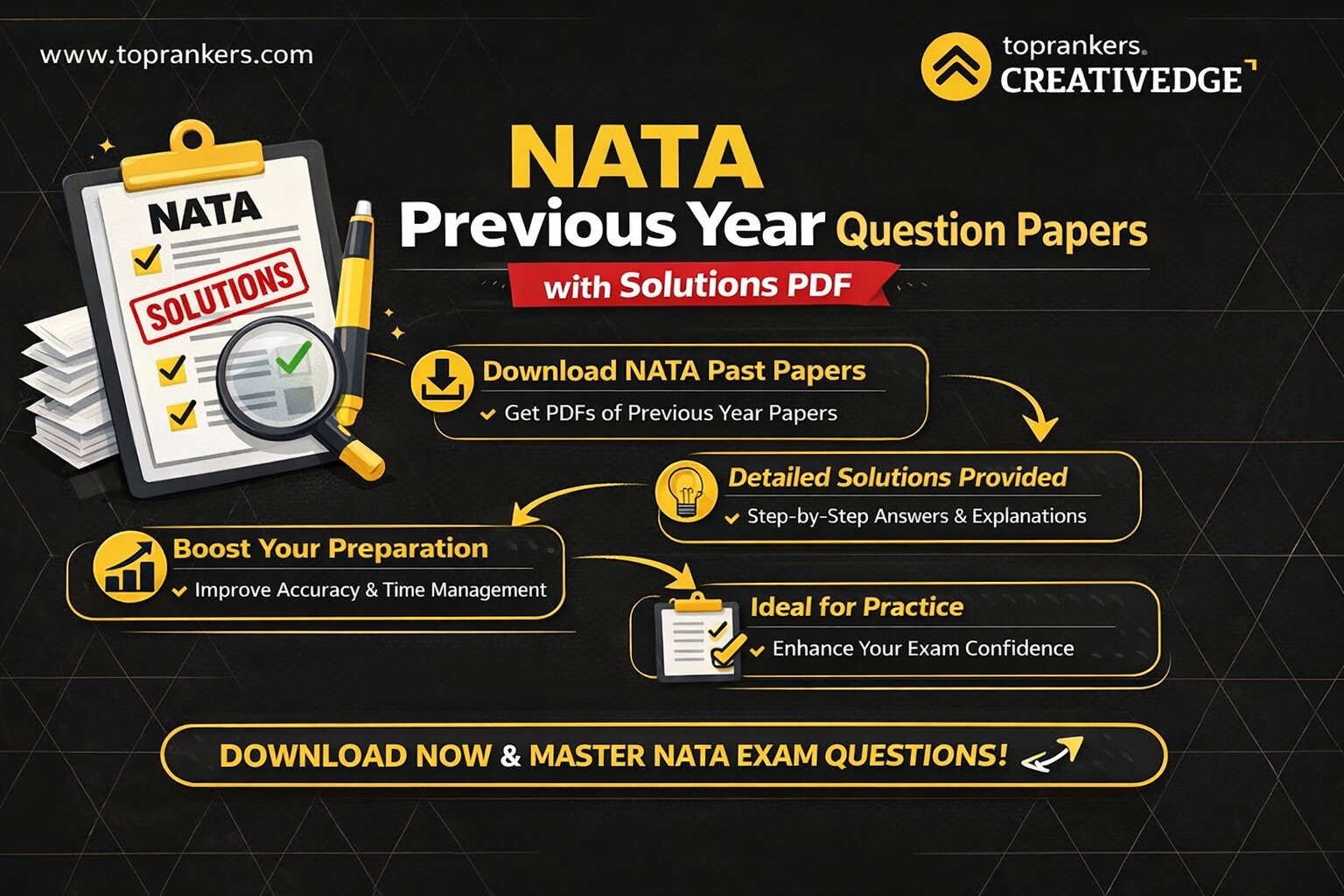
Download the year-wise PDFs below - free, with answer keys and solutions. Then solve them under a 3-hour timer to sharpen speed, accuracy and creative visualization.
Start with the most recent papers (2025, 2024) because they best match the current pattern.
Note: CoA does not officially publish full NATA papers; the PDFs below are faithfully reconstructed from student recall and expert review.
NATA Previous Year Question Papers (2018-2025): Free PDF Download
| Year | NATA Question Papers PDF Links | Answer Key PDF | Solutions PDF |
|
NATA 2025 Question Paper PDF |
|||
|
NATA 2024 Question Paper PDF |
|||
| NATA 2023 Question Paper | |||
| NATA 2022 Question Paper | |||
| NATA 2021 Question Paper | |||
| NATA 2019 Question Paper (Shift 1) | |||
|
NATA 2019 Question Paper (Shift 2) |
|||
| NATA 2018 Question Paper |
As we all know, the Council of Architecture (CoA) changed the NATA exam paper pattern last year. However, practicing the NATA previous year papers and current NATA question paper pattern will still help you get an idea about the difficulty level of the paper and the type of questions asked in the upcoming NATA entrance exam.
They also help test your preparation levels, thus directing you to focus on weak areas.
Are NATA Previous Year Question Papers Officially Released by CoA?
The Council of Architecture (CoA) does not release full official NATA question papers after the exam.
What circulates online including the PDFs on this page, are reconstructed papers built from verified student recall and reviewed by our architecture faculty, plus the official sample formats CoA publishes on nata.in.
This matters for two reasons:
(1) treat any "official 2025 paper" claim elsewhere with caution, and
(2) reconstructed papers are still highly reliable for pattern practice because the structure (Drawing + Aptitude, 200 marks, no negative marking) stays consistent year to year.
Check: NATA Drawing Preparation 2027
Key Highlights: NATA Previous Year Question Papers
- Understand NATA exam pattern with previous year question papers (2018-2025)
- Papers include composition design, perspective drawing, visualization, logical reasoning, and visual aptitude questions.
- Analyzing past papers reveals recurring trends such as spatial visualization tasks and analytical reasoning formats.
- Solving NATA PYQs under timed conditions improves speed, accuracy, and exam confidence for the NATA 2027 exam.
- Recent papers show increasing emphasis on practical creativity, 3D visualization, and application-based aptitude questions.
- Practicing year-wise NATA question papers helps aspirants identify difficulty trends and build an effective preparation strategy.
Table of Contents
- Which NATA Previous Year Papers Should You Solve First?
- Section-wise Breakdown of NATA Exam Papers
- NATA PYQ Difficulty Level Analysis
- Sample Aptitude Questions from NATA Past Year Papers
- NATA PYP Practice Plan by Past Year Toppers
- NATA Question Paper Pattern
- How to Use NATA Exam Papers for 2027 Prep
- Importance of Solving NATA Previous Year Papers
- 5 Common Mistakes to Avoid When Solving NATA PYQs
Which NATA Previous Year Papers Should You Solve First?
Don't solve papers oldest-to-newest. Solve them by relevance to the current pattern:
1. 2025 & 2024 first - closest to today's hybrid Drawing + Aptitude format. These set your baseline.
2. 2023 & 2022 next - the hybrid pattern stabilized here; great for volume practice and spotting repeated question types.
2. 2021 and earlier last - useful for extra drawing prompts and aptitude drills, but pattern-match them loosely; some sections have since changed.
NATA Previous Year Question Papers - Section-Wise Breakdown and Trends
NATA previous year question papers follow a hybrid structure where candidates are evaluated through drawing, visualization, and aptitude-based questions.
Analyzing each and every past year NATA exam question paper section-wise helps aspirants understand which skills are tested repeatedly and how the exam pattern has evolved over time.
Drawing and Composition Questions in NATA PYQs
|
Question Focus |
What Appears in Previous Papers |
Trend Observed |
|
Composition Design |
Arranging elements with balance and creativity |
Consistent across years |
|
Perspective Drawing |
Interior or exterior scene visualization |
Increasing emphasis on spatial accuracy |
|
Creative Visualization |
Idea-based drawing prompts |
More conceptual tasks in recent papers |
Drawing questions evaluate creativity, spatial understanding, and architectural thinking rather than just artistic detailing.
Check: NATA Important Topics
Aptitude Questions in NATA Previous Year Question Papers
|
Question Type |
Skills Tested |
Trend Observed |
|
|
Visual Reasoning |
Pattern recognition and spatial analysis |
Frequently repeated |
|
|
Logical Reasoning |
Analytical thinking and problem solving |
Shift toward application-based questions |
|
|
Architecture Awareness |
Design concepts and observation |
Moderate presence |
The aptitude section carries higher weightage, making accuracy and time management crucial.
3D Modelling and Spatial Visualization Trends
|
Component |
Appearance in PYQs |
Trend Insight |
|
3D Composition Tasks |
Introduced in recent structures |
Practical architectural skills gaining importance |
|
Structural Visualization |
Understanding form and depth |
Increasing complexity |
Recent NATA papers show a gradual shift toward practical design thinking through 3D modelling elements.
Check: Expected NATA Cut Off
Visualization and Observation-Based Questions
|
Skill Area |
Example from PYQs |
What It Tests |
|
Scene Interpretation |
Visual storytelling prompts |
Observation and creativity |
|
Object Transformation |
Turning shapes into functional designs |
Imagination and design logic |
Visualization questions highlight how NATA assesses architectural aptitude beyond theoretical knowledge.
Check: NATA Maths Syllabus and Sample question


NATA Previous Year Question Papers - Difficulty Level Analysis
|
Year |
Overall Difficulty Level |
Drawing Section Trend |
Aptitude Section Trend |
Key Observation |
|
2024 |
Moderate |
Focus on composition and spatial visualization |
Logical reasoning and visual aptitude dominant |
Balanced hybrid structure |
|
2023 |
Moderate to Easy |
More observation-based sketching |
Higher number of visual reasoning questions |
Speed mattered more than complexity |
|
2022 |
Moderate |
Conceptual drawing tasks increased |
Analytical aptitude questions increased |
Shift towards conceptual thinking |
|
2021 |
Easy to Moderate |
Basic perspective and composition tasks |
Direct aptitude questions |
Scoring opportunity for prepared candidates |
|
2020 |
Moderate |
Creativity-focused drawing evaluation |
Mixed aptitude formats |
Beginning of hybrid pattern consistency |
Read More: NATA Exam Centers
Sample NATA Aptitude Questions from NATA Previous Year Question Papers
In the NATA entrance exam, you will be tested primarily on general aptitude, mathematics, and drawing. To help you understand the questions asked in the exam, we have provided a few sample aptitude questions for NATA.
1. Which of the following films was directed by Satyajit Ray?
- A. Bhumika
- B. Satranj ke khiladi
- C. Nishant
- D. Ardhya Satya
2. A’ starts his walk north and turns left; similarly, `B’ starts his walk from the same point in the east direction and then turns right, straight, and left. A & B faces are?
- A. In the same direction
- B. In the opposite direction
- C. Perpendicular to each other
- D. None of the above
3. In a specific code language, COMPUTER is written as RFUVQNPC. How will MEDICINE be written in that code language?
- A. MFEDJJOE
- B. EOJDEJFM
- C. MFEJDJOE
- D. EOJDJEFM
Check: Is NATA Necessary for Architecture
4. Which of the following is not part of Reinforced Cement Concrete?
- A. Steel
- B. Cement
- C. Sand
- D. Lime
5. If South East becomes North, North East becomes West, and so on. What will West become?
- A. North East
- B. North West
- C. South East
- D. South West
6. One morning after sunrise, Suresh was standing facing a pole. The shadow of the pole fell exactly to his right. To which direction was he facing?
- A. East
- B. West
- C. South
- D. Data is insufficient
Check: How to improve Your NATA Score
NATA Previous Year Question Papers Practice Plan (7 Days, Repeatable)
Whichever attempt you're targeting - the current phase or the next NATA cycle, the smartest way to use these papers is a repeatable 7-day loop: one full timed paper, one deep error-analysis day, targeted Maths + Aptitude revision, dedicated Drawing practice, then a second timed paper and correction.
Repeat until exam day. Because CoA allows more than one attempt in a cycle, a disciplined PYQ loop is what turns a first attempt into a higher-scoring second one.
The following 7-day repeatable plan helps students balance PYQ practice, Maths revision, aptitude improvement, and drawing practice.
|
Day |
Focus |
What to Do |
|
Day 1 |
Full PYQ Practice |
Solve 1 complete NATA previous year question paper under exam timing. |
|
Day 2 |
Error Analysis + Revision |
Review the PYQ in detail. Note weak areas in Maths, aptitude, and drawing execution. |
|
Day 3 |
Maths + Aptitude Revision |
Revise formulas, geometry concepts, visual reasoning patterns, and architecture awareness topics. |
|
Day 4 |
Drawing Practice |
Practice 1-2 drawing questions (scene creation, perspective, or 3D composition). |
|
Day 5 |
Full NATA PYQ Practice |
Solve another NATA previous year question paper with strict timing. |
|
Day 6 |
Mistake Correction |
Analyze errors from the paper and revise weak topics again. Practice quick sketching exercises. |
|
Day 7 |
Light Revision + Optional PYQ |
Revise key formulas, architecture GK, and reasoning patterns. If confident, solve one additional NATA previous year question paper. |
How to Use This Plan
Students can repeat this cycle every week until their exam date.
Each cycle typically includes:
- 2-3 NATA previous year question papers
- Targeted revision of maths and aptitude
- Regular drawing practice
This approach ensures students stay in exam rhythm without burnout, while continuously improving accuracy and time management.
Check: Logical Reasoning Questions for NATA
NATA Question Paper Pattern (What Every PYQ Reflects)
Every NATA previous year paper mirrors the current CoA structure: a hybrid, 200-mark test with a Drawing/Part A component (sketching, composition, perspective, 3D visualisation) and an Aptitude/Part B component (visual reasoning, logical reasoning, maths, architectural awareness). Key facts to remember while solving PYQs:
- Total marks: 200
- Mode: Computer-based test (with drawing component)
- Duration: 3 hours (≈180 minutes)
- Negative marking: None - attempt every question
- Attempts: Multiple attempts allowed in a cycle; best score counts
Check: How to prepare for NATA in 1 Month
How to Use NATA Previous Year Question Papers for NATA 2027 Preparation
Solving NATA previous year question papers is one of the most effective ways to prepare for the NATA 2027 exam because it helps candidates understand the hybrid pattern, improve drawing speed, and master aptitude accuracy. Instead of solving PYQs randomly, aspirants should follow a structured strategy aligned with the latest exam format.
Step-by-Step Strategy to Use NATA PYQs for 2027
|
Preparation Stage |
How to Use NATA Previous Year Question Papers |
What You Should Focus On |
Expected Outcome |
|
Initial Preparation |
Solve papers section-wise (drawing and aptitude separately) |
Understand question pattern and difficulty level |
Build conceptual clarity |
|
Pattern Analysis Phase |
Compare multiple years of NATA question papers |
Identify repeated drawing themes and reasoning formats |
Recognize exam trends |
|
Timed Practice Stage |
Attempt full-length PYQs within 180 minutes |
Practice time management for hybrid exam format |
Improve speed and confidence |
|
Drawing Skill Development |
Recreate past composition and perspective questions |
Focus on visualization and layout planning |
Enhance creativity and presentation |
|
Final Revision Stage |
Analyze mistakes from PYQs and revise weak topics |
Strengthen aptitude accuracy and drawing efficiency |
Maximize scoring potential for NATA 2027 |
Check: NATA Preparation Books 2027
Smart Tips to Use NATA Previous Year Question Paper PDF
As per the NATA Exam Analysis, most questions were repeated from the NATA question paper pattern. So, practising more questions will help you score better.
You can follow experts' advice while solving the NATA Previous Year question papers.
- Understand the complete NATA syllabus and exam pattern in-depth.
- Start your preparation with easy topics and then proceed to complex topics.
- After studying all the topics according to the latest syllabus, begin your revision, during which you must solve question papers.
- Solve at least 3 NATA question papers weekly and spare time to improve weak areas.
- Take up each NATA exam question paper and solve it by keeping a timer as in the main exam.
- Make sure you solve the NATA pyqs and finish it on time.
- After completing solving, check all your answers, and allot marks.
- Solve at least 1-2 Mock Tests for NATA weekly.
- Analyze your performance and begin to correct your mistakes
Join CreativEdges NATA Coaching Institutes in India
| NATA Coching in Indore | NATA Coching in Andheri | NATA Coching in Mumbai |
| NATA Coching in Agra | NATA Coching in Lucknow | NATA Coching in Kolkata |
Use Creative Edge Free Resources 2027 Strategically
| NATA Mock Test | |
| NATA Preparation Video 2027 | |
| NATA Syllabus 2027 |
Read also: NATA Preparation Strategies in 2027
Importance of Solving NATA Previous Year Papers
There are numerous benefits to solving the NATA last year question papers.
Some of these are mentioned below.
- You will understand the NATA Exam Pattern, syllabus, and topic weighting in depth.
- Know the difficulty level of the paper.
- You can familiarize yourself with the questions that can be asked in the exam.
- Know how to improve in weaker sections.
- NATA papers will help you improve your time management and problem-solving skills.
5 Common Mistakes to Avoid When Solving NATA PYQs
1. Skipping the timer
NATA is won on speed. Always solve full papers in one 3-hour block.
2. Practicing drawing without evaluation
Get a mentor to score your composition, proportion and concept - self-scoring drawing is unreliable.
3. Hoarding old papers
Ten pre-2021 papers won't fix a weak current-pattern score. Prioritise recent years.
4. No error log
If you don't record why you missed a question, you'll repeat it. Keep a one-line-per-mistake log.
5. Treating Aptitude as an afterthought
Part B carries heavy weight and is the fastest place to gain marks. Drill reasoning and maths daily.
Conclusion
In conclusion, the NATA exam question papers are essential for aspiring architecture students to prepare for the NATA exam.
Understanding the structure and content of the NATA question paper pattern allows candidates to tailor their preparation effectively, enhancing their chances of success in securing admission to prestigious architecture programs.
Through consistent practice and strategic study, aspiring architects can navigate the challenges of the NATA exam and step confidently towards their professional goals.
NATA Previous Year Papers (Year-wise Analysis & PDFs)
| NATA 2026 Question Paper | NATA 2025 Question Paper | NATA 2024 Question Paper |
| NATA 2023 Question Paper | NATA 2022 Question Paper | - |
Preparing for NATA 2027? We can help you with exact strategic roadmap, study material and crucial feedback required to ace this exam.
Join Creative Edge, India’s leading NATA online coaching and get expert guidance on all NATA 2027 subjects.


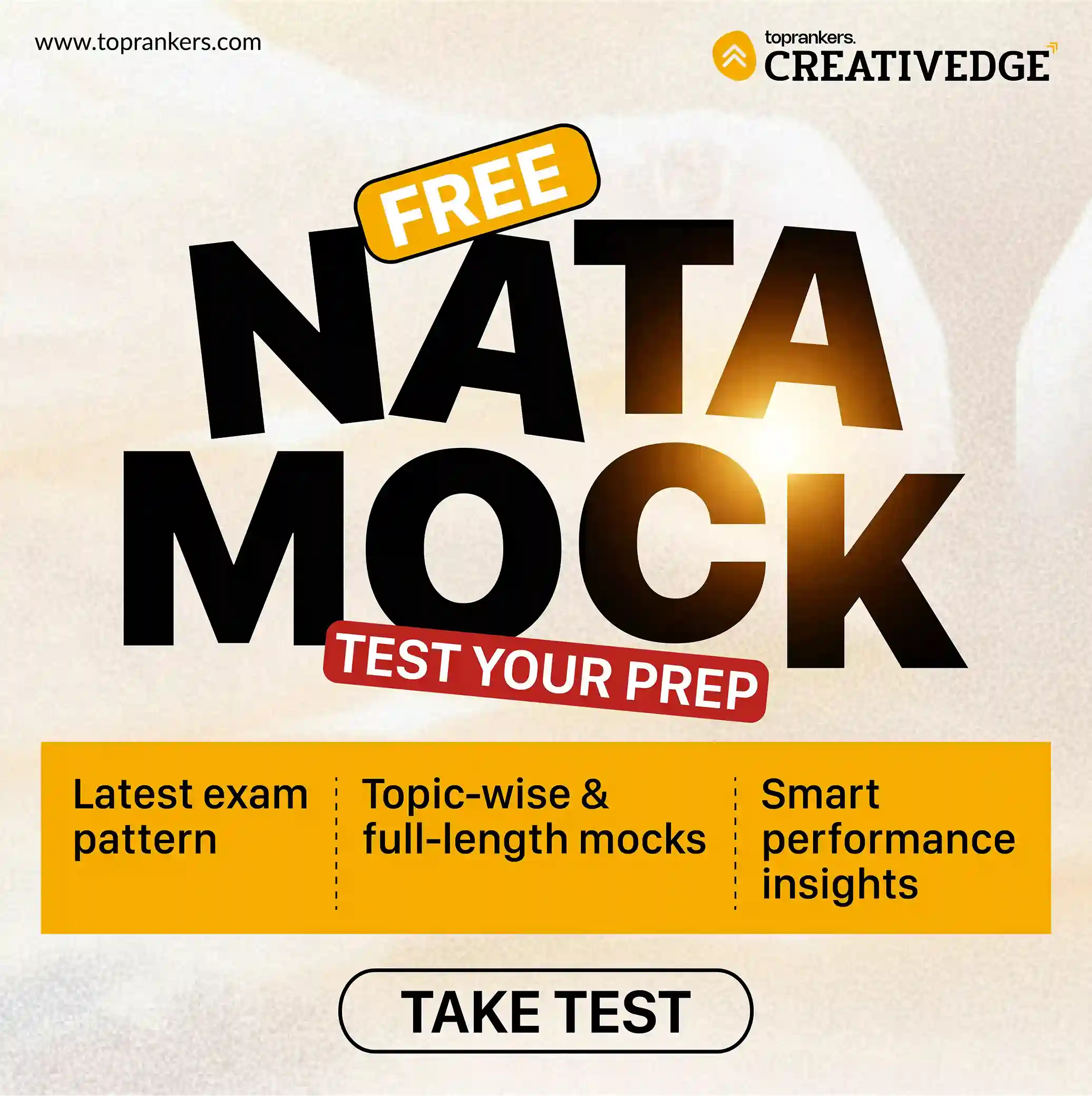
Attempt a Free NATA Mock Test
Fill your details
Frequently Asked Questions
How to prepare for NATA Exam 2026?

Why should I solve the NATA Previous Year Question Papers?
Where can I find NATA Previous Year Question Papers?
Where can I download last year NATA Question Paper?
Is the NATA Sample Papers of the previous year printable?
Are these NATA Question Papers Free?

Vineeta Agrawal
Communications Executive


SHARE