
1723534562.png)

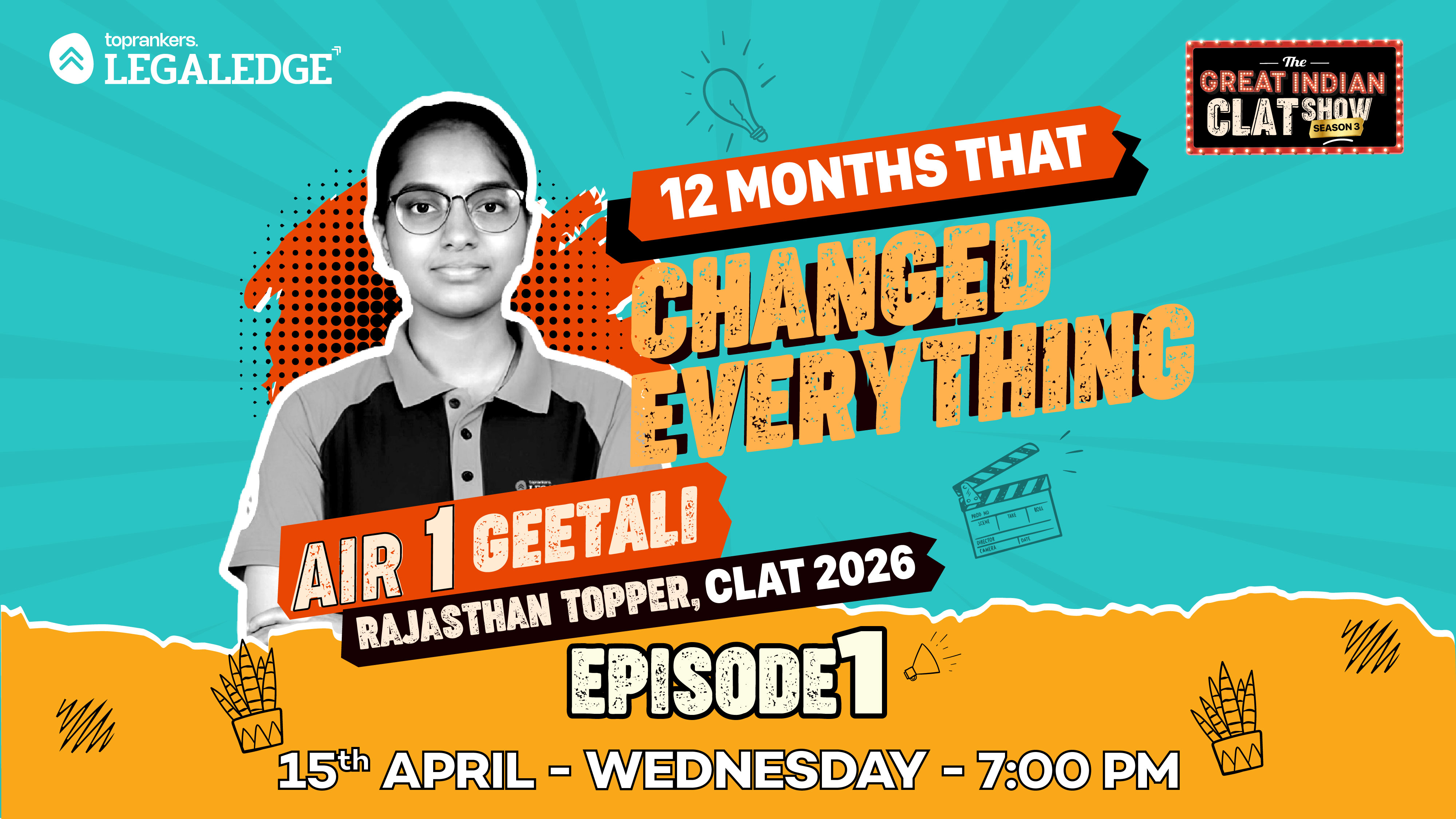
How Geetali Gupta Topped CLAT 2026: AIR 1’s Real Story
April 17, 2026
Overview: The result moment (the way she told it, not the way headlines write it)
She didn’t scream.
That’s the first thing that stayed with me from the episode.
She said she refreshed the page once, then again, because the first time didn’t feel real. The rank was just sitting there. AIR 1. No dramatic music, no cinematic pause. Just a number on a screen that didn’t match how normal the room still felt.
Her parents were in the next room. She didn’t rush out immediately. She waited a few seconds, almost like she needed to confirm that nothing was about to change if she refreshed again.
Then she called them.
And even in that moment, what she described wasn’t excitement first. It was disbelief, followed by this quiet, almost private relief. Like something that had been sitting on her chest for months had finally been taken off.
That’s where her story actually begins. Not with “she worked hard.” Not with “she always wanted to do law.”
It begins with that strange, quiet 60-second gap between seeing AIR 1 and actually feeling it.
Why is this article not another topper piece
If you’ve read enough CLAT topper blogs, you already know the template.
Daily routine. Mock scores. “Stay consistent.” “Believe in yourself.” End.
This isn’t that.
I watched all five episodes, not just hers. Six toppers, same exam, same year, but their stories don’t line up the way you’d expect. And Geetali’s story, especially, doesn’t fit the “perfect student with perfect system” narrative at all.
This piece is what I wish someone had told me when I was preparing: what it actually looked like behind the rank, across all six toppers, but anchored in Geetali’s year because that’s where the clearest signals showed up.
Think of this as a debrief, not a biography.
The six toppers (quickly, because that’s not the point)
You already know the names. But here’s the one-line version that matters:
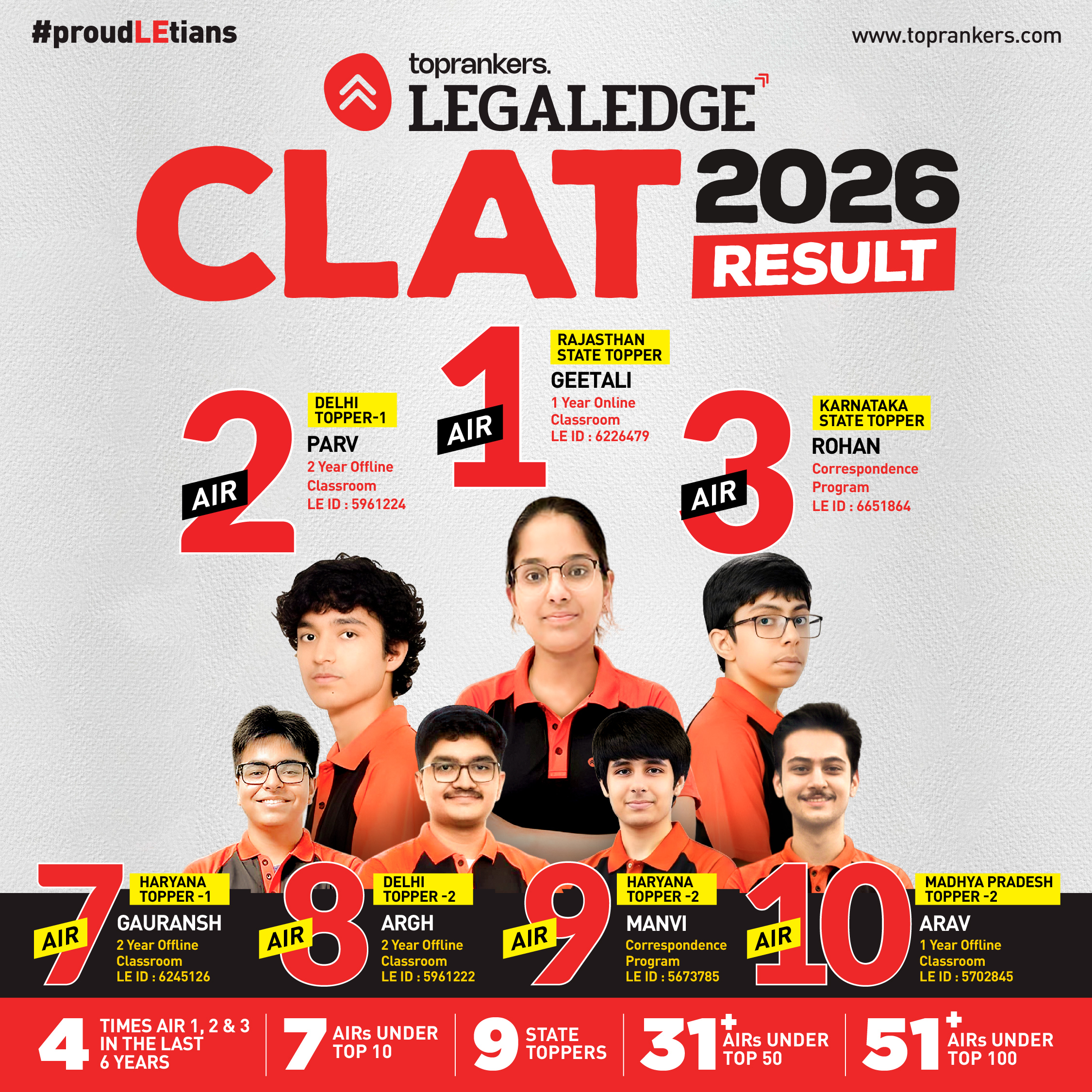
- Geetali Gupta – AIR 1, fully online prep, no physical coaching centre
- One topper who peaked very late, the last 2 months
- One who was consistently high-scoring but never AIR 1 in mocks
- One who struggled with section balance till the end
- One who changed strategy mid-year
- One who barely studied “traditionally” in the last few weeks
Different stories. Same exam.
That’s where things get interesting.
Pattern 1: What all six had in common (and it’s not what you think)
None of them had a “perfect plan.”
That surprised me.
Geetali, for example, didn’t describe her preparation as structured in the way coaching brochures show it. She had a system, yes, but it evolved constantly.
What was common across all six was something more uncomfortable:
They all got very good at sitting with confusion.
Geetali talked about this indirectly when she described her reading phase. She didn’t always understand everything she read, especially legal passages early on. But she didn’t panic. She didn’t restart. She kept going.
Same with mocks.
She didn’t treat a bad mock as a failure. She treated it like unfinished information.
And this showed up in all six:
- They didn’t overreact to low scores
- They didn’t chase “perfect understanding” before moving on
- They didn’t reset their prep every time something went wrong
If you’re expecting a neat takeaway like “revise more” or “give more mocks,” this is harder to accept.
Because this isn’t a strategy. It’s a temperament
Pattern 2: The thing they all said was harder than expected
Time wasn’t the hardest part.
Content wasn’t the hardest part.
It was consistency without visible progress.
Geetali described phases where her scores just… didn’t move. Not down, not up. Just stuck.
And that’s where most aspirants break. Not when things are bad, but when they’re flat.
She didn’t romanticise it. She didn’t say she “trusted the process” in some dramatic way. She just kept doing the same things because she didn’t have evidence that stopping would help.
Another topper said something similar: “You don’t know if what you’re doing is enough until the exam is over.”
That uncertainty? That was the common difficulty.
Pattern 3: What none of them did (but most aspirants do)
They didn’t keep changing sources.
This came up again and again.
Geetali’s preparation was almost boring in how stable it was:
- Limited material
- Repeated revision
- Same type of analysis
No constant switching between new PDFs, new strategies, new “must-follow” lists.
She didn’t say this as advice. She said it as a fact, like she didn’t even consider doing otherwise.
And across all six toppers, there was this clear absence of:
- Resource hoarding
- Strategy hopping
- Last-minute overhauls
Which is ironic, because if you look at most aspirants, that’s exactly what the last 3 months look like.
What was different across each of them (and why that matters)
Here’s the part that actually matters more than similarities.
Because if you try to copy what all six did, you’ll end up with a vague, unusable plan.
What stood out was how differently they executed the same fundamentals.
Geetali: Stability over intensity
Her prep wasn’t about extreme hours or dramatic spikes.
It was about showing up in a steady way, especially because she was preparing entirely online from Rajasthan, without a physical centre.
That changes things more than people realise.
No peer pressure. No classroom rhythm. No immediate comparison.
She had to build her own structure.
And she did, but it was flexible, not rigid.
Another: Section imbalance till the end
One topper admitted they never fully “fixed” one weak section.
They just got strong enough elsewhere.
Which goes against the usual “balance everything” advice.
Another: Mid-year reset
One completely changed approach halfway through.
Dropped what wasn’t working. Started over.
Risky, but it worked for them.
What this tells you
There is no single correct preparation model.
But there are wrong behaviours (panic, over-switching, inconsistency).
Geetali’s story works because it avoids those wrong behaviours, not because it follows some magical formula.
Now, her story, properly
Not the rank. Not the summary.
The year.
Rajasthan, online prep, and why that actually matters
She prepared entirely online.
No centre. No physical batch. No classroom ecosystem.
And she didn’t frame it as a disadvantage, but you can tell it changed her preparation.
- Because when you’re alone, two things happen:
- You don’t get distracted by comparison
You also don’t get pushed by it
So everything becomes self-regulated.
She had to decide:
- When to study
- When to stop
- When something was “enough”
And that’s harder than following a timetable someone else made.
This is probably the most underrated part of her story.
The origin story (how CLAT even became the plan)
It wasn’t some dramatic childhood dream.
She didn’t grow up wanting to be a lawyer.
From how she described it, CLAT became the plan gradually, through exposure, discussions, and then a decision that this was worth committing to.
What mattered wasn’t when she decided.
It was that once she did, she didn’t keep second-guessing the decision.
What her year actually looked like (not the ideal version)
This was my favourite part.
Because it wasn’t aesthetic.
Her “real Tuesday,” as she described it, didn’t look like a productivity reel.
Some days were heavy on reading. Some days were just mocks and analysis. Some days didn’t go as planned at all.
But there was a pattern:
She always came back the next day.
Not with a new strategy. Not with guilt-driven overcompensation.
Just… back.
That’s it.
The hardest day (the one she didn’t skip over)
When asked about her hardest day, she didn’t give a vague answer.
She talked about a phase where things weren’t clicking, scores weren’t improving, and there was this quiet doubt building up.
Not dramatic breakdowns. Just a steady question in the background: Is this working?
What pulled her back wasn’t a motivational speech or some breakthrough technique.
It was continuity.
She didn’t stop.
That sounds simple, but in that phase, not stopping is the hard part.
What she refused to give up
This part was unexpectedly human.
She didn’t cut off everything “normal” from her life.
There was one thing she held onto, something small but consistent that kept her grounded outside of CLAT prep.
She didn’t present it as a strategy. It just mattered to her.
And that’s important, because a lot of aspirants go into full isolation mode, thinking that’s required.
Her prep didn’t look like that.
Her preparation approach (what actually worked, specifically)
If you strip away everything else, here’s what defined her prep:
1. Reading without overthinking
She read consistently, even when comprehension wasn’t perfect.
No paralysis over “not understanding enough.”
2. Mock analysis > mock scores
She didn’t obsess over scores as standalone numbers.
What mattered was what the mock revealed.
3. Stability in resources
No constant switching.
She trusted repetition more than novelty.
4. No dramatic shifts near the exam
No last-minute reinvention.
Just continuation.
None of these is revolutionary.
But together, they’re rare.
Coming back to the result moment
After she told her parents, after the initial disbelief settled, things started moving quickly, calls, messages, everything you’d expect.
But the part that stayed with me wasn’t the celebration.
It was that quiet pause before it.
Because that pause contains the entire year.
All the days that didn’t feel like AIR 1.
All the mocks that didn’t predict it.
All the uncertainty that didn’t go away until the very end.
What she would tell herself at the start
This was probably the most useful part of the episode.
Not generic advice, specific corrections.
Three things she would change or reinforce if she could go back:
- Don’t overreact to fluctuations in performance
- Trust repetition more than new material
- Keep things stable, especially when things feel uncertain
Again, nothing flashy.
But very hard to follow in real time.
If you’ve read this far
You probably weren’t looking for motivation.
You wanted something real.
This is as close as it gets without sitting in that room and listening to her talk.
If you want the full context, the pauses, the tone, the exact way she explains things, you should watch the episode.
Relevant CLAT Blogs:
NLU Dream, Zero Cost Start: Free CLAT Demo
Fill your details
Frequently Asked Questions
Did Geetali Gupta take offline coaching for CLAT 2026?

How many hours did she study daily?
What was her strategy for mock tests?
Did she use multiple books and resources?
What if my payment fails during acceptance?

Samriddhi Pandey
Content Writer


SHARE