
1723534562.png)

Download UCEED 2019 Question Paper PDF & Answer Key (Part A + Part B)
August 19, 2026
Download the official UCEED 2019 question paper PDF and the official answer key using the links below. This page also explains the exam pattern (NAT/MSQ/MCQ + Part B), section-wise difficulty, and how to use the paper as a timed mock for UCEED preparation.
Looking for the UCEED question paper 2019? Use the direct links below to download the official PDF and answer key. After downloading, check the quick pattern summary and section-wise insights to review your performance.
The UCEED 2019 question paper is one of the best papers to understand how UCEED exam tests visualization, logic, observation, and design aptitude at a deeper level. It consisted of:
- Part A (240 marks) with NAT, MSQ, and MCQ questions
- Part B (60 marks) with one sketching question
The paper was considered moderate to difficult, especially due to visualization-heavy questions and logical reasoning intensity. It is still highly useful for improving core UCEED aptitude and mock-test strategy.
UCEED 2019 Question Paper with Answer Key PDF Download
| UCEED 2019 Paper PDF | Download Link |
|---|---|
| Official UCEED 2019 Question Paper PDF | |
| UCEED 2019 Answer Key - Direct Link |
Links to Other UCEED Previous Year Question Papers:
Key Highlights: UCEED 2019 Question Paper
1. UCEED 2019 had 68 questions in Part A
2. Included NAT, MSQ, and MCQ sections with negative marking
3. Part B included one UCEED sketching question (60 marks)
4. Strong focus on:
- Visualization
- Perspective
- Spatial reasoning
- Observation
5. Difficulty level: Moderate to Difficult
6. One of the best papers for:
- Mock practice
- Visualization training
- Time-management improvement
Table of Content
- UCEED 2019 Paper with Solution PDF Download
- UCEED 2019 Exam Pattern
- Section-wise Deep Dive of UCEED 2019 Exam Paper
- Sample Questions from UCEED 2019 Question Paper with Answers
- UCEED 2019 Difficulty Level Analysis
- Good Attempts Strategy for UCEED 2019 Question Paper
- Why UCEED 2019 Still Matters for Preparation
- How to Download the Official 2019 UCEED Paper
- How to Use UCEED 2019 Question Paper for 2027 & 2028 Preparation
- Common Mistakes Students Make While Solving UCEED 2019 Paper
- What Changed After UCEED 2019 Question Paper?
- Other Resources for UCEED Preparation
UCEED 2019 Exam Pattern (Quick Breakdown)
The UCEED 2019 question paper had a total duration of 3 hours and carried 300 marks. The paper was divided into three sections - NAT, MSQ, and MCQ.
|
Section |
Question Type |
No. of Questions |
Marks per Question |
Negative Marking |
Total Marks |
Important Characteristics |
|
Section A |
20 |
+3 |
No negative marking |
60 |
No options were given; students had to enter numerical answers manually |
|
|
Section B |
MSQ (Multiple Select Questions) |
20 |
+3 |
-0.19 for wrong answer |
60 |
One or more correct options possible; no partial marking |
|
Section C |
MCQ (Multiple Choice Questions) |
45 |
+4 |
-1.32 for wrong answer |
180 |
Highest weightage section with strong negative marking |
|
Total |
- |
85 Questions |
- |
- |
300 Marks |
|
Compare this with the latest UCEED 2027 Exam Pattern to understand how the exam has evolved over the last 7 years.
Actual Pattern Changes from UCEED 2019 to UCEED 2026
|
Feature |
UCEED 2019 |
UCEED 2026 |
|
Paper Structure |
3 sections (NAT, MSQ, MCQ) |
Part A + Part B |
|
NAT |
20 × 3 marks = 60 |
14 × 4 marks = 56 |
|
MSQ |
20 × 3 marks = 60 |
15 × 4 marks = 60 (with revised partial marking) |
|
MCQ |
45 × 4 marks = 180 |
28 × 3 marks = 84 |
|
Total Part A Marks |
300 |
200 |
|
Part B |
Not included |
Added separately (100 marks: Sketching + Design Aptitude) |
|
MSQ Partial Marking |
No partial marking |
Partial marking (+1, +2, +3, +4) |
|
MCQ Negative Marking |
-1.32 |
-0.71 |
|
MSQ Negative Marking |
-0.19 |
-1 |
The 2019 paper follows a completely different marking pattern. It has 85 questions of total 300 marks, whereas the latest UCEED exam has 57 Part A questions (200 marks) along with a separate 100 mark Part B.
The introduction of Part B and partial marking in MSQs are the two biggest changes.
Mentor’s Tip:
While solving the UCEED 2019 paper, keep in mind that the UCEED 2019 paper follows an older evaluation pattern. The latest UCEED marking scheme includes different question distribution, revised negative marking, partial marking for MSQs, and a separate 100-mark Part B, so don't use the 2019 pattern to estimate how you would score in upcoming exam cycles.
UCEED 2019 Question Paper - Section-Wise Breakdown
|
Section |
Core Skills Tested |
Representative Question Types |
Key Takeaway |
|
NAT (Numerical Answer Type) |
Visualization & spatial reasoning, 3D geometry, symmetry, logical calculations, perspective reasoning |
Counting slipper matched pairs, 3D surface counting, transparent shape overlap, cube symmetry, logo area calculation, frog animation sequence |
Combined geometry, observation and logic. |
|
No negative marking but time consuming. |
|||
|
MSQ (Multiple Select Questions) |
Folding & unfolding, spatial reasoning, logical deduction, tiling, visual transformations, practical reasoning |
Seamless patterns, 3D folding, cube structures with L-shaped holes, Euler path networks, image manipulation, booklet folding, ergonomics |
Required complete certainty before selecting answers due to negative marking risk. |
|
Strong visualization skills were more valuable than guesswork. |
|||
|
MCQ (Multiple Choice Questions) |
Perspective, reflections, shadows, folding & cutting, animation logic, observation, design sensitivity, spatial ability |
Envelope unfolding, rotating light source, running pose, mirror reflection, top-view identification, paper-strip punching, Ferris wheel motion blur |
Focused on observation and mental simulation under time pressure. |
|
Many questions appeared simple but required careful attempt. |
Before solving this paper, make sure you're familiar with the complete UCEED syllabus so you know which topics are tested most frequently.
Sample Questions from UCEED 2019 Question Paper with Answers
Q) X1 is a 3D form generated from the shape X, using certain 3D operations. It has 11 surfaces in total. If the same operations are carried out on shape Y, how many surfaces would the resulting 3D form have?
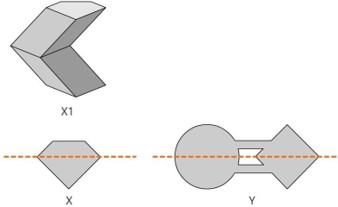
Ans: 22
Q) A tetrahedral puzzle is made of smaller tetrahedrons. Shown below is one side of the puzzle and a small tetrahedron. Assuming that all the faces of the puzzle are same, how many small tetrahedrons are there on the faces of the larger tetrahedron?
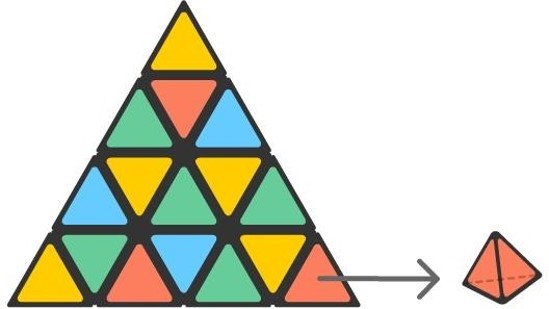
Ans: 44
Q) A diagram of three blocks A, B and C and their direction of movement is shown below. The blocks move continuously in units and change directions after hitting the side walls. From the given position, if block A moves at a speed of 2 units per second, and block B and block C move at a speed of 1 unit per second, what is the least time (in seconds) that is required for all blocks to align exactly one below the other?
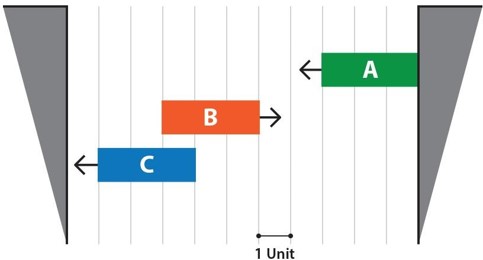
Ans: 7
Q) Which of the following birds is/are native to (found in) India?
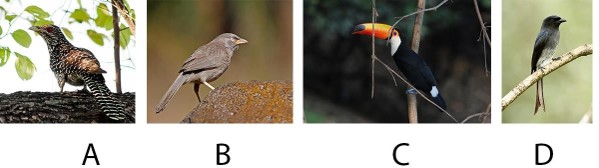
Ans: A, B, D
Q) In the figure below, a person is putting small packets of potatoes in one of the bins A, B or C. The packets are placed on a table, and the bins A, B and C are placed on tables which are lower in height as compared to table on which the packets rest. Which of the following statements is/are TRUE?
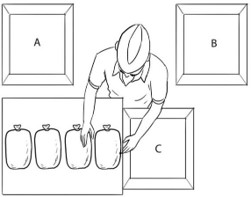
- Lifting the bag from the table and placing it in bin B will be less effortful compared to lifting and placing it in bin C
- Lifting the bag from the table and placing it in bin A will be more effortful compared to sliding it in bin C
- Lifting the bag from the table and placing it in bin B will be less effortful than sliding it to bin C
- Sliding the bag from the table to bin C will be less effortful than lifting it and placing it in bin C
Ans: B, D
Q) Decode the following:
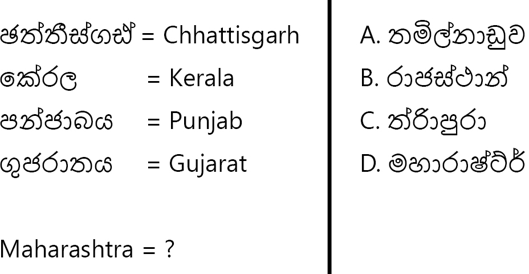
Ans: D
Q) The word given below uses a particular font. Which option belongs to the same font?
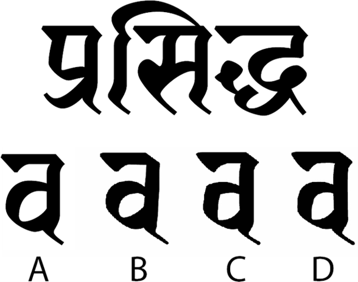
Ans: A
UCEED 2019 Difficulty Level Analysis
As per UCEED exam analysis of 2019, the paper was considered moderate to difficult, mainly because of its strong focus on:
- Visualization
- Multi-step reasoning
- Spatial ability
- Decision-making under time pressure
Unlike straightforward aptitude papers, UCEED 2019 tested how well students could observe, mentally simulate, and logically analyze complex situations.
Section-Wise Difficulty Breakdown
|
Section |
Difficulty Level |
Why It Felt Difficult |
|
NAT (Numerical Answer Type) |
Moderate to Difficult |
Questions involved multi-step geometry, counting, symmetry, and spatial reasoning that required both accuracy and time |
|
MSQ (Multiple Select Questions) |
Difficult |
High-risk section with negative marking and no partial scoring; many questions required complete visual certainty |
|
MCQ (Multiple Choice Questions) |
Moderate |
Conceptual but manageable; included perspective, reflection, shadow, folding, and observation-based traps |
|
Moderate |
Required observation, composition, perspective, and storytelling - not just neat drawing |
|
|
Overall Paper |
Moderate to Difficult |
Time pressure + visualization-heavy questions increased difficulty significantly |
Most Difficult Areas in the UCEED 2019 Paper
|
Area |
Why Students Struggled |
|
3D Visualization |
Cube structures, folds, intersections, perspective reasoning |
|
MSQ Decision-Making |
Difficulty identifying all correct options confidently |
|
Observation-Based Questions |
Small visual details changed the correct answer |
|
Time Management |
Students spent too long on NAT and rushed later sections |
After attempting this paper, follow these proven UCEED preparation tips to maximize your score.
Good Attempts Strategy for UCEED 2019 Question Paper (When Using It as a Full Practice Mock)
When solving the UCEED 2019 question paper as a mock test, your goal should not be “maximum attempts.”
The paper rewards:
- smart selection
- accuracy
- calm decision-making
especially in MSQ and visualization-heavy questions.
Ideal Attempts & Accuracy Strategy
|
Section |
Ideal Attempts |
Target Accuracy |
Focus While Attempting |
|
NAT |
13-16 |
80-90% |
Attempt maximum possible since there is no negative marking |
|
MSQ |
8-11 |
90%+ |
Attempt only when fully confident |
|
MCQ |
22-26 |
80-90% |
Balance speed with careful observation |
|
Part B |
Full attempt |
Strong composition & detailing |
Prioritize perspective, object placement, and storytelling |
Wondering what your score in this paper could translate to? See the latest UCEED marks vs rank analysis to estimate your expected rank and possible college.
Section-Wise Strategy While Solving
|
Section |
Smart Strategy |
|
NAT |
Do not get stuck too long on one puzzle; mark and return later if needed |
|
MSQ |
Avoid guesswork completely; this section can quickly reduce score |
|
MCQ |
Carefully verify visual details before selecting answers |
|
Part B |
Spend initial minutes planning composition before sketching |
Not sure if your score after attempting a UCEED mock is good enough? Here's what is considered a good score in UCEED based on recent admission trends.
Why UCEED 2019 Still Matters for Preparation
|
Why It Still Matters |
How It Helps in UCEED Preparation |
|
Builds Strong Visualization Skills |
Improves folding, rotation, perspective, 3D object understanding, and spatial reasoning abilities |
|
Strengthens Multi-Step Thinking |
Trains you to solve layered logic and analytical questions instead of direct one-step problems |
|
Improves Question Selection Strategy |
Helps you learn what to attempt, skip, or solve later under time pressure |
|
Sharpens Observation Skills |
Enhances attention to detail through reflection, shadow, composition, and visual-analysis questions |
|
Develops Core Design Aptitude |
Improves practical reasoning, ergonomics understanding, and design sensitivity |
|
Prepares You Beyond Memorization |
Focuses on thinking ability rather than formulas or rote learning |
|
Useful for Mock Practice |
Simulates real UCEED-level pressure, timing, and decision-making |
|
Still Relevant Despite Pattern Changes |
Core skills tested in UCEED - visualization, logic, observation, design thinking remain unchanged |
|
Helps Identify Weak Areas |
Reveals whether you struggle more with visualization, speed, logic, or accuracy |
|
Improves Accuracy Under Pressure |
Teaches careful solving in sections with negative marking and tricky options |
Compare your expected marks with previous years' UCEED cut-off trends to understand your chances of admission.


How to Download the Official UCEED 2019 Question Paper (Step-by-Step)
You can download the UCEED 2019 question paper PDF directly from the link given above in this article, or follow the steps below to download it from the official IIT Bombay UCEED website.
|
Step |
What to Do |
What You’ll See |
|
1 |
Visit the official UCEED website |
IIT Bombay UCEED homepage |
|
2 |
Open the “Downloads” or Previous Year Question Papers section |
List of year-wise UCEED papers |
|
3 |
Scroll to the previous papers section |
UCEED papers from different years |
|
4 |
Click on UCEED 2019 Question Paper |
Official PDF opens in browser |
|
5 |
Download or save the PDF |
Question paper saved on your device |
|
6 |
Download the answer key as well (recommended) |
Helps in mock analysis and self-evaluation |
How to Use UCEED 2019 Question Paper for 2027 & 2028 Preparation
The best way to use the UCEED 2019 question paper is not just to “solve and check answers,” but to use it as a full aptitude training tool.
Step-by-Step Strategy to Use UCEED 2019 Effectively
|
Step |
What to Do |
Why It Helps |
|
1. Attempt it as a Full UCEED Mock |
Solve the paper in one sitting with strict timing |
Builds exam stamina and focus |
|
2. Follow Real Exam Conditions |
No pauses, no checking answers midway |
Gives realistic performance assessment |
|
3. Track Attempts & Accuracy |
Note attempted, correct, and wrong questions section-wise |
Helps identify whether your issue is speed or accuracy |
|
4. Analyze Every Mistake |
Understand why you got a question wrong |
This is where actual improvement happens |
|
5. Categorize Weak Areas |
Identify whether you struggle with visualization, logic, or observation |
Makes future preparation targeted |
|
6. Reattempt After Improvement |
Solve the paper again after 10-15 days |
Measures progress and retention |
|
7. Practice Weak Topics Separately |
Do focused practice on folds, perspective, rotations, etc. |
Strengthens problem areas efficiently |
|
8. Use It for Question Selection Practice |
Learn which questions to skip or attempt later |
Improves exam strategy and time management |
Since incorrect answers can reduce your score, learn how to avoid negative marking in UCEED with smart attempt strategies.
Common Mistakes Students Make While Solving UCEED 2019 Question Paper
|
Mistake |
Better Approach |
|
Solving casually without timing |
Attempt like a real exam |
|
Focusing only on score |
Focus on analysis and learning |
|
Ignoring weak areas after mock |
Create targeted improvement plan |
|
Comparing pattern directly with current exam |
Focus on core skills instead |
Must Check: FREE Tutorial on Sketching Human Figures for UCEED
What Changed After UCEED 2019 Question Paper?
The UCEED 2019 question paper followed the older exam structure, but over the next few years, UCEED gradually evolved to test a wider range of design-thinking and problem-solving abilities.
Here are the most important changes students should know:
|
Change |
Earlier (UCEED 2019) |
What Changed Later |
What It Means for Aspirants |
|
Part B Structure |
Only 1 sketching question |
Later expanded to include drawing + design aptitude/problem-solving questions |
Drawing alone is no longer enough |
|
Focus of Evaluation |
Observation & sketching-heavy |
Greater emphasis on design thinking and user-centric solutions |
Idea quality became more important |
|
Part B Weightage |
Lower overall weightage |
Part B weightage increased significantly in later patterns |
Subjective section became more rank-deciding |
|
Question Style |
More aptitude & visualization focused |
More real-world design application and practical thinking |
Students need stronger conceptual clarity |
|
MSQ Marking System |
Strict all-or-nothing scoring |
Partial marking introduced in later years |
Smarter attempt strategy became possible |
|
Part A Structure |
Larger number of questions |
Number of questions reduced later |
Greater focus on quality of thinking over quantity |
|
Design Aptitude Focus |
Limited explicit design problems |
More direct design-situation and problem-solving questions introduced |
Creativity + functionality became more important |
Other UCEED Study Resources You Can Use
|
Resource |
Download Link |
|
UCEED 2026 Question Paper (for latest trends) |
|
|
Previous year papers (2018-2022) |
|
|
UCEED Part B Sketching Solved Questions |
|
|
UCEED Visualization Practice Questions |
|
|
UCEED FREE Study Material Kit |
After evaluating your performance, compare the top UCEED accepting colleges to decide which institutes match your expected rank and career goals.
Final Takeaway
The UCEED 2019 question paper is not just an old paper, it is a strong training resource for building the exact thinking abilities UCEED still demands today.
If used correctly, it can improve:
- Visualization
- Accuracy
- Time management
- Problem-solving strategy
UCEED 2019 helps you train the most important UCEED skill of all: thinking clearly under pressure.
Preparing for UCEED 2027? We can help you with exact strategic roadmap, study material and crucial feedback required to ace this exam.
Join India's most trusted UCEED Online Coaching by Creative Edge and get expert guidance on all UCEED subjects.



Frequently Asked Questions
Where can I download the official UCEED 2019 question paper PDF?

Was the UCEED 2019 question paper difficult?
Is the UCEED 2019 sample question paper still useful for UCEED 2027 and 2028 preparation?
What was the exam pattern of the UCEED question paper 2019?
How should I practice the UCEED 2019sample question paper effectively?
Vineeta Agrawal
Communications Executive
SHARE