
1723534562.png)

UCEED 2027 Visualisation and Spatial Ability Syllabus: Topics, Weightage, Practice Questions
July 9, 2026
Overview: If you’re searching for the UCEED Visualisation and Spatial Ability syllabus, this guide lists the exact Part A topic areas, what each topic means, and the most common question patterns (with solved examples) so you can plan practice efficiently.
Quick Answer: The UCEED visualization and spatial ability syllabus focuses on testing a candidate’s ability to mentally understand, rotate, transform, and analyze 2D and 3D objects.
Common UCEED visualization questions include shape rotation, paper folding/unfolding, surface counting, cube and dice problems, top/side views, pattern recognition, and spatial arrangement.
This is considered one of the most scoring & highest-weightage topics in UCEED Part A.
Key Highlights - UCEED Visualization & Spatial Ability Syllabus
1. UCEED visualization and spatial reasoning questions test mental rotation, spatial understanding, perspective, and visual logic rather than memorization.
2. Common UCEED visualization questions include:
- Paper folding & unfolding
- 2D-3D transformations
- Cube & dice problems
- Mirror and reflection questions
- Pattern recognition
- Top/front/side view analysis
- Spatial relationships
- Pictorial & diagrammatic questions
3. Visualization and spatial reasoning consistently carry high weightage in UCEED Part A.
4. These questions are considered highly scoring because they rely more on practice and pattern recognition than theory.
5. Regular practice with UCEED previous year questions and mock tests significantly improves speed and accuracy.
6. Building visualization skills also improves performance in drawing, composition, and design aptitude sections.
Note: This video is about UCEED 2026, but it's relevant for 2027 aspirants as well.
Table of Content
- What is the UCEED Visualization and Spatial Reasoning 2027?
- Topic-wise UCEED Visualization Syllabus 2027 with Real Sample Questions
- Weightage trend of UCEED Visualization Questions
- How to Improve Visualization Skills for UCEED 2027?
- Full-proof Hacks to Solve UCEED Visualization Questions
- Common Traps in UCEED Visualization Questions
- Best Resources to Study Visualization for UCEED 2027
What is the UCEED Visualization and Spatial Ability Syllabus 2027?
The UCEED visualization and spatial ability syllabus is part of Part A of the exam, the computer-based aptitude test. It forms a significant portion of UCEED 2027 design aptitude questions, alongside analytical reasoning, environmental awareness, and design thinking. Your performance in this section will be a sure shot deciding factor for clearing UCEED cut-off.
Important UCEED Visualization & Spatial Ability Topics:
| S.No. |
Topic |
What It Includes |
| 1. |
2D/3D Transformation & Object Manipulation |
Conversion of 2D shapes into 3D forms, object rotation, unfolding, transformation, and manipulation of shapes |
| 2. |
Mirror & Water Image Questions |
Identifying reflections of objects, alphabets, symbols, and figures in mirrors or water surfaces |
| 3. |
Paper Folding & Cutting |
Predicting fold patterns, punch holes, cuts, and resulting shapes after unfolding |
| 4. |
Pattern & Shape Recognition |
Identifying repeating patterns, missing figures, odd-one-out shapes, and visual sequences |
| 5. |
Spatial Arrangement & Rotation |
Understanding positioning, movement, and rotation of objects in space |
| 6. |
Hidden Figures & Visual Memory |
Finding hidden shapes within complex figures and recalling visual details from memory |
| 7. |
Orientation & Perspective Questions |
Top/front/side views, perspective drawing, direction-based visual analysis |
"Think of it as the mind’s sketchpad, how clearly you can imagine forms, spatial arrangements, and structures."
Why is Visualization So Important in UCEED Exam?
Nearly 70-80% of the UCEED aptitude questions, directly or indirectly, are based on visualization, observation, and spatial reasoning. Whether it’s identifying object rotations, analysing 3D forms, understanding patterns, or predicting how a folded paper will look when cut open, every question tests your ability to imagine clearly and think visually. If you can do that, you already think like a designer. And that’s exactly what the UCEED subjects are designed to measure.
Attempt UCEED Visualization Mock Test for FREE:
UCEED Visualization and Spatial Reasoning Topics & Sample Questions for 2027 Practice
Here’s the official list of important visualization topics from the UCEED syllabus with examples based on past UCEED visualization questions and most repeated UCEED reasoning questions.
1. 2D/3D Transformation and Object Manipulation
What it tests: Your ability to visualize a 3D object from different angles or after rotations.
Common question types:
- Identify top/side/front views of a 3D object
- Match a 3D solid to its 2D projection
- Count visible faces after rotation
Example Q: Which of the options is/are rotation(s) of the given figure?
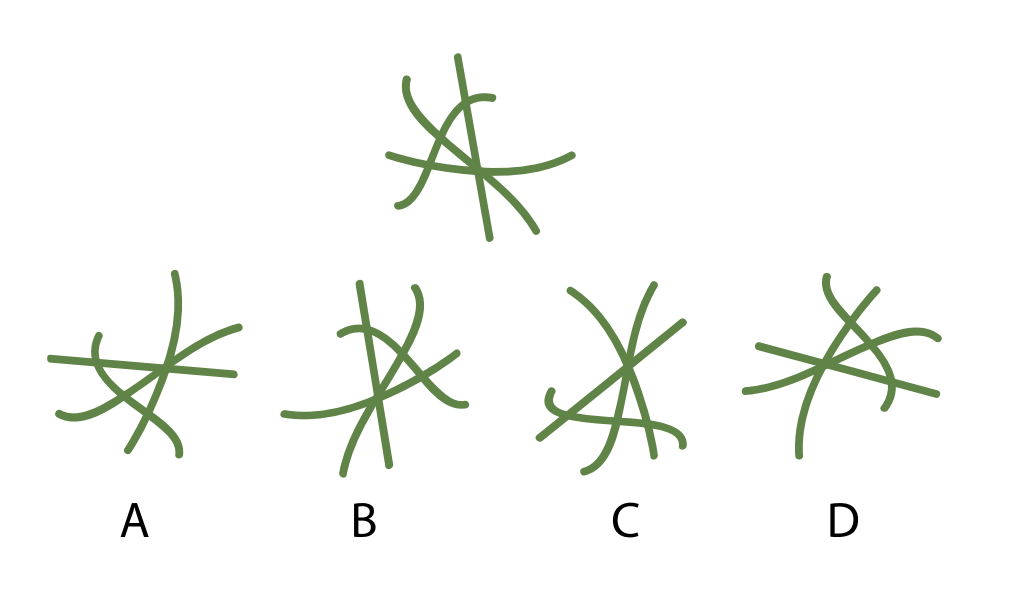
Answer: A & D
2. Mirror and Water Image Questions
What it tests: How accurately you can visualize reflections and inversions.
Example Q:
Some of the shapes in the image K are either flipped or rotated in the image J. What is the number of flipped shapes in image J?
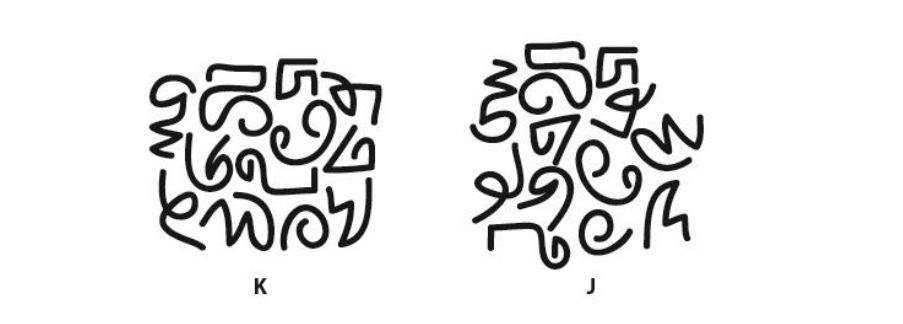
Answer: 2
Pro Tip:
Use a small hand mirror while practicing. Observing actual reflections improves mental recall.
Must Read: Expert Tips on How to Avoid Negative Marks in UCEED
3. Paper Folding and Cutting
What it tests: Your imagination for symmetrical folding and predicting outcomes after cuts or holes.
Example Q:
An irregular piece of paper is folded and cut as shown below. Which option shows the correct cuts when the paper is unfolded?
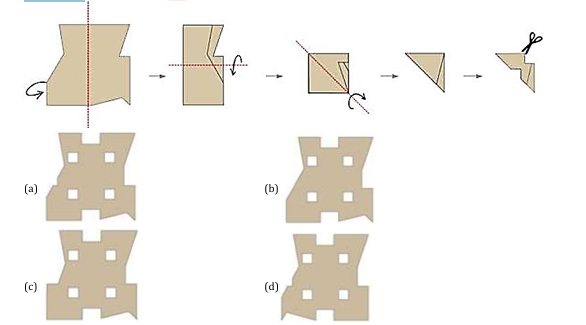
Answer: A
Hack:
- Focus on symmetry lines - every fold multiplies the number of cuts.
- Draw dotted fold lines to keep mental visualisation accurate.
Practical Tip:
Physically fold papers during early prep. Actual handling strengthens your 2D → 3D visualization bridge.
4. Pattern and Shape Recognition
What it tests: Your ability to detect missing or hidden figures in a sequence.
Example:
Which option will replace the question mark?

Answer: C
5. Spatial Arrangement and Rotation
What it tests: Understanding the positioning and rotation of objects in space.
Example Q:
If the image on the left is flipped horizontally (about Y-axis), and then rotated 180 degrees, what will be the resulting image?
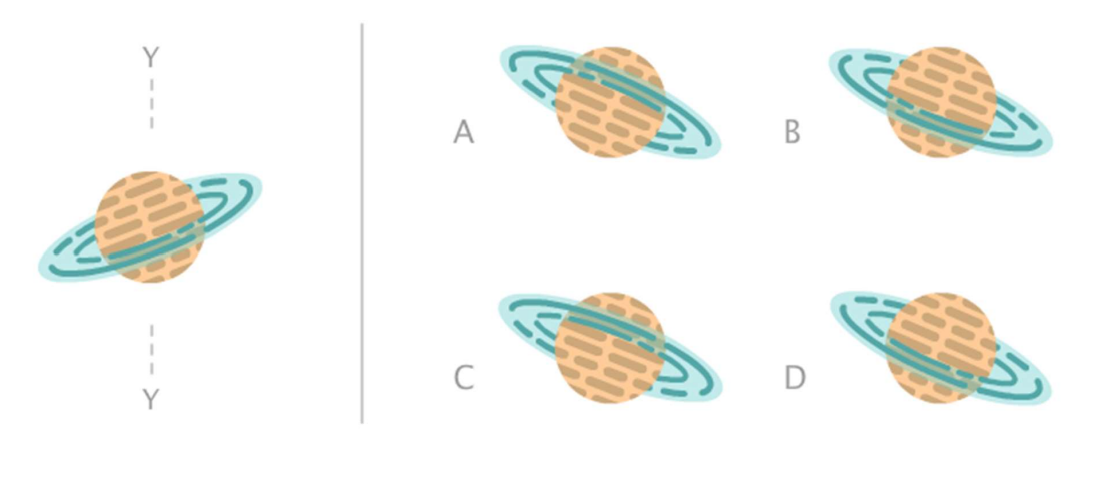
Answer: C
Check: Common Mistakes to Avoid While Preparing for UCEED 2027
6. Hidden Figures and Visual Memory
What it tests: How sharply you can recall a visual image and detect hidden shapes.
Example Q:
What is the highest number of occurrences of a shape in the figure shown?
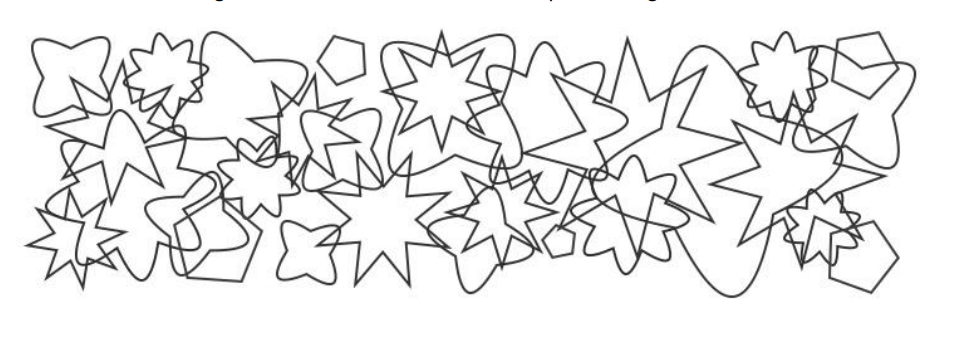
Answer: 9
7. Mental Folding & Unfolding (3D Nets)
What it tests: Your ability to mentally fold or unfold 3D structures like cubes, prisms, or pyramids.
Example Q:
Which options can be folded to form the cube shown?
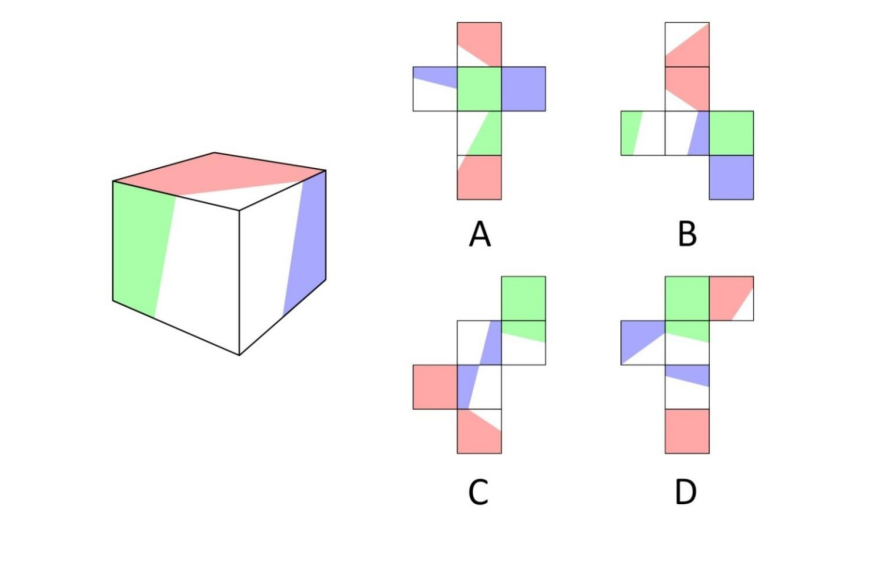
Answer: Option B and option C.
_(1)1754636837.webp)
1756536783.webp)
8. Orientation & Perspective Questions
What it tests: Your sense of direction, viewing angle, and perspective-based visual understanding.
Example Q:
P and Q show two different views of the same solid object. Which of the options represent(s) the top view of the solid object?
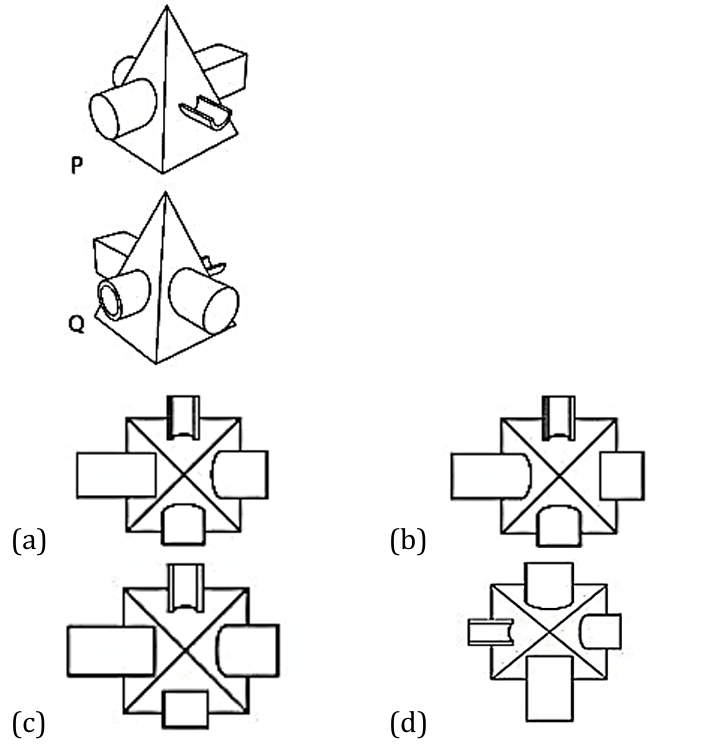
Ans: A & D
Also Check: Physics Preparation Tips for UCEED 2027
UCEED Visualization and Spatial Ability Syllabus 2027 : Topic-Wise Weightage Trend (Past 5 Years)
|
Year |
UCEED Visualization Question Type |
Weightage |
|
2025 |
1. Flipped figures in images 2. Flipping/rotating and rearranging shapes 3. Rotated image clockwise/anticlockwise 4. Missing image in rotation series 5. Count surfaces when shapes are flipped to form 3D solids |
Around 7 out of 57 questions in Part A |
|
2024 |
1. Different views (flipped/rotated) of the same object 2. Wrapping & unwrapping of a 3D figure 3. Series of rotations and flipping based on instructions 4. 3D to 2D conversion |
Around 7 out of 57 questions in Part A |
|
2023 |
1. Flipping a 3D figure n number of times as per instructions 2. Assembling 3D figures 3. Chain of 3D figures 4. Cutting and unfolding of 3D figures 5. Folding and unfolding of cube 6. Revolving 2D figure to form 3D solid 7. Folding & unfolding of solids |
Around 8 out of 68 questions in Part A |
|
2022 |
1. Assembling 3D forms 2. Passing 3D forms from 2D cut outs 3. Rotating 3D solids 4. 3d cube folding unfolding |
Around 7 out of 68 questions in Part A |
|
2021 |
1. Rotating figures 2. Spinning figures 3. 3D cube folding unfolding 4. Cutting the 3D figures |
Around 7 out of 68 questions in Part A |
How to Improve Visualization & Spatial Reasoning Skills for UCEED 2027?
The UCEED visualization and spatial ability syllabus is not about memorizing formulas, it’s about training your mind’s eye. Unlike math or GK, this section measures how quickly and accurately you can imagine, rotate, and transform 2D and 3D forms.
Here’s how to actually achieve good score in UCEED 2027 visualization questions, with practical, proven strategies that toppers swear by.
1. Practice “Mental Sketching” Every Day
Why it works:
Visualization gets stronger the same way muscles do with repetition. Every day, pick one random object (a cup, shoe, bottle, pen drive) and imagine it:
- Rotated 90°, 180°, and 360°
- Viewed from top, bottom, and side
- Split into parts (e.g., cap vs body, handle vs lid)
Example:
If you take a mug, visualize how the handle looks from above. Can you mentally sketch the shape without seeing it? That’s the same skill tested in UCEED visualization questions.
Pro Tip:
Before sleeping, close your eyes and picture an object in 3D space. Try rotating it mentally. This builds spatial retention, the foundation of the visualization section.
2. Build Real-World Analogies for Visualization Concepts
Why it works:
Your brain understands spatial logic faster when connected to real experiences.
Example:
- Cube unfolding → Think of unwrapping a gift box.
- Mirror image → Imagine your reflection while brushing your teeth.
- Paper folding → Picture folding a napkin before dinner.
When you relate exam concepts to real-life scenarios, you train your brain to recall them faster in pressure situations.
Hack:
Label your surroundings. Mentally mark left, right, top, front of objects around you. This naturally enhances spatial orientation, a critical part of the UCEED 2027 visualization and observation section.
3. Don’t Just Visualize - Physically Do It
Why it works:
Hands-on learning bridges the gap between imagination and accuracy. When you physically fold, rotate, or cut paper, your brain builds stronger neural links for spatial understanding.
Example:
For paper folding and cutting questions:
Use A4 sheets → fold them twice → cut a triangle → unfold → observe symmetry.
Now imagine doing the same mentally next time.
For 3D nets, draw cube patterns on graph paper → cut → fold → and see how faces connect.
Next time you’ll instantly visualize which net forms a cube and which doesn’t.
Pro Tip:
Spend just 10 minutes daily on hands-on folding or LEGO building.
This is more effective than an hour of passive test-solving.
Read more: UCEED Marks vs Rank
4. Focus on Conceptual Clarity Before Mock Tests
Many students rush into mock tests, thinking quantity equals confidence. But in the UCEED visualization and spatial ability questions, clarity beats speed every time.
Example:
If you’re struggling with mirror vs water images, first understand reflection axes using diagrams.
Once your concept is rock-solid, then solve 50–100 questions for reinforcement.
Hack:
Use 'Spaced Practice' - study one visualization concept per day, revisit it after 3 days, then again after a week. This repetition cycle builds long-term retention and pattern recognition, exactly what’s needed for most repeated UCEED reasoning questions.
Also Check: How to Prepare for UCEED 2027 in 2 Months
5. Train with Real Reflections & Shadows
Why it works:
UCEED visualization and spatial ability syllabus often include questions that mix light, shadow, and perspective logic, which comes from real-world observation, not rote learning.
Example:
When sunlight hits your chair or bookshelf, note how the shadow shape changes with angle. This real observation helps in solving perspective, orientation, and 3D projection problems faster.
Pro Tip:
Use your phone flashlight to cast shadows of small objects at different angles, then sketch what you see. This sharpens your visual interpretation skills, a key component of the UCEED visualization syllabus 2027.
6. Track Repeated UCEED Visualization Question Patterns
Over 7 years of analysis shows that certain visualization patterns repeat almost every cycle:
- Cube unfolding/folding
- Paper cutting
- Symmetrical design identification
- 3D projection matching
Example:
A 2023 UCEED question asked to identify a 3D object from its top and side views, almost identical questions appear almost every year.
Hack:
Maintain a pattern logbook. Whenever you spot a repeated visualization question, jot it down. After 3-4 months, revise only this list, it becomes your high-weightage UCEED visualization question bank.
7. Think Like a Designer, Not a Solver
UCEED 2027 isn’t testing who solves fastest, it’s testing who thinks visually and contextually.
When solving any visualization question:
- Don’t just find the correct answer → ask why the wrong options fail.
- For example, in a cube rotation question, visualize why one view cannot exist (edges mismatch or opposite faces overlap).
This reflective thinking builds visual logic, a key differentiator between average and high-scoring aspirants.
8. Solve UCEED Previous Year Question Papers
One of the fastest and most reliable ways to improve your visualization accuracy is by solving UCEED previous year question papers. It's a must include in your UCEED study plan. Why? Because UCEED has very specific visualization patterns that repeat year after year, in structure, difficulty, and logic.
When you solve real UCEED visualization questions from past papers, you learn:
- The exact type of visualization asked every year
- Cube rotation, paper folding, 3D projection, symmetry, pattern logic, and perspective-based reasoning appear consistently across multiple years.
- How IIT Bombay frames visual traps
- You’ll notice small but consistent tricks, tiny notches, reversed patterns, misleading rotations, non-obvious symmetry, that only real UCEED papers reveal.
- Difficulty progression & time pressure
UCEED Part A’s visualization difficulty isn’t linear. Some questions look easy but require careful detail-checking; others are complex but can be solved using simple elimination. Previous year UCEED question papers teach you this balance.
How to Use PYPs Effectively:
Step 1: Solve one full paper without watching solutions.
Focus on visualization speed & clarity.
Step 2: Re-solve all incorrect questions separately.
These become your personal weak-pattern list.
Step 3: Create a 'Visualization Error Log.'
Record which category you miss the most:
- Mirror image?
- Cube rotation?
- Paper folding symmetry?
- Perspective view?
- Hidden figures?
After 3-4 papers, you’ll clearly see your weak areas from the UCEED visualization and spatial ability syllabus.
Expert Tip: During PYP practice, set a 40-45 second timer per visualization question.
Check: Time Management During UCEED Exam
Hacks for UCEED Visualization and Spatial Ability Syllabus Questions 2027 (Works for Every Question Type)
Here are some hacks that apply to almost every question in the UCEED visualization and spatial ability syllabus, regardless of whether it’s cubes, paper folding, mirror images, or pattern recognition.
1. Fix a Reference Point Before You Visualize
Before rotating or folding any object mentally, always pick one identifiable reference, like a colored face, corner mark, or unique shape. Keeping one fixed “anchor” helps you track orientation accurately when everything else changes.
Example:
In a cube rotation, imagine one face has a dot or logo, this helps you remember which face moves where.
Why it works: It reduces spatial confusion and stops you from reversing direction mid-rotation.
2. Visualize in Slow Motion (Don’t Jump to the End)
The biggest mistake aspirants make in UCEED visualization questions is rushing. Always rotate, flip, or unfold step by step, like watching a slow-motion animation in your head.
How to do it:
If a paper is folded twice, mentally perform the first fold, freeze it, then visualize the second. You’ll understand symmetry and duplication far more accurately. Think cinematic: The slower the visualization, the clearer the transformation.
3. Simplify Complex Shapes Into Basic Geometry
When faced with dense or layered figures, mentally break them down into simple shapes, squares, triangles, rectangles, or circles.
Example:
A confusing 3D structure may just be a combination of cylinders and cubes. If you can “chunk” it into smaller parts, visualization becomes effortless. This hack works for: pattern completion, object assembly, hidden figure, and 3D projection questions.
4. Use the “Axis Rule” for Reflections
Mirror and water image questions in UCEED aptitude questions can be solved instantly using this simple rule:
|
Type |
Flip Direction |
Trick to Remember |
|
Mirror Image |
Left ↔ Right |
Imagine flipping along a vertical line |
|
Water Image |
Top ↔ Bottom |
Imagine flipping along a horizontal line |
Hack: Practice this with real letters (“E”, “P”, “3”) in front of a mirror. Once your eyes learn it, your brain won’t get confused in the exam.
Also Check: Most Important UCEED GK Questions with Answers
5. Zoom In Mentally - Look for Small, Subtle Differences
Visualization accuracy isn’t just about imagining shapes, it’s also about noticing micro differences others ignore.
Before finalizing an answer, scan for:
- A missing notch
- Slight angle change
- A reversed arrow or flipped corner
Hack: Always compare corner-to-corner, not overall shape-to-shape.
This prevents the most common visualization error, picking the 'almost correct' option.
Also Check: Sketching Human Figures for UCEED
6. Visualize Using Both Hands
This is a pro trick top UCEED rankers use unconsciously.
When you rotate or fold mentally, subtly move your hands in the air as if doing the action.
Why?
It activates the motor cortex (the part of your brain that processes movement), making your visualization sharper and faster.
It’s not silly, it’s science. Physical gestures improve 3D comprehension by up to 40%.
7. Train for Short Visual Bursts (10-15 Seconds per Problem)
In the exam, you’ll have limited time, about 40-50 seconds per question.
So during practice, build short, high-intensity visualization bursts instead of slow, elaborate sessions.
How to do it:
Use a timer, give yourself 10 seconds to visualize the transformation, and then pick the answer.
This trains your brain for real-time visualization speed.
8. Expert Hack: ‘Reverse Visualization’ for Double Accuracy
When you’re unsure of a rotation or pattern, use reverse visualization. Mentally rewind the movement to verify if your answer still makes sense.
Take any object → visualize it backwards (inside-out, upside-down, mirrored).
This rare skill helps instantly with rotation-type UCEED visualization questions.
Let’s Understand It With a Simple Example:
Suppose you see a cube net like this (a cross-shaped layout of six squares).
Normally, you imagine folding it up into a cube.
That’s forward visualization.
Now, reverse visualization means:
You imagine starting with the finished cube, then mentally unfolding it step-by-step to picture what its 2D net would look like.
When you do this, your brain automatically understands:
- Which faces touch each other
- Which face will come next when rotated
- What pattern the unfolded version must form
Real UCEED Visualization Question Example : Paper Folding
A paper is folded twice and a triangle is cut. What will it look like when unfolded?
Reverse visualize:
- Start with the unfolded paper.
- Mentally fold it once, then twice.
- See where the cut would have appeared originally.
- When you unfold it back, your mind already knows the symmetry pattern.
- You’ll predict the answer without tracing or drawing.
9. Use Elimination Before Imagination
Sometimes you don’t need to visualize every option, you just need to eliminate the wrong ones logically.
Example:
If two answer choices are mirror images of each other, only one can be correct. Visualize just the difference.
Hack: Use logic + visualization instead of brute-forcing every rotation. It saves time and reduces confusion.
Read more: UCEED Exam Analysis Year Wise

1757510491.webp)
Common Traps in UCEED Visualization and Spatial Ability Syllabus 2027 (and How to Avoid Them)
Even students who practice visualization regularly often fall for subtle mental traps during the UCEED visualization and observation section. These traps don’t test your intelligence, they test how calmly and accurately you can visualize under time pressure.
Remember, wrong answers for UCEED visualization questions can result in negative marking (as much as -1 per wrong answer) as per the UCEED 2027 marking scheme and plan your practice strategy accordingly.
Here are the most common visualization traps in UCEED, with examples and fixes you can apply immediately.
1. Rotating in the Wrong Direction
The Trap:
While visualizing object rotation, many aspirants unconsciously rotate objects in the opposite direction of what the question demands.
Example:
‘The cube is rotated 90° clockwise as viewed from the top.’
Students often visualize it anticlockwise, especially when seeing the cube from a different side.
Fix:
Always use a reference marker, like imagining an arrow or logo on one face.
Then, mentally move it clockwise or anticlockwise according to the instruction.
Practice this with daily cube rotation exercises (physical or virtual).
2. Confusing Mirror Image and Water Image
The Trap:
Mirror image = Left ↔ Right flip
Water image = Top ↔ Bottom flip
Students often mix these up under time pressure.
Example:
If the figure has letters or numbers like “E”, “2”, “P”, or “3”, your brain can easily misinterpret the direction of reflection.
Fix:
Use the axis rule:
- Mirror = flip along vertical axis
- Water = flip along horizontal axis
Quickly draw a line through the figure in your mind before visualizing.
Know more: UCEED Seat Allotment Process
3. Ignoring Symmetry Lines in Paper Folding Questions
The Trap:
In paper folding and cutting problems, aspirants forget that each fold duplicates the cut or hole on the opposite side.
Example:
A paper is folded twice and one triangle is cut. Many students think it’ll produce one hole after unfolding, but it produces four, symmetrically placed.
Fix:
Before solving, count the number of folds → multiply by 2 for each fold → visualize duplication. This ensures accurate prediction of symmetrical outcomes.
4. Misjudging Hidden Faces in 3D Views
The Trap:
When analyzing 3D projections or solids, students forget about the hidden faces or confuse visibility after rotation.
Example:
In cube questions, you may be asked to identify which faces are visible from a particular viewpoint. One common mistake? Counting an opposite face as visible after rotation.
Fix:
Mentally mark faces with colors (Red, Blue, Green…) and track which faces rotate toward or away from you. This technique improves spatial tracking instantly.
5. Overcomplicating Simple Visualization Questions
The Trap:
Aspirants sometimes overthink, adding complexity that doesn’t exist.
Example:
‘Identify the front view of a given object.’ Instead of simply matching visible outlines, many imagine hidden parts or perspective depth that the question doesn’t ask for.
Fix:
- Keep it literal. Visualize exactly what’s asked, not what could be behind or beneath.
- Read the question twice; underline words like top view, front, right side before visualizing.
6. Not Adjusting Perspective (Viewpoint Errors)
The Trap:
Perspective-based visualization requires seeing from a specific angle - top, bottom, left, etc. Students often keep imagining from their default front view.
Example:
The object is viewed from the right side. Most aspirants still imagine it from the front subconsciously.
Fix:
- Before visualizing, mentally place yourself at the given viewpoint.
- Imagine walking around the object until you reach the right/left/top view. This quick orientation reset fixes 80% of such errors.
7. Getting Trapped by Visual Overload
The Trap:
Visualization-heavy questions have multiple patterns, shapes, and orientations, your eyes get tired, and your brain freezes mid-rotation.
Fix:
Follow the “2-step simplification rule”:
- Mentally reduce the figure into basic shapes (squares, triangles, rectangles).
- Visualize each shape’s position separately, then combine them back.
It declutters your mental workspace and improves speed.
8. Missing Small Details
Trap:
This is one of the most dangerous mistakes in the UCEED visualization and spatial ability syllabus, missing minute variations that seem unimportant but completely change the correct answer.
Examples:
- Two figures look identical, but one has a tiny notch or line break.
- A 3D solid has an extra hidden edge on one side.
- Pattern direction subtly flips (clockwise vs counterclockwise).
Most aspirants don’t notice these until it’s too late.
Fix:
- Zoom into details before locking your answer. Compare shapes corner-to-corner, not overall.
- Develop a detective eye. Consciously look for what’s different, not what’s similar.
- In mocks, recheck any too ‘obvious’ answer. UCEED often hides the twist in plain sight.
Best Study Resources for UCEED Visualization and Spatial Ability Syllabus Questions
If you’re serious about mastering visualization quickly, use structured UCEED books that covers every concept with examples, includes real UCEED questions with quick solving hacks and step-by-step solutions for drawing questions.
CreativEdge UCEED Visualization & Spatial Reasoning Book
Why you should use it:
- 1000+ UCEED design aptitude and drawing questions
- Past 5 year topic-wise trend analysis
- QR-Linked Video Solutions, especially for UCEED drawing questions, because design drawing is better watched than read.
- Fully updated with latest UCEED exam pattern.
- Crafted by Creative Edge mentors with nearly 3 decades of real exam prep wisdom.
- Best-selling and trusted by thousands of UCEED aspirants.
Perfect for aspirants who want a single, exam-oriented resource rather than scattered free PDFs.
Conclusion
Mastering the UCEED visualization and spatial ability syllabus 2027 is about developing mental clarity and spatial imagination, not just solving puzzles. Once you understand how to visualize form, space, and structure, you think like a designer, not just a test-taker.
Keep your practice smart, consistent, and concept-focused. Within weeks, you’ll start seeing objects differently, exactly the way IIT design examiners expect.
Preparing for UCEED 2027? We can help you with exact strategic roadmap, study material and crucial feedback required to ace this exam.
Join best UCEED Crash Course by CreativEdge and get expert guidance on all UCEED subjects.

Attempt a Free UCEED Mock Test
Fill your details
Frequently Asked Questions
What is included in the UCEED Visualization and Spatial Ability syllabus 2027?

How many visualization questions are asked in UCEED?
How can I prepare for UCEED 2027 Visualization and Spatial Ability effectively?
Are visualization questions difficult in UCEED?
What are the most repeated UCEED reasoning and visualization questions?
Is drawing required to solve visualization and spatial ability questions in UCEED 2027?
Where can I get practice material for UCEED 2027 Visualization and Spatial Ability?

Vineeta Agrawal
Communications Executive
SHARE