
1723534562.png)

NID Creativity Test Questions: Types, Solved Examples, PDF & How to Practice
September 7, 2026
NID Creativity Test questions are the drawing and ideation questions asked in the NID DAT Prelims. They are largely subjective and test creativity, observation, visualization and design thinking - not textbook knowledge.
Typical questions ask you to draw a scene from memory, illustrate an object in different situations, visualize a concept, or create a design using given elements. In a reported 2026 question, students were shown a bottle and asked to draw it in three different settings - beside a hospital bed, in a restaurant, and at a house gathering. There is no negative marking, so every question should be attempted.
NID Creativity Test Questions PDF: Where to Practice
The best preparation is working through real papers. You can practice with our solved sets, which double as a NID Creativity Test questions pdf you can print and attempt under timed conditions.
| Download Link | |
|---|---|
| 50+ NID Drawing Questions with Solution Tips | |
| Sample NID Creativity Test Questions (Solved) |
Working through NID studio test previous year questions alongside the Prelims creative questions also helps you see how ideas carry from one round to the next.
For those who want worked responses, our NID drawing questions solved sets show the thinking, not just the final image, so you build a method rather than copying an answer.
Key Highlights- NID Creativity Test Questions
- Creativity Test = the drawing part of DAT Prelims - not the same as the Studio Test, which is the Mains round.
- It is mostly subjective. You draw, imagine and explain ideas; there is no single "correct" answer.
- Big 2026 change: the objective aptitude section was removed and Prelims became a qualifying-only round with the final result decided in Mains.
- Ideas beat artwork. Examiners reward original thinking, observation and clarity far more than polished rendering.
- No negative marking - attempt every question, and never leave the high-mark drawing question blank.
If you are preparing for NID 2027 or 2028, understanding NID Creativity Test questions is the fastest way to stop feeling anxious about this exam. Unlike a school test, the NID Creativity Test does not ask what you have memorized - it asks how you see, imagine and solve problems on paper.
NID creativity test questions and answers are all about unique & innovative ideas + confident execution. This guide breaks down exactly what kind of questions appear, shows real examples, explains how each type is judged, and gives you a practical plan to practice.
Want to practice NID questions from year-wise past papers? Browse solved sets on our NID previous year question paper page.
What Is the NID Creativity Test? (And How It Differs From the Studio Test)
This is the single biggest point of confusion for NID aspirants, so let's settle it first. NID admission runs through the Design Aptitude Test (DAT), which has two stages: DAT Prelims and DAT Mains.
The "Creativity Test" is the creative, drawing-based portion of the Prelims. The Studio Test is a separate, hands-on round in the Mains, where you build models, sketch and present in person.
Here's how the Creativity Test differs from the NID Studio Test:
|
|
NID Creativity Test (Prelims) |
NID Studio Test (Mains) |
|
Stage |
Stage 1 - screening |
Stage 2 - final selection |
|
Format |
Pen-and-paper drawing & ideation |
Hands-on model making, sketching, interview |
|
What it tests |
Creativity, observation, visualization on paper |
Material handling, 3D thinking, communication |
|
Role in result |
Qualifying (recent cycles) - shortlists you for Mains |
Decides your final admission |
In short- the Creativity Test gets you through the gate; the Studio Test gets you the seat. Both reward creative thinking, but they test it in different ways. If you want the full picture, read our overview of the NID Design Aptitude Test (DAT).

What Kind of Questions Come in the NID Creativity Test?
Almost every NID Creativity Test question falls into one of a few recognizable types. Once you can name the type, you know how to approach it. Here is the taxonomy, with what each one is really testing.
|
Question type |
What it tests |
Example prompt |
|
Situational / contextual drawing |
Observation + imagination |
Draw a single object (e.g. a bottle) as it would appear in three different settings. |
|
Memory drawing or NID perspective drawing |
Visual recall & detail |
Draw a crowded railway platform or a market scene from memory. |
|
Visual storytelling |
Narrative & sequencing |
Show a short story or a process in four panels. |
|
Concept visualization |
Abstract thinking |
Illustrate unconventional uses of an everyday object like 'spectacles'. |
|
Design with given elements |
Constrained creativity |
Create a composition or object using only the shapes provided or in suggested proportions. |
|
Observation & picture analysis |
Perception & reasoning |
Study an image and answer or complete it logically. |
|
Design thinking and problem solving |
User-centric thinking, functional improvement, ability to look past obvious solutions. |
Solutions other than regular seat belts for bus seats that could prevent injuries. |
Sample Previous Year NID Creativity Test Questions for 2027 Practice
Q) Rajiv and Sudip share a common wall. There is a neem tree in Rajiv's yard which tilts into Sudip’s yard. When the tree sheds its leaves it gets difficult for Sudip to clean the garden. He tells Rajiv to cut the tree but he refuses… Give 4 solution for this problem through illustration.
Q) A thirsty crow is looking at the juice kept in a shop . The juice shop is located in a market.
a) Imagine you are the crow and looking at the juice shop, Draw the shop from your perspective
b) Draw a poster about crows deserving to have juice from juice shop
Q) Draw a room for a person above 50 years old or a child aged 6-10.
- Show where they would be positioned in the room.
- Write a key function / purpose of any product in the picture you draw.
- Describe ways to improve the functionality of the product
Q) Draw 3 key steps for the process Given below - Potato to chips - Bees to candle - Mango/fruit to pickle - Seashell/beads to jewelry
Q) Draw a Cycle in correct proportion with the parts given below:
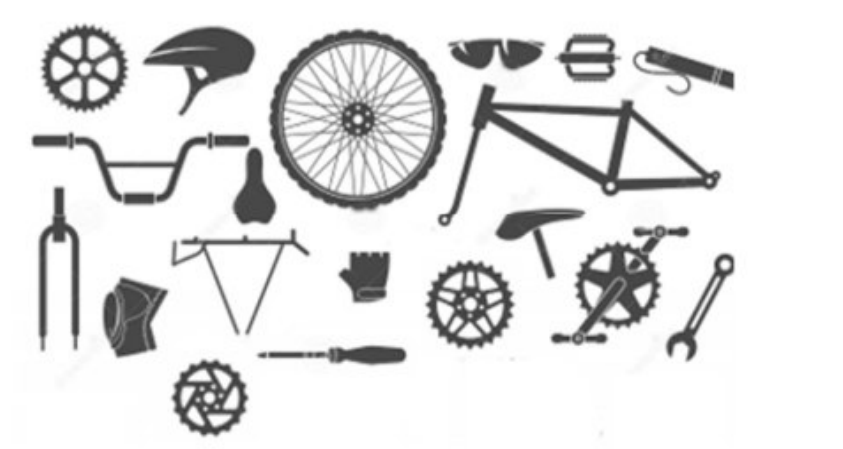
Creativity test questions in NID simultaneously test observation, empathy and imagination, exactly what NID looks for in design aspirants. Practicing these formats is far more useful than hunting for exact repeated questions, because NID rarely repeats a prompt but almost always repeats a type.
Improve your drawing with our NID DAT drawing tips and tricks, and see more NID sample papers to try each type.
Practice the real question types under exam conditions. Get a free set of NID-style creative questions with a suggested time limit for each - Get Free NID Practice Questions.
NID Creativity Test Pattern 2027: Marks, Duration and the 2026 Change
Here is where you must be careful, because the exam changed recently and many older guides are now out of date. Traditionally, the NID DAT Prelims had two parts: an objective aptitude section and a subjective creative section.
From the 2026 cycle, NID removed the objective aptitude section, making the Prelims almost entirely drawing and ideation - and turned it into a qualifying-only round, meaning your Prelims score shortlists you for Mains but carries no weight in the final merit list.
Indicative NID Creativity Test pattern based on recent cycles.
|
Feature |
NID Creativity Test (recent pattern) |
|
Mode |
Offline, pen-and-paper |
|
Duration |
Around 3 hours |
|
Total marks |
100 (Prelims) |
|
Question count |
A small number of high-value questions (roughly 20–26 in recent papers) |
|
Question style |
Mostly subjective - drawing, ideation, short written explanation |
|
Negative marking |
None |
|
Role in final result |
Qualifying only in recent cycles - shortlists for Mains |
Important: NID revises its pattern more often than most exams, and the 2027 structure may or may not follow the 2026 changes exactly. Treat the details above as your working plan, but always confirm the official structure on the NID exam pattern and NID syllabus pages, and on the official NID admissions portal, before your attempt.
How Are NID Creativity Test Questions With Answers Actually Judged?
Because the paper is subjective, students panic about what a "correct" answer even looks like. It helps to think like the examiner. When NID evaluators look at your sheet, they are scanning for four things, roughly in this order:
- Idea & originality: Is your response fresh, or the first obvious thing anyone would draw? A slightly unusual, well-reasoned idea scores higher than a common one drawn beautifully.
- Observation & detail: Do the little details make sense - the way light falls, how an object sits in its setting, how people behave in a scene?
- Clarity of communication: Can a stranger understand your idea without you explaining it? Clear layout and labelling matter.
- Execution: Confident lines, sensible proportion and color - important, but the last priority, not the first.
This is genuinely good news if you have ever worried "I can't draw well enough for NID." A simple, confidently-drawn idea with sharp observation will out-score an ornate drawing with no thought behind it. When you review NID Creativity Test questions and answers, judge your own work against these four filters, not against how "pretty" it looks.
Tip- pair your creative practice with the NID Studio Test preparation guide so you're ready for both rounds, not just the Prelims.
Which Question Types Repeat Most Often in the NID Creativity Test?
Following types of questions might come back in different forms year after year. Based on recent papers and exam analysis, prioritize these:
- Situational drawing - one object or subject shown across different contexts or moods.
- Memory & observation scenes - everyday places (markets, stations, kitchens) drawn from recall.
- Concept visualization - turning an abstract word or feeling into an image.
- Visual storytelling - a sequence or narrative told in panels.
- Design with constraints - building something using given shapes or limits.
If you master these five, you have covered the vast majority of what the NID Creativity Test throws at you. For a structured order of study, see our NID section-wise preparation guide.
How to Prepare for the NID Creativity Test
Preparation for a creative exam is different from cramming. You are building habits of seeing and thinking, which take time but stick. Here is a simple phased approach and a preparation roadmap for the NID Creativity Test:
|
Phase |
Focus |
What to do |
|
Foundation (weeks 1-4) |
Drawing fundamentals |
Daily quick sketches, basic perspective, proportion, shading. 20-30 minutes a day. |
|
Type training (weeks 5-10) |
Question familiarity |
Practice one question type per week; build an idea bank for each. |
|
Speed & ideation (weeks 11-14) |
Thinking fast |
Timed single questions; force three different ideas before drawing. |
|
Full mocks (final weeks) |
Exam stamina |
Full 3-hour timed papers, then review each sheet against the examiner's filters. |
The habit that helps most is a daily observation sketchbook: draw one everyday thing each day - a cup, a bus stop, your grandmother's hands - and note one detail you had never noticed before. That single habit trains exactly what NID rewards. For a longer runway, follow our how to prepare for NID in 6 months plan, and pick the right resources from our NID preparation books list.
How Should You Split 3 Hours in the NID Creativity Test?
Most students don’t lose marks because they lack ideas, they lose marks because time runs out and a high-value drawing stays half-finished.
With a paper of roughly 20-26 questions worth 100 marks in about 180 minutes, a simple rule keeps you safe- budget around 1.5 minutes per mark, and hold back a 15-minute buffer for finishing and labelling.
Here is a workable template you can adapt once you see your actual paper.
A sample 3-hour plan for the NID Creativity Test. Adjust the splits to match your paper’s actual mark distribution.
|
Stage |
Time |
What to do |
|
1. Read & plan |
First 10 min |
Read every question. Mark each as quick-win, medium, or high-mark. Jot a one-line idea next to the big ones so nothing starts from a blank mind later. |
|
2. Bank the quick wins |
~30-40 min |
Clear the short ideation and simple NID sketching questions first. They secure easy marks and warm up your hand while your focus is fresh. |
|
3. Complete the high marks drawings you are most confident about |
~60-80 min |
Do the biggest question while energy is still high - never save it for last. Spend the first few minutes on three thumbnail ideas, pick one, then draw. |
|
4. Finish the medium questions |
~30-40 min |
Complete the remaining mid-weight questions. Keep them clean and clear rather than over-detailed. |
|
5. Final polishing |
Last 15 min |
Add labels, tidy any unfinished sheet, and make sure nothing is blank. A rough attempt always beats an empty box. |
When should you stop drawing? The moment your idea reads clearly to a stranger and the proportions look right - stop.
Extra shading in one question will earn you almost nothing, while leaving a question blank or half-drawn loses everything.
Since there is no negative marking, spreading effort across every question will yield more than perfecting just one. This single habit fixes the most common reason strong students still miss the NID cut-off.
How Do NID Creativity Test Questions Connect to the Studio Test?
This is the part too many aspirants realize too late. After the 2026 change, the DAT Prelims became a qualifying-only round - it decides whether you reach the next stage, but it no longer counts toward your final rank.
Your actual seat is now won in the Mains, through the Studio Test and interview. So, the goal in the Creativity Test is simply to qualify comfortably; the goal in Mains is to win.
The good news is that the two rounds are not separate skills. The exact habits the Creativity Test builds - generating three ideas before starting to draw, observing everyday objects closely, and communicating a concept clearly - are the same habits that decide the Studio Test, only there you express them in three dimensions with real materials.
A student who has practiced turning ‘a bottle in three situations’ into quick, thoughtful sketches will find it far easier to turn a pile of paper, clay or wire into a considered model under pressure.
So, treat every Creativity Test question as early training for Mains, not a one-off hurdle. When you review your practice sheets, ask "how would this idea work as an object I could build?"
To prepare the next stage properly, follow our NID Studio Test preparation guide and study common NID interview questions with answers well before your Prelims result arrives.
Want experts to review your sketches? Join a free live demo class where a NID mentor reviews sample answers and shows you how to raise your score.
Common Mistakes Students Make in the NID Creativity Test
- Leaving the big drawing question blank. Many students run out of time and skip a high-mark subjective question - the costliest mistake in the paper. Since there is no negative marking, always put something down.
- Over-rendering, under-thinking. Spending 40 minutes shading one object while the idea stays ordinary. Plan the idea first, then draw.
- Ignoring the brief. Drawing a nice picture that does not answer what was actually asked. Re-read the prompt and underline the key words.
- Only one idea. The first idea is usually everyone's idea. Quickly think of three, then pick the most original that you can execute in time.
- No time strategy. Not budgeting minutes per question. Decide your split before you start drawing.
Final Word:
The students who clear this exam are not artists who draw perfectly, they are the ones who learn to see and think before they drew. That is the real lesson hidden inside every NID Creativity Test question- it is checking whether you notice the world and can shape an idea on paper, quickly and clearly.
You cannot learn to do that that overnight, but you can build it as a skill, one sketch and one observation at a time.
So treat the practice sets as more than a download. Work through the question types, time yourself, review each sheet against idea, observation, clarity and execution, and keep a daily observation sketchbook alongside your NID Creativity Test questions pdf.
Do that consistently and the exam stops feeling like a gamble and starts feeling like something you are ready for - because design thinking, once it becomes a habit, is exactly what a career at NID and beyond is built on.
Preparing for NID 2027? We can help you with exact strategic roadmap, study material and crucial feedback required to ace this exam.
Join Creative Edge, India’s leading NID online coaching and coaching for other design/architecture exams like NIFT, UCEED, CEED, NATA & JEE B.Arch, and get expert guidance on all NID 2027 subjects.
You can enroll in offline NID batches at your nearest centres also!


Attempt a Free NID Mock Test
Fill your details
Frequently Asked Questions
What are NID Creativity Test questions 2027?

Is the NID Creativity Test the same as the Studio Test?
Are there NID Creativity Test questions and answers with a single correct solution?
Where can I download NID Creativity Test questions pdf for 2027 exam practice?
How many questions are there in the NID Creativity Test?
Is there negative marking in the NID Creativity Test 2027?
Can I clear the NID Creativity Test 2027 if I am not good at drawing?
What kind of drawing questions are asked in NID?
How is the NID Creativity Test different in 2026 and 2027?
How should I practice NID studio test previous year questions?
Vineeta Agrawal
Communications Executive
SHARE