
1723534562.png)

NATA Maths Question Paper (Numerical Ability) 2027: Sample PDF, Topic Weightage & Exam Format
October 12, 2026
The nata maths question paper is not a separate paper, it is a component of the part B section of the NATA exam, which is a 90-minute, 120-mark, fully computer-based test. There are a total of 50 questions (42 MCQs + 8 NCQs).
Apart from maths (officially called Numerical Ability), the other 5 major areas in NATA Part B includes visual reasoning, logical reasoning, GK (Architecture & Design), Language, and Design Sensitivity.
You get 108 seconds for each question, calculators are not allowed, and there's no negative marking for wrong answers as per the latest exam structure published by the Council of Architecture for this section.
Key Highlights- NATA Maths Question Paper
- NATA exam has two parts- Part A (Drawing, 80 marks, 90 minutes) and Part B (MCQ/NCQ, 120 marks, 90 minutes).
- Numerical Ability (which includes maths) is one of six domains tested within Part B
- The difficulty level of questions in NATA Maths paper are 11th and 12th class level and are usually framed around geometry, mensuration, and applied spatial/architectural math, not pure calculation.
- Calculators, log tables, and smartwatches are not allowed in the exam hall.
- You can attempt NATA up to 2 times in Phase 1, so if you score less in the NATA maths question paper in the first attempt, you still have another chance.
Is There Really a Separate NATA Maths Question Paper in 2026-27?
This is the question almost every student ask us about NATA Maths. In the older NATA format, Mathematics has always been a part of the aptitude/MCQ paper.
As per the official CoA brochure of the latest cycle, the exam is conducted in 2 parts - Part A (Drawing and Composition) and Part B (MCQ and NCQ, computer-based adaptive test).
Numerical Abilityf - the closest thing to "Maths" is included in Part B alongside Visual Reasoning, Logical Reasoning, General Knowledge/Architecture & Design, Language Interpretation, and Design Sensitivity.
So when you search for a nata exam Maths question paper, what you actually need is numerical ability practice from Part B.
This distinction is important because it completely changes your NATA preparation strategy. You should be aware that it’s the problems are not pure Mathematics or heavily calculation-based; they are mostly spun around spatial and geometric context, because that's what architecture aptitude is designed to measure.
Where Do Maths Questions Actually Appear in the NATA Exam Pattern?
|
Section |
Duration |
Marks |
Format |
Contains Maths? |
|
90 minutes |
80 |
Offline, hand-drawn (A1, A2, A3) |
No |
|
|
Part B - MCQ + NCQ (Adaptive) |
90 minutes |
120 |
Computer-based, 50 questions (42 MCQ + 8 NCQ) |
Yes - under Numerical Ability |
|
Total |
3 hours |
200 |
Within Part B, Numerical Ability is officially described as "basic mathematics and how it is accociated with creative thinking" and the ability to "fold or unfold a space using geometry" - a clear signal that NATA's Maths questions test applied, spatial mathematics, not algebra type problems from general Math textbooks.
This is the single most important thing to understand before you start solving any nata maths questions pdf. Prioritize geometry, mensuration, and coordinate based reasoning instead of wasting time in memorizing formulas and solving higher Math that rather comes in entrance exams like JEE.
What Topics Are Covered in the NATA Maths Syllabus?
Based on the NATA exam syllabus by CoA (Class 11-12 level) and on what we have observed across NATA previous year question papers, NATA maths questions majorly seem to come from the following topics:
|
Topic |
Class Level |
Typical Weightage |
Why It Matters for Architecture |
|
Coordinate Geometry |
11 |
High |
Directly related to spatial/plan reading |
|
Mensuration (2D & 3D) |
10-11 |
High |
Area, volume, surface area |
|
Trigonometry |
11 |
Moderate |
Heights, distances, angles in composition |
|
Algebra (Quadratic Eqns, Progressions) |
10-11 |
Moderate |
Logical/numeric reasoning base |
|
3D Geometry & Vectors |
12 |
Moderate |
Spatial visualization overlap |
|
Statistics & Probability |
11-12 |
Low-Moderate |
Data interpretation style questions |
|
Matrices & Determinants |
12 |
Low |
Occasionally tested |
|
Sets, Relations & Functions |
11 |
Low |
Logical reasoning base |
Remember, CoA doesn't publish how many questions come from each topic, treat the "Typical Weightage" column for prioritizing NATA important topics while preparation, and not a guaranteed count.
What Do NATA Maths Previous Year Question Papers Actually Show?
On observing previous year NATA Maths questions some patterns can be consistently seen, even though the exam's overall structure has changed quite a few times in recent years (especially from 2020 to present).
However, the following trends are still relevant for future attempts as the changes have been majorly in the delivery format, rather than in the underlying syllabus and framing of questions.
- Geometry and mensuration questions appear more than pure algebra problems
- Diagram-based numerical questions (reading a figure, then calculating) recur across nearly every past paper.
- Very few questions are based on advanced calculus, despite the syllabus overlapping with class 12; NATA Maths is noted to be closer to Class 10-11 applied Maths.
Check: Expected NATA Cut Off


NATA Maths Questions PDF - Topic-Wise Practice Bank
Here's a sample of how questions across difficulty tiers typically look, so you know exactly what to expect before diving into the full practice set.
1. Mensuration
Q) In the figure below, a rectangle of length 14 cm and breadth 7 cm has a semicircle removed from one short side (radius = 3.5 cm). Using π = 22 7 , find the area of the shaded region.
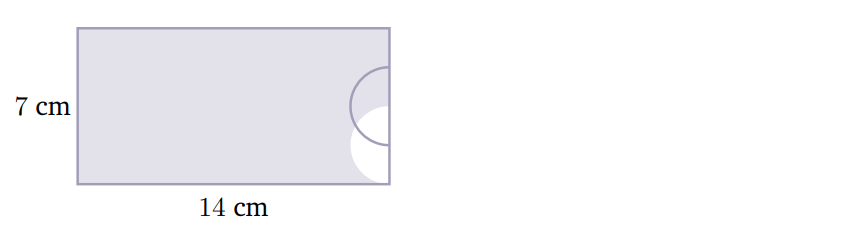
(A) 78.75 cm2 (B) 98 cm2 (C) 80.75 cm2 (D) 88.50 cm2
Ans: A
Q) Three cubes each of sides 7 cm are joined end to end. Find the surface area of the resulting solid?
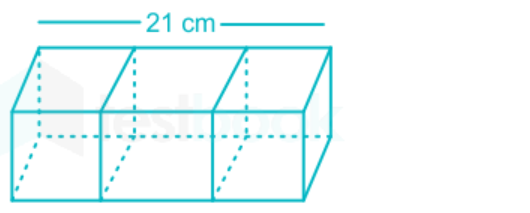
(A) 686 cm^2 (B) 882 cm^2 (C) 841 cm^2 (D) None of the above
Ans: 686 cm^2
Q) A boy walked along two adjacent sides of a rectangular field. If he had walked along the diagonal, then he would have saved a distance equal to one-fourth of the larger side. The ratio of larger to smaller side is:
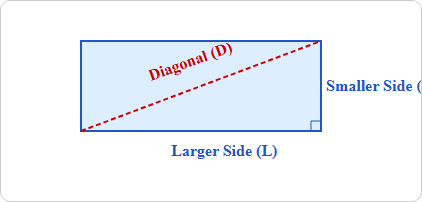
(A) 17:24 (B) 11:18 (C) 24:7 (D) 18:11
Ans: 24:7
2. Coordinate Geometry and Trigonometry
Q) If sin θ = 3/5 and θ is acute, what is the value of tan θ?
(A) 4/5 (B) 5/3 (C) 5/4 (D) 3/4
Ans: D
Q) What are the roots of the quadratic equation x^2 − 7x + 12 = 0?
(A) −3 and −4 (B) 3 and 4 (C) 2 and 6 (D) 1 and 12
Ans: B
Q) Find the distance between the points A(1, 2) and B(4, 6) shown on the grid below
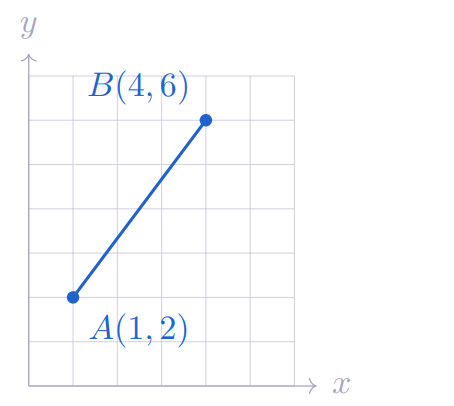
(A) 7 (B) 4 (C) 5 (D) 6
Ans: C
3. Applied Maths and Arithematic
Q) A car travels 180 km in 3 hours. Maintaining the same speed, how far will it travel in 5 hours?
(A) 240 km (B) 300 km (C) 280 km (D) 360 km
Ans: B
Q) The average of five numbers is 42. If one number, 30, is removed, what is the average of the remaining four numbers?
(A) 40 (B) 44 (C) 48 (D) 45
Ans: D
4. 3D Visualization + Calculation
Q) Which of the men from 𝑋, 𝑌, 𝑍 will fall faster to the ground when they are jumping from an airplane, ignoring the air resistance.
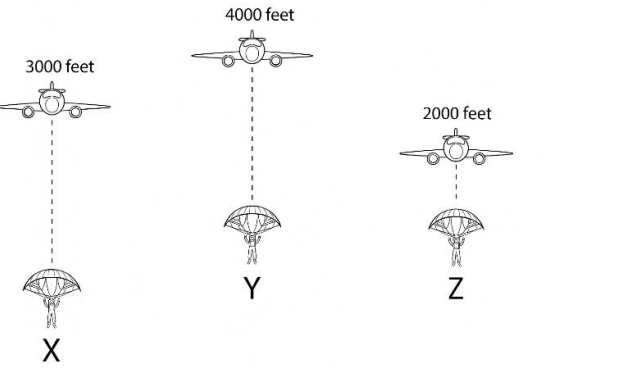
(a) 𝑋 (b) 𝑌 (c) 𝑍 (d) All of them.
Ans: D
Want 50+ more questions like these, organized by topic and difficulty? Download the free NATA Maths questions pdf question bank below:
How to Plan Time Management in NATA Maths Question Paper?
In a normal exam with restricted time limits, you usually get to plan time to spend per question based on it’s difficulty level. You spend more time on a hard question, less on another that seems comparatively easy for you, and it balances out over the full paper.
NATA Part B doesn't work that way. The official NATA exam pattern states that "the system allocates 108 seconds for each question", which describes a per-question limit set by the computer system, and not one shared 90-minute clock that you are free to redistribute as per your own strengths.
Practically, that means:
1. Don't plan to "bank" time
Rushing through an easy question to save 40 seconds for a harder one later will not work.
2. Train per-question speed, not sectional time management
You should prepare for solving Maths questions and other NATA aptitude questions of any difficulty (easy, moderate, or tricky) within its own 108 seconds window, against the usual habit of managing full test time across all 50 questions.
3. Treat 108 seconds as a ceiling, not a target
You don't need to use the full window of 108 seconds every time; you just need to consistently stay under it, question by question.
What Mistakes Do Most Students Make in the NATA Numerical Section?
1. Assuming it's a JEE-style Maths test
NATA numerical questions test applied, spatial maths - over-preparing calculus and neglecting mensuration/geometry is the single biggest misallocation of study time.
2. Practicing with a calculator
Since calculators aren't allowed, students who train with one consistently underperform on speed during the actual test.
3. Ignoring diagram-based questions
A large share of NATA Maths questions come with an accompanying figure - skipping diagram practice leaves a real gap.
4. Practicing only from old NATA Maths Question Papers
Solving NATA previous year Maths questions without adapting to the current computer-adaptive Part B format (with 108 seconds timer restriction) might leave you unprepared for how numerical questions are mixed with other aptitude questions and to strategically plan time dedication between the two.
How to Prepare for the NATA Exam Maths Question Paper in 60 Days?
|
Weeks |
Focus |
Goal |
|
Week 1-2 |
Revise Class 10-11 mensuration, geometry, trigonometry basics |
Build formula fluency without a calculator |
|
Week 3-4 |
Coordinate geometry + algebra application questions |
Speed-solve 2-step problems under 90 seconds |
|
Week 5-6 |
Full topic-wise nata Maths questions pdf practice + diagram-based sets |
Cover every topic in the weightage table |
|
Week 7 |
Timed sectional mocks (Part B only) |
Simulate adaptive pacing |
|
Week 8 |
Full-length NATA mock tests + error log review |
Fix repeat mistakes before exam day |
Because NATA runs almost every Friday/Saturday across April-June, and you're allowed two attempts in Phase 1, you don't need to peak perfectly on day one - use an early attempt as a diagnostic if your schedule allows it.
Which Books Help Most for NATA Maths Questions?
|
Book |
Best For |
Note |
|
NCERT Class 11 & 12 Mathematics |
Concept foundation |
Free, official, covers 80% of tested concepts |
|
RS Aggarwal - Quantitative Aptitude |
Speed practice |
Good for mental-math practice without a calculator |
|
NATA/B.Arch specific mocks |
Exam-style practice |
Look for ones updated post-2025 pattern change |
|
Previous year nata question paper compilations |
Pattern familiarity |
Use alongside current-format numerical ability sets, not as a substitute |
How Should You Use Mock Tests for the NATA Maths Section?
Treat mock tests as your primary diagnostic tool, not just a confidence check. After each mock:
- Log every numerical question you got wrong or solved too slowly.
- Tag it by topic (from the weightage table above).
- Revisit that topic within 48 hours - not at the end of your prep cycle.
This turns your mock test data into a live, personalized version of the topic-wise weightage table, sharpened to your actual weak spots.
Conclusion
Before following any study plan involving NATA maths question paper, take a trial run - a 10-minute test. For example- 10 mensuration or coordinate geometry questions with 108-second stopwatch and no calculator.
Set a goal based on your level of preparation or timeline available until the exam and keep improving until you solve at least 7 correctly under these time constraints.
Once you achieve that, skip basic revision and go straight to speed-based practice. Then note every miss by topic and difficulty level. If you are getting moderate level questions wrong, it’s most probably a speed problem, but if you make mistakes in easy questions also, consider it a real concept gap.
Since your better of two Phase 1 scores count, review/compare how you perform in NATA maths questions usually against your actual scorecard right after attempt one, not after both.
Also don't let maths prep quietly eat drawing or reasoning prep time - numerical ability improves faster with short but consistent daily practice, so prepare for both skills with equal discipline.
Preparing for NATA 2027? We can help you with exact strategic roadmap, study material and crucial feedback required to ace this exam.
Join Creative Edge NATA Online Coaching and get expert guidance on all NATA 2027 subjects.
You can enroll in offline NID batches at your nearest centers also!



Attempt a Free NATA Mock Test
Fill your details
Frequently Asked Questions
Is there a separate NATA maths question paper?

How many maths questions are asked in NATA?
Is a calculator allowed for NATA Maths questions?
Is NATA maths harder than JEE Paper 2 maths?
Where can I get a free nata maths questions pdf with solutions for 2027 exam prep?
Is there negative marking in the NATA numerical section?
What class level is NATA maths based on?
Can I retake NATA if I score poorly in the maths/numerical section?

Vineeta Agrawal
Communications Executive
SHARE