


JEE Main Paper 2 Previous Year Question Papers (B.Arch) PDF Download with Solutions
October 25, 2026
Download JEE Main Paper 2 (B.Arch) previous year question papers (2011-2025) with solutions, free, on this page. Paper 2A has 77 questions for 400 marks (Mathematics 25, Aptitude 50, Drawing 2); B.Planning (2B) replaces Drawing with 25 Planning MCQs.
Solving JEE B.Arch PYQs is the fastest way to learn the pattern, spot repeated topics (orthographic projection, 3D visualization, architectural GK, calculus) and build exam speed for 2027.
Key Highlights - JEE Main Paper 2 Question Papers
- Papers available: JEE Main Paper 2 (B.Arch) papers from 2011 to 2025, free to download as PDFs.
- JEE Main paper 2 exam pattern: Paper 2A has 77 questions for 400 marks Mathematics (25), Aptitude (50) and Drawing (2); B.Planning (2B) replaces Drawing with 25 Planning MCQs.
- Duration & marking: 3 hours; +4 for a correct answer and −1 for a wrong one in the objective sections. The Drawing Test (100 marks) has no negative marking.
- High-frequency topics: around 70-75% of questions come from a fixed set of repeated topics - orthographic projection, 3D visualization, architectural awareness (GK), perspective, reasoning and calculus.
- Sources: recent papers (2023–2025) are the official NTA question papers; earlier years are memory-based practice sets compiled by Creative Edge.
- Solutions: objective sections come with answer keys; the Drawing section is subjective, so model approaches are provided.
- Where it leads: JEE Main Paper 2 is the route to B.Arch and B.Planning at NITs, SPAs, IIITs and GFTIs via JoSAA - not the IITs (IIT architecture uses JEE Advanced + AAT).
- Best practice: solve the last 5-7 years under timed conditions to build speed, spot repeated topics and benchmark against past cut-offs.
If you’re preparing for JEE Main Paper 2 for B.Arch 2027, one of the smartest ways to boost your score is by solving JEE Main Paper 2 question papers PDF from previous years. These papers are not just practice material, they are the closest you can get to the real exam environment.
Whether you're targeting B.Arch, B.Plan, or both, practicing with actual question papers helps you understand the format, difficulty level trends, frequently repeated concepts, and the time-management demands of the exam.
JEE Main Paper 2 Question Papers with Solution PDF - Download Here
All JEE Main B Arch previous year question paper and answer keys are sourced from the official NTA portal - https://jeemain.nta.nic.in. Students are advised to download only official PDFs to ensure accuracy and exam authenticity.
Click the links below to access past year JEE B.Arch Question Papers (2011-2025):
| Previous Year Question Paper for JEE Main Paper 2 (B.Arch) | Download PDF |
| JEE Main 2025 Paper 2 (B.Arch) PDF | |
| JEE Main 2024 Paper 2 Question Paper (B.Arch) | |
| JEE Main 2023 Paper 2 Question Paper (B.Arch) | |
| JEE Main 2022 Paper 2 Question Paper (B.Arch) | |
| JEE Main 2021 Paper 2 Question Paper (B.Arch) | |
| JEE Main 2020 Paper 2 Question Paper (B.Arch) | |
| JEE Main 2019 Paper 2 Question Paper (B.Arch) | |
| JEE Main 2018 Paper 2 Question Paper (B.Arch) | |
| JEE Main 2017 Paper 2 Question Paper (B.Arch) | |
| JEE Main 2016 Paper 2 Question Paper (B.Arch) | |
| JEE Main 2015 Paper 2 Question Paper (B.Arch) | |
| JEE Main 2014 Paper 2 Question Paper (B.Arch) | |
| JEE Main 2013 Paper 2 Question Paper (B.Arch) | |
| JEE Main 2012 Paper 2 Question Paper (B.Arch) | |
| JEE Main 2011 Paper 2 Question Paper (B.Arch) | |
Note: For JEE Main Paper 2 Previous Year Question Paper 2026, stay tuned! We'll add it here with solutions as soon as it is released by the National Testing Agency (NTA).
The 2023-2025 papers are the official NTA question papers; earlier years (2011-2022) are memory‑based compilations prepared by Creative Edge from student recall and reliable sources - excellent for pattern practice, though treated as indicative. Always cross‑check the latest papers on the official NTA portal (jeemain.nta.nic.in).
Why You MUST Solve JEE Main Paper 2 Question Papers PDF for B.Arch Entrance 2027?
Here’s why JEE Main B.Arch question paper with solution are a goldmine for 2027 aspirants:
1. Understanding Real JEE Mains Paper 2 Exam Pattern
The official JEE main question paper help you see how questions are framed, especially in the Drawing and Aptitude sections.
2. Spotting Question Repetition
Some Mathematics and Aptitude topics appear every year. Solving PDFs helps you catch these patterns.
3. Improving Speed & Accuracy
Regular timed practice with PDFs trains you to solve efficiently within the 3-hour time frame.
4. Learning from NTA’s Question Language
NTA has a very specific way of framing questions, especially in the Aptitude section. PDFs help you understand this precisely.
PYQs work best inside a plan - see our JEE Main Paper 2 preparation strategy.

What is JEE Main Paper 2 2027?
JEE Main Paper 2 is the national entrance exam conducted by the NTA for admission into:
- B.Arch (Bachelor of Architecture) Paper 2A
- B.Planning (Bachelor of Planning) - Paper 2B
Both papers include Mathematics and Aptitude, while B.Arch includes a Drawing Test and B.Planning includes Planning-based MCQs. A good Paper 2 score opens the door to B.Arch and B.Planning seats at NITs, SPAs (Schools of Planning and Architecture), IIITs and other participating institutes through JoSAA/CSAB counselling.
Admission Process Through JEE Main Paper 2 (B.Arch / B.Planning) 2027
| Step | Stage | What You Do |
|---|---|---|
| Step 1 | Appear for JEE Main Paper 2 | Sit Paper 2A (B.Arch) or Paper 2B (B.Planning), or both. You can attempt the January and April sessions; your better score counts. |
| Step 2 | Check Result & NTA Score | The NTA releases your score, percentile and All India Rank, which decide the institutes and programs you're eligible for. |
| Step 3 | Register for JoSAA / CSAB Counselling | Based on your rank, register for counselling and fill your choices of colleges and courses. |
| Step 4 | Seat Allotment | Seats are allotted by rank, category, choices filled and seat availability across participating institutes. |
| Step 5 | Document Verification & Admission | Complete document verification and fee payment to confirm admission into the B.Arch or B.Planning programme. |
Where does this lead?
JEE Main Paper 2 is the route to architecture and planning seats at NITs, SPAs, IIITs and GFTIs - not the IITs. For top institutes like SPA Delhi and NIT Trichy, clearing the Paper 2 cut-off and securing a competitive rank is all you need.
Planning for an IIT? The B.Arch Route at IITs is Different
Architecture at the IITs (offered only at IIT Kharagpur and IIT Roorkee) follows a completely separate route that does not use JEE Main Paper 2. If an IIT B.Arch is your goal, this is the path instead:
| Step | Stage | What You Do |
|---|---|---|
| Step 1 | Qualify JEE Main Paper 1 & JEE Advanced | IIT admission is based on JEE Main Paper 1 (B.Tech), not Paper 2. Clear the Paper 1 cut-off, rank among the candidates eligible for JEE Advanced, then qualify JEE Advanced. |
| Step 2 | Register for & Pass the AAT | Only JEE Advanced-qualified candidates can take the Architecture Aptitude Test (AAT), conducted by the IITs to test drawing and architectural aptitude. It is qualifying-only - no separate rank is released. |
| Step 3 | JoSAA Counselling & Seat Allotment | Candidates who clear the AAT qualifying marks are eligible for B.Arch seats at IIT Kharagpur and IIT Roorkee through JoSAA counselling. |
In short:
JEE Main Paper 2 → NITs, SPAs and other institutes, while JEE Advanced + AAT → IIT architecture. Since you're preparing for Paper 2, your focus is the first route. To understand the two papers fully, read the difference between JEE Main Paper 1 and Paper 2.
Seat allotment is based on:
-
JEE Advanced rank
- AAT qualification (not rank),
- Category & seat availability,
- Choice filling during JoSAA.
JEE Main B.Arch Question Paper Pattern Before solving PYQs for 2027:
Paper 2A (B.Arch) Exam Pattern:
| Particulars | Details |
|---|---|
| Exam mode | Online (Mathematics and Aptitude) and offline (Drawing test) |
| Number of sections and subjects | 3 (Drawing, Mathematics, and Aptitude) |
| Duration of exam | 3 hours (180 minutes) |
| Sections | Mathematics (Part I) 20 MCQ and 5 Numerical Value Questions Aptitude Test (Part II) 50 Drawing Test (Part III) 02 |
| Number of questions | 77 |
| Type of questions | Mathematics and Aptitude Questions: Objective-type questions Drawing: Questions to test the candidate’s drawing and sketching skills |
| Total Marks of JEE Mains | 400 marks (Drawing section carries 100 marks; per-question marking is indicated in the paper) |
| Language of paper | Assamese, Bengali, Kannada, Malayalam, Marathi, Odia, Punjabi, Tamil, Telugu and Urdu, in addition to Hindi, English and Gujarati |
[For B.Plan, there are planning based MCQs instead of drawing questions in paper 2B]
Solving JEE B.Arch previous year question paper with solution pdf helps you balance these sections strategically.
Most Repeated Topics in JEE Main Paper 2 (Based on Analysis of Past JEE Main B.Arch Question Papers)
JEE Main Paper 2 has shown a very predictable pattern over the years. If you study the last 10+ years of question papers, you will find that around 70-75% of questions come from a fixed set of high-frequency topics.
Below is a detailed breakdown of the most repeated topics, why they appear every year, what part of the JEE B.Arch syllabus they target, and sample questions for practice.
1. Orthographic Projection (Front, Top, Side Views)
Why it’s repeated:
These questions form a major part of JEE B.Arch question papers every single year. Because understanding the orthographic projections, elevations and view of 3D objects from different directions is the core skill of architectural representation. Every architect must understand how 3D structures translate into 2D views.
What JEE asks:
- Identify the correct orthographic view
- Match 3D objects with their projections
- Predict missing views
- Shadow and edge visibility
Example Questions:
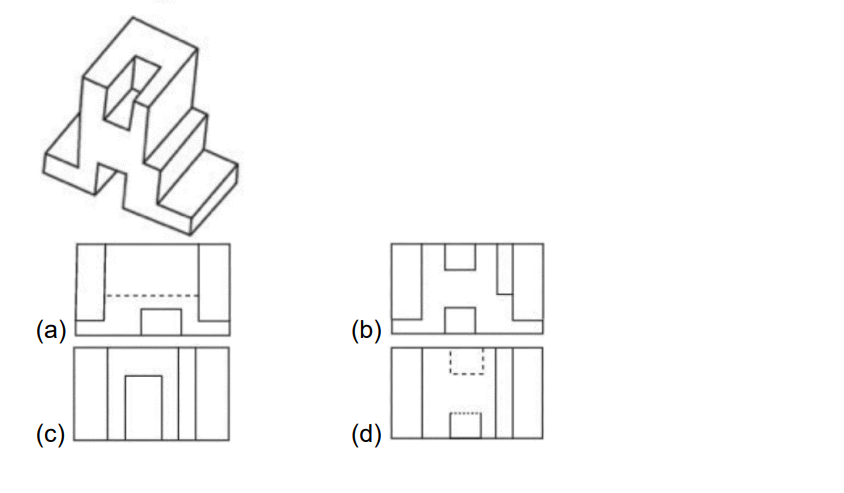
1) In a question figure a 3D object is given. Identify the correct top view of the object amongst the answer figures.
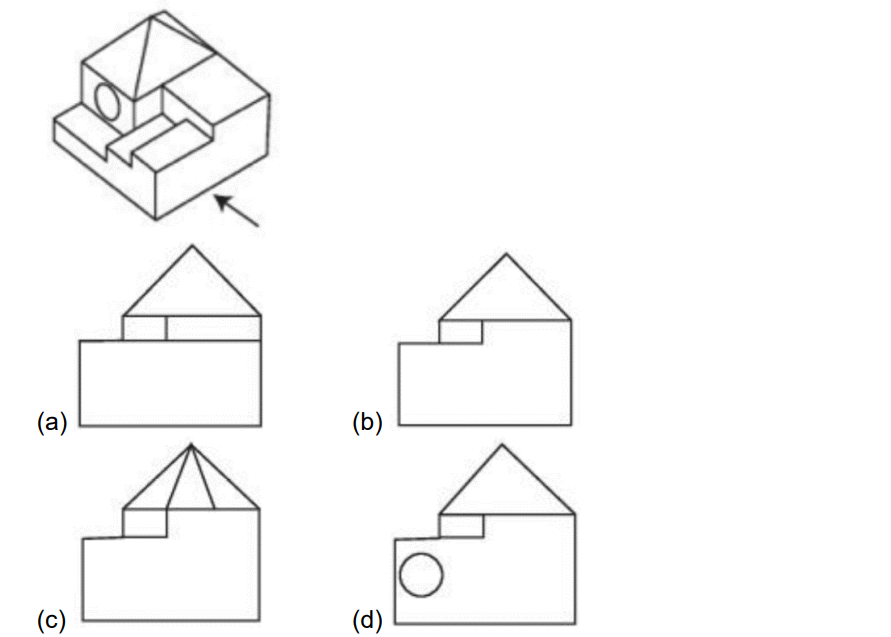
2) The question figure shows the 3D view of an object. Identify the correct view looking in the direction of arrow.
Build speed on this question type with our JEE Main Paper 2 aptitude questions.
2. 3D Visualization & Solids (Rotation, Cross-Sections, Patterns)
Spatial thinking is essential for architects. JEE consistently tests mental manipulation of 3D forms.
What JEE asks:
- Rotation of solids
- Cross-sectional shapes
- Counting faces/edges after modifications
- Shadows of 3D shapes
Example Questions:
1) Select the answer figure which shows correct view of question figure after rotating it by 90∘ on it's right.
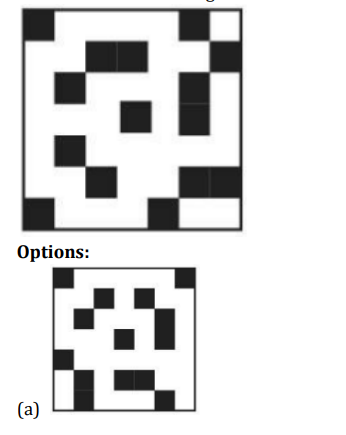
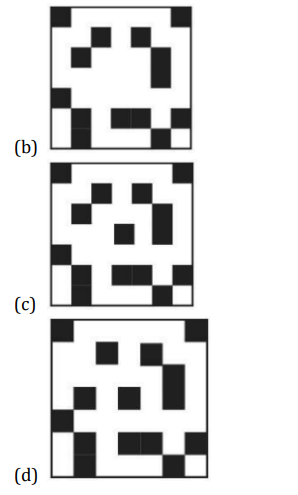
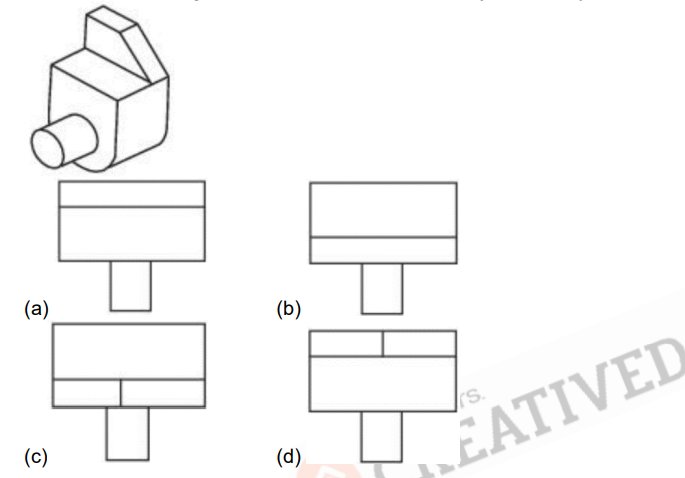
2) The question figure shows the 3D view of an object. Identify the correct view looking in the direction of arrow.
Reasoning sits in the high-weightage Aptitude section - see the full JEE Main Paper 2 aptitude weightage.
3. GK & Architectural Awareness
NATA and JEE coordinate this topic to ensure students know basic architectural vocabulary.
What is asked in JEE Mains Paper 2A previous year question paper:
- Famous architects
- Famous buildings & styles
- Architectural terms
- Indian monuments
- Building materials
Example Questions:
1) . Match the List-I with List-II: List-I List-II
| List - I | List - II |
|---|---|
| (A) Nahargarh Fort | (I) Hyderabad |
| (B) Lakshmi Vilas Palace | (II) Jodhpur |
| (C) Chowmahalla Palace | (III) Jaipur |
| (D) UMAID Bhawan Palace | (IV) Vadodra |
(a) Shanghai World Financial Center
(b) Taipei 101
(c) Sydney Opera House
(d) One World Trade Center
2) Given below is the famous temple in India. Identify the style of temple architecture adopted in the temple.
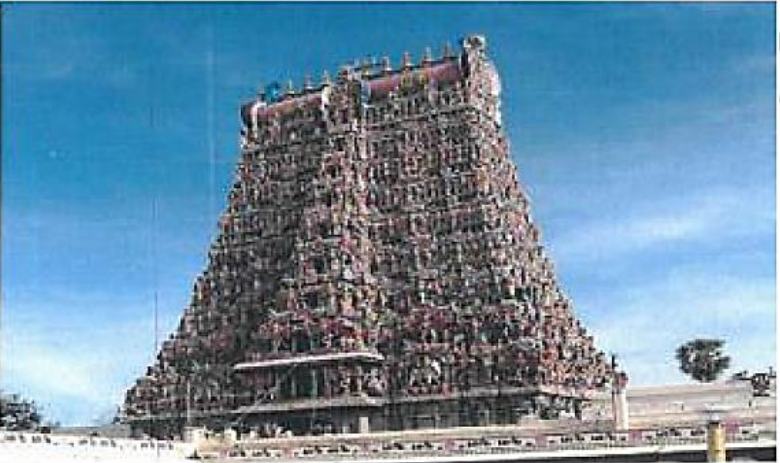
(a) Nagara
(b) Dravidian
(c) Vesara
(d) Orissan
3) Which of the following celebrity actor was part of the award winning movie "Which Annie Gives It those ones", which was based on life of student of architecture ?
(a) Amir Khan
(b) Shah Rukh Khan
(c) Salman Khan
(d) Akshay Kumar
4) Identify the architectural symbol represented in the given figure
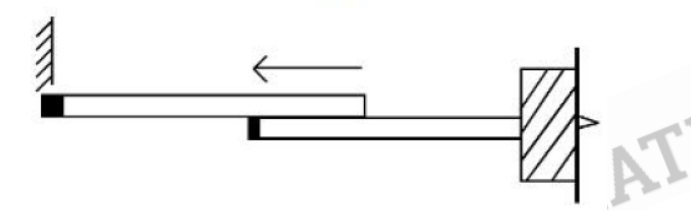
(a) Sliding door
(b) Window
(c) Revolving door
(d) Rolling shutter
5) PRASAD' scheme stands for :
(a) Pilgrimage Rejuvenation and Spiritual Augmented Drive
(b) Perception and Reform Analysis in social and Demography
(c) Perception and Rejuvenation And Spiritual Association Drive
(d) Pilgimage Regeneration and Social Association Drive
Architectural awareness is pure recall - drill it with our GK questions for JEE Main Paper 2.
4. Scale & Proportion
Architecture deals with real-world measurements. JEE checks whether candidates understand ratios, scaling, enlargements, reductions, etc.
What is asked in JEE paper 2 question paper:
- Scale conversion
- Proportional drawing
- Mapping & model scale calculations
Example Questions:
1) Draw a proportionate sketch of given reference image. Use black and white rendering techniques of your choice.
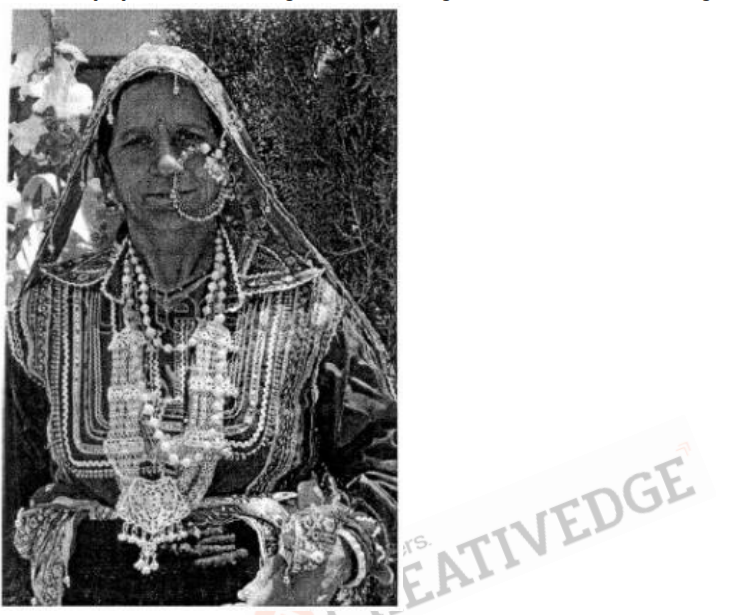
2) A model is created at 1:50 scale. What is the real height of a door shown as 4 cm?
See how a topper used previous-year papers in our interview with AIR 341 Kanika Bahati.


5. Analytical Reasoning & Pattern Recognition
This section forms a major part of Part II (Aptitude) because architects must think logically and visually.
What JEE asks:
- Sequence completion
- Pattern folding
- Symmetry
- Hidden figures
- Odd one out (visual logic)
- Coding-Decoding
- Direction sense
Example Questions:
1) Which of the given shapes would complete the sequence?
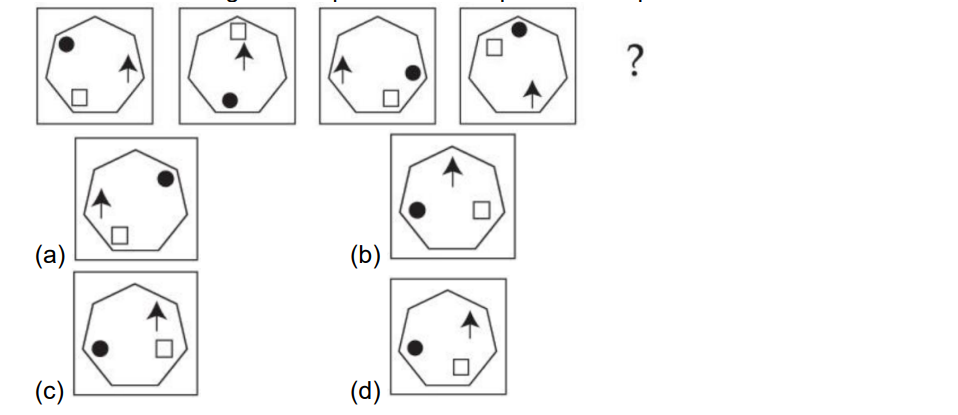
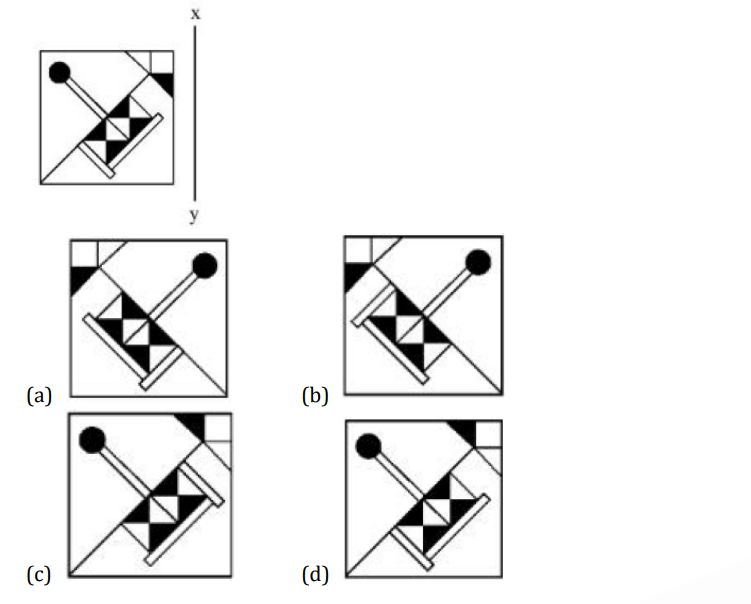
2) Identify the correct mirror image of the given figure along 𝑥 − 𝑦 axis :
3) In a certain word code, EXHAUST is written as CZFCSUR. How is NETWORK written in that code?
(a) LGRYMTI
(b) LGVYQTM
(c) LCRYQTM
(d) LCVYQTI
Fit this topic-wise practice into a daily routine with our JEE Main Paper 2 study plan.
6. Perspective Drawing (1-Point & 2-Point Perspective)
This topic repeats every year because perspective is the foundation of architectural drawing.
What is asked in JEE Mains Paper 2A previous year question paper:
- Identify correct perspective
- Vanishing point logic
- Depth, height, foreshortening
Example Questions:
1) Which of the following drawings represents a 2-point perspective of a cuboid?
2) In a one-point perspective, parallel receding lines meet at…?
7. Mental Folding/Unfolding of Paper
Tests deep visualization, essential for architectural model-making.
What JEE asks:
- Folding paper nets
- Predicting crease patterns
- Identifying 3D outcomes
- Hidden surfaces
Example Questions:
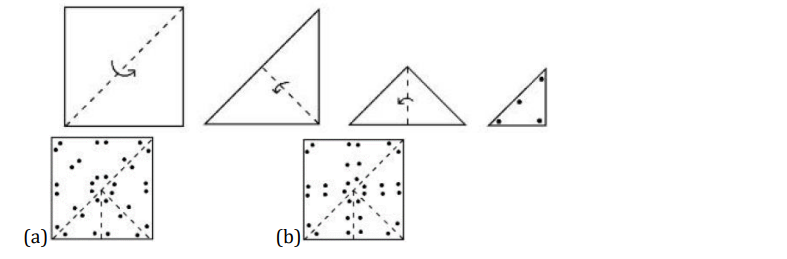
1) When the paper is folded in a given pattern and is cut at the end. Identify which pattern is formed when the paper is unfold?

Check what your practice scores translate to with our JEE Main marks vs percentile guide.
8. Arithmetic Geometry (Mensuration + Shapes)
What topics are frequently repeated?
- Properties of triangles (medians, incentres, circumcentres, orthocentres)
- Circle properties (tangents, chords, power of a point)
- Properties of quadrilaterals, especially parallelograms
1) An equilateral triangle is inscribed in the ellipse 𝑥 2 3 +𝑦 2 = 1 such that one of the vertex of the triangle is (0,1) and one of the altitude of the triangle is along the 𝑦-axis. If A is the area of the equilateral triangle. Then 625 A 2 is equal to .
2) The distance between the two points on the hyperbola 𝑥 2 −𝑦 2 = 60, where the tangents are parallel to the line 𝑦 = 2𝑥, is :
(a) 6√10
(b) 20
(c) 10
(d) 10√2
3) If an equilateral triangle, having centroid at the origin, has a side along the line, x+y=2, then the area (in sq. units) of this triangle is :
(1) 6
(2) 6√3
(3) 9/2 (√3)
(4) 3√6
9. Calculus (Differentiation & Integration)
Yes. Calculus is absolutely important in JEE Main Paper 2. Students think B.Arch has 'less maths,' but calculus contributes 15-20 questions every year.
Why this topic is repeated:
Calculus tests analytical and observational skills and it directly appears in architecture foundation courses.
Frequently tested areas:
- Differentiation (especially application-based)
- Maxima & minima
- Rate of change
- Standard indefinite integrals
- Definite integrals
- Area under curves (very common)
- Simple differential equations
Example Questions:
1) Let 𝑓(𝑥) = ∑10 r=1 cot−1 (1 −(𝑥 + r)+(𝑥 + r) 2 ), 𝑥 ⩾ 0. Then lim𝑥→∞ (tan(𝑓(𝑥))+ sec2 (𝑓(𝑥))) is :
(a) 2
(b) not defined
(c) 0
(d) 1
2) If ∫ 9 4 𝑥−√𝑥 𝑥(𝑥−1) d𝑥 = 𝛼, then e 𝛼 is equal to:
(a) 4/9
(b) 4/3
(c) 9/4
(d) 16/9
As you solve, map each Maths question back to the JEE B.Arch Maths syllabus so you know which topics to revise next.
10. Drawing (Composition, Sketching, Rendering) (Important for B.Arch paper)
JEE Mains Paper 2 for B.Arch 2027 checks whether you can think visually and express concepts cleanly.
What JEE asks:
- Scene drawing
- Daily life objects
- Geometric composition
- Product sketching
- Light & shadow
Example Questions:
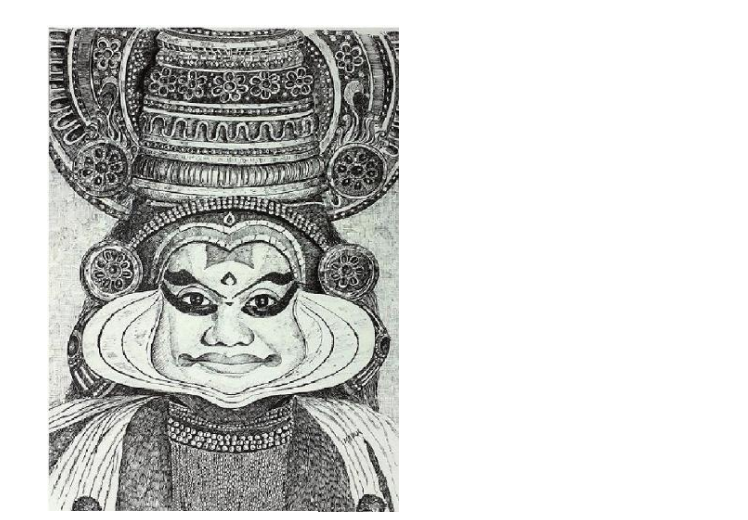
1) Use monochromatic colour rendering technique, light and shadow to represent its depth and intensity. Draw the sketch of the given image using the above instructions.
2) Use five different types of crackers and make a beautiful 3D sculpture for Diwali mela. You can scale each cracker to any size of your choice. Usage of minimum 4 colours is compulsory.
OR Draw a beautiful sketch of a basket ball court where players are playing a match and audience are enjoying. Use suitable colours of your choice.
Advantages of Solving JEE Main Previous Year Question Papers for 2027
Applicants appearing for JEE Main Paper 2 Exam 2025 should refer the following benefits of solving JEE Main question paper
1. Exam Pattern Insight: Practicing with JEE B.Arch PYQ pdf will help you gain a clear understanding of the question formats, marking scheme, and overall structure.
2. Topic Prioritization: Identify frequently asked questions and important topics for focused study.
3. Time Management Mastery: Develop the ability to allocate time efficiently across different sections. And builds stamina for a long exam.
4. Self-Assessment: Practicing with JEE Main B.Arch Previous Year Question Papers helps evaluate your preparation level and identify areas for improvement and in turn helps you avoid silly mistakes.
5. Difficulty Level Awareness: Get accustomed to the exam's difficulty, helping to set realistic preparation goals.
6. Strategic Preparation: B.Arch Previous Year Question Paper with solution pdf will eventually help you formulate effective answering strategies and techniques to tackle tricky questions.
7. Confidence Boost: Familiarity with question types reduces stress and increases confidence. It reduces fear of unexpected question types.
8. Problem-Solving Skills: Enhance your analytical and problem-solving abilities, crucial for competitive exams.
9. Trend Analysis: Stay informed about changing exam pattern, syllabus and question trends over the years. This makes the overall exam smoother and predictable.
10. Performance Benchmarking: Compare your scores with past cut offs to gauge exam readiness.
Check Out: Best study timetable for JEE Main Paper 2 exam
How to Approach JEE Main B Arch Previous Year Question Paper for 2027 Prep
1. Plan a Schedule: Dedicate specific days for solving JEE Main Previous Year Question Papers.
2. Simulate Exam Conditions: Solve them in a quiet environment with strict timing.
3. Review Mistakes: After completion, analyze each error and revisit weak concepts.
4. Track Progress: Maintain a score log to measure improvement over time.
5. Compare Your Score With Previous Cut-offs: Comparing your JEE B.Arch paper solving or mocks score with JEE Mains Paper 2 cut-off helps you identify if your current score aligns with admission possibilities.
Conclusion
Leveraging JEE Paper 2 previous year Question papers with Solutions PDF is a strategic move for any aspirant aiming for success. You can master exam techniques, sharpen accuracy, and boost confidence to achieve your dream architecture seat in 2027.
Key Takeaways:
- Exam Pattern Clarity: Utilizing JEE Main Previous Year Question Papers with answers provides insights into the exam's format and marking scheme, essential for effective preparation.
- Focus on JEE Mains Paper 2 Important Topics: Analyzing these JEE Main question papers helps identify frequently asked questions with answer key, allowing students to prioritize crucial topics in the syllabus
- Improved Time Management: Regular practice enhances time allocation skills across different exam sections, a key factor in achieving good scores.
- Self-Assessment Tools: Solving these PYQs enable students to assess their preparation levels and identify areas needing improvement.
- Boost in Confidence: Familiarity with question types through consistent practice reduces stress and increases confidence during the actual exam.


Frequently Asked Questions
Is it enough to solve JEE B.Arch Previous Year Question Papers for cracking JEE Mains Paper 2 in 2026?

How many JEE Main Previous Year Question Papers should I attempt before the exam?
Where can I download JEE Main Paper 2 (B.Arch) question papers for 2027 prep?
Is JEE Main Paper 2 used for IIT architecture?
Are solutions of the JEE Main Paper 2 question papers provided?
In how many languages is Paper 2 held?
Has the B.Arch pattern changed for 2027?
Vineeta Agrawal
Communications Executive
SHARE