


JEE Main Paper 2 Study Material 2027: Download PDFs + Best Books & Mock Tests
October 23, 2026
The best JEE Main Paper 2 study material combines NCERT Mathematics (Class 11 & 12), a dedicated architectural aptitude resource, drawing practice sheets (for B.Arch), planning notes (for B.Planning), and previous year papers plus mock tests.
Since Aptitude carries half the paper (200 of 400 marks), prioritize it alongside Maths. Below you'll find free section-wise PDFs, recommended books, PYQs and mock tests for both Paper 2A (B.Arch) and Paper 2B (B.Planning), updated for 2027.
Latest update:
As per the NTA examination calendar, JEE Main 2027 Session 1 is scheduled for 22-24 and 28-30 January 2027 (buffer: 31 Jan 2027). B.Arch (Paper 2A) and B.Planning (Paper 2B) aspirants can appear in both the January and April 2027 sessions - your best score counts, so use the months ahead to work through this study material systematically.
JEE Main Paper 2 Study Material PDF Free Download
Accessing the right JEE Main Paper 2 study material PDF free download resources can significantly improve your preparation. From B.Arch aptitude practice and mathematics notes to drawing worksheets and previous year papers, these resources help aspirants build a strong foundation for both B.Arch and B.Planning entrance exams.
| Resource | Download |
|---|---|
| JEE B.Arch Study Material PDF - Visual Reasoning | |
| JEE B.Arch Study Material - Analytical & Logical Reasoning | |
| JEE B.Arch Drawing Practice PDF | |
| JEE Main Paper 2 - Mathematics | |
| JEE Main Paper 2 Quant Formula Sheet PDF | |
| JEE Main Paper 2 Previous Year Papers PDF | |
| JEE Main Paper 2 Mock Test PDF | |
| JEE Main Paper 2 Study Material - Preparation Videos 2027 |
Recommended Preparation Strategy
- Use NCERT as the foundation for Mathematics.
- Practice Aptitude questions daily using above PDFs to improve visualization and reasoning skills.
- Dedicate time every week to JEE Main Paper 2A drawing questions practice (for B.Arch aspirants).
- Regularly solve planning-based questions if appearing for B.Planning.
- Attempt mock tests and previous year papers to improve speed, accuracy, and exam temperament.
A balanced combination of books, PDFs, mock tests, and PYQs forms the most effective JEE Main Paper 2 preparation material for both B.Arch and B.Planning aspirants.
For step-by-step roadmap, check - JEE Main Paper 2 Study Plan 2027 (By Past Toppers).
Key Highlights: JEE Main Paper 2 Study Material
- Mathematics follows the same syllabus as JEE Main Paper 1, making NCERT the foundation for preparation.
- Aptitude is one of the highest-scoring sections and often acts as a rank differentiator in JEE Main Paper 2 exam.
- Drawing requires consistent practice in perspective, composition, human figures, and scene creation.
- Planning questions are exclusive to B.Planning (Paper 2B) and test urban, environmental, and civic awareness.
- NCERT Class 11 & 12 Maths remains the most important study resource for Paper 2 preparation.
- Previous Year Papers (PYQs) are among the most valuable study materials for understanding exam trends and difficulty levels.
- Mock tests help improve speed, accuracy, and time management across Maths, Aptitude, Drawing, and Planning sections.
- Subject-wise preparation using the right books, PDFs, and practice material produces the best results.
JEE Main Paper 2 Exam Pattern at a Glance (2027)
Before choosing study material, it helps to know exactly what you're preparing for and where the marks sit. For 2027, the NTA pattern is unchanged:
Paper 2A - B.Arch (77 questions, 400 marks)
| Section | Questions | Marks | Mode |
|---|---|---|---|
| Mathematics | 25 (20 MCQ + 5 numerical, all compulsory) | 100 | Computer-based |
| Aptitude Test | 50 MCQ | 200 | Computer-based |
| Drawing Test | 2 questions | 100 | Pen & paper (offline, A4 sheet) |
| Total | 77 | 400 | - |
Paper 2B - B.Planning (100 questions, 400 marks)
| Section | Questions | Marks | Mode |
|---|---|---|---|
| Mathematics | 25 (20 MCQ + 5 numerical, all compulsory) | 100 | Computer-based |
| Aptitude Test | 50 MCQ | 200 | Computer-based |
| Planning | 25 MCQ | 100 | Computer-based |
| Total | 100 | 400 | — |
Why this matters for your prep:
Aptitude alone carries 200 of 400 marks (half the paper) which is why it's the biggest rank differentiator. Maths and Drawing/Planning carry 100 each. So your study material and hours should weight Aptitude first, then Maths and Drawing/Planning equally.
JEE Main Paper 2 Marking Scheme:
For every question in Mathematics, Aptitude and Planning, including the Section-B numerical questions, you get +4 for a correct answer, −1 for a wrong answer, and 0 if unanswered. Negative marking applies to both Section A (MCQs) and Section B (numerical).
The Drawing Test (Paper 2A) is evaluated separately on your sketches (2 questions, 100 marks) and has no negative marking.
All 5 Maths numerical questions are compulsory - there's no "attempt any 5 of 10" option. Since every wrong answer costs a mark, attempt only what you can actually reason through rather than guessing. (Source: official NTA JEE Main 2026 Information Bulletin.)
Exam-day note (from the official Drawing syllabus) - Paper 2A candidates must bring their own pencils, geometry box, erasers, color pencils and crayons for the pen-and-paper Drawing Test.
For a full breakdown of how each section is scored, see the JEE Main Paper 2 marking scheme.
Best Books for JEE Main Paper 2 Preparation
Choosing the right JEE Main Paper 2 preparation books can make a significant difference in your performance. Since Paper 2 evaluates Mathematics, Aptitude, Drawing (B.Arch), and Planning (B.Planning), aspirants should use subject-specific resources rather than relying on a single book.
| Subject | Best Books |
|---|---|
| Mathematics | NCERT Mathematics Class 11 & 12, Objective Mathematics by R.D. Sharma, Mathematics for JEE Main by Cengage |
| Aptitude | JEE B.Arch & B.Planning Entrance Examination by Arihant Experts, A Complete Self Study Guide for B.Arch Entrance Examination by P.K. Mishra |
| Drawing | A Complete Self Study Guide for B.Arch Entrance Examination by P.K. Mishra, NATA & B.Arch Drawing by Arihant Experts, Perspective Drawing Practice Books |
Match your material to the official JEE Main Paper 2 syllabus so you don't over-study low-weight topics.
Previous Year Papers: The Most Important Study Material
Among all available JEE Main Paper 2 study materials, previous year papers (PYQs) are arguably the most valuable.
They help aspirants understand the actual JEE Main Paper 2 exam pattern, question difficulty, important topics, and section-wise weightage while improving speed and accuracy.
Why JEE Main Paper 2 Previous Year Papers Matter?
- Reveal frequently asked topics in Mathematics, Aptitude, Drawing, and Planning.
- Help understand the level of questions asked by NTA.
- Improve time management and exam temperament.
- Highlight high-weightage and recurring concepts.
- Provide the most realistic mock test experience.
How to Use JEE Main Paper 2 Study Material Effectively?
Having the right study material is only half the job - most aspirants lose marks not because they lack resources, but because they consume them in the wrong order. Here's a method that turns material into actual score.
1. The Right Sequence: Learn → Practice → Test → Fix
For every topic, move through four stages instead of jumping straight to mocks:
- Learn the concept from NCERT (Maths) or your aptitude/drawing material - once, properly.
- Practice topic-wise questions until the method feels automatic.
- Test it under time pressure in a sectional or full mock.
- Fix every mistake in an error log, and revisit it in your next revision cycle.
2. Match Your Hours to the Marks (200 / 100 / 100)
Since Aptitude carries 200 of 400 marks - as much as Maths and Drawing combined - your study time should reflect that, not split evenly. A workable weekly split for a B.Arch aspirant:
| Section | Weight in Paper | Suggested Weekly Focus |
|---|---|---|
| Aptitude | 200 marks (50%) | ~40% of your time - daily practice; it's the biggest rank differentiator |
| Mathematics | 100 marks (25%) | ~35% of your time - concept-heavy, so it needs steady blocks |
| Drawing | 100 marks (25%) | ~25% of your time - short daily sketching beats weekend marathons |
Wondering what score you need? See how marks map to rank in our JEE Main marks vs percentile guide.
3. One Resource per Job - Not Ten
Fix a single primary resource for each need and stick with it - one maths reference beyond NCERT, one aptitude book, one drawing practice source, plus previous year papers and a mock test series. Collecting a tenth PDF doesn't add 10% more marks - it adds confusion. Depth in a few trusted resources always beats shallow coverage of many.
4. Use PYQs as a Diagnostic, Not Just Practice
Don't save previous year papers for the end. Solve one early to see where you actually stand, map your weak sections, and let that decide what to study first. Then return to full papers in the final weeks to build exam temperament. Treating PYQs as a mirror, not just a worksheet is what separates a focused plan from a generic one.
6-Month / 3-Month / 1-Month JEE B Arch Study Material Plan
The effectiveness of your JEE Main Paper 2 study material depends not only on what you study but also on when you use it. As the exam approaches, your focus should gradually shift from concept-building to practice, revision, and mock tests.
| Timeline | Mathematics | Aptitude | Drawing / Planning |
|---|---|---|---|
| 6 Months Before Exam | Complete NCERT Class 11 & 12, build fundamentals, solve chapter-wise questions and formula sheets | Learn visualization, reasoning, mental ability, and architectural awareness concepts | Practice perspective drawing, human figures, object sketching (B.Arch) / Study urban planning and civic awareness basics (B.Planning) |
| 3 Months Before Exam | Focus on important chapters, PYQs, short notes, and topic-wise tests | Solve aptitude question banks and sectional tests regularly | Attempt drawing assignments and timed sketching exercises / Practice planning-based MCQs and case studies |
| 1 Month Before Exam | Revise formulas, solve PYQs, and attempt full-length Maths mocks | Take daily aptitude tests and revise frequently asked concepts | Practice exam-style drawing questions or planning mocks, focusing on speed and accuracy |
| Last 2 Weeks | Quick revision using notes and formula sheets | Revise shortcuts, visualization concepts, and weak topics | Review previous questions, improve presentation skills, and avoid learning new concepts |
| Last Week | Mock tests + revision only | Mock tests + revision only | Mock tests + revision only |
Paper 2 Maths shares Paper 1's syllabus - see exactly how the two papers differ.
Why Use JEE B.Arch Study Material by Creative Edge?
Not all study materials are designed specifically for JEE Main Paper 2A (B.Arch).
While many resources focus heavily on Mathematics, Creative Edge's study material is curated to cover all key sections of the exam - Mathematics, Aptitude, and Drawing - in a structured and exam-oriented manner.
| Feature | How It Helps Aspirants |
|---|---|
| Complete Paper 2 Coverage | Covers Mathematics, Aptitude, Drawing, and exam-specific preparation strategies in one place. |
| Designed for B.Arch Aspirants | Focuses on architectural aptitude, visualization, perspective drawing, and creativity-based questions. |
| Previous Year Paper Integration | Helps students understand actual JEE Main Paper 2 question trends and frequently tested topics. |
| Mock Tests & Practice Questions | Improves speed, accuracy, and time management under exam-like conditions. |
| Drawing Practice Resources | Includes exercises for perspective drawing, human figures, scene creation, and composition. |
| Expert-Curated Content | Developed by mentors experienced in architecture and design entrance exam preparation. |
| Structured Learning Path | Reduces confusion by providing a clear roadmap instead of forcing students to collect multiple books and PDFs. |
Check Out: Creative Edge All India Scholarship & Admission Test
Common Mistakes While Choosing JEE Main Paper 2 Study Material
Many JEE Main Paper 2 aspirants struggle not because they lack resources, but because they use the wrong resources or follow an ineffective preparation strategy. Avoiding these common mistakes can save valuable time and improve your overall score.
| Mistake | Why It's a Problem | What to Do Instead |
|---|---|---|
| Collecting Too Many PDFs | Leads to information overload and incomplete preparation. | Stick to a limited set of quality books, notes, and study materials. |
| Ignoring Aptitude Preparation | Aptitude is the single highest-scoring section - 200 of 400 marks. | Practice visualization, reasoning, and architectural aptitude regularly. |
| Only Solving Maths Questions | Neglects Aptitude, Drawing, or Planning sections that significantly impact rank. | Follow a balanced subject-wise preparation strategy. |
| Guessing Blindly on MCQs | Every wrong answer costs −1, including the Section-B numerical questions. | Attempt only what you can reason through; eliminate options before guessing. |
| Not Attempting Mock Tests | Weakens time management and exam temperament. | Take regular full-length and sectional mock tests. |
| Skipping Previous Year Papers (PYQs) | Misses important question trends and frequently tested topics. | Solve at least the last 5-10 years of JEE Main Paper 2 papers. |
| Not Making Revision Notes | Makes revision difficult during the final weeks before the exam. | Create concise formula sheets, aptitude notes, and quick revision summaries. |
NATA or JEE Main Paper 2 - Does Your Study Material Change?
Both NATA (conducted by the Council of Architecture) and JEE Main Paper 2A are valid routes into a B.Arch degree, and most colleges accept one or both. The good news for your preparation, the two exams test largely overlapping skills - Mathematics, architectural aptitude, and drawing - so the bulk of your study material works for both.
The main differences are in emphasis. JEE Paper 2A leans more on Mathematics (a full 100-mark section), while NATA weights drawing, aptitude and observation more heavily. If you're targeting both, build a common base (aptitude + drawing + maths) and add exam-specific practice papers for each.
A combined NATA + JEE B.Arch prep plan is usually the most efficient path for serious architecture aspirants.
Also Check: GK Questions for JEE Main Paper 2 2027
Final Takeaway
Success in JEE Main Paper 2 exam does not depend on collecting the maximum number of books or PDFs, it depends on using the right resources effectively.
A strong preparation strategy should combine NCERT, quality reference books, study material PDFs, previous year papers, and mock tests.
While Mathematics provides the foundation, Aptitude often acts as a major rank differentiator, and B.Arch aspirants must also dedicate time to Drawing practice.
The key is to choose a limited set of high-quality resources, revise them consistently, solve PYQs regularly, and take mock tests frequently. Smart resource selection and focused preparation will always outperform resource overload.
Preparing for NATA 2027? We can help you with exact strategic roadmap, study material and crucial feedback required to ace this exam.
Join CreativEdge JEE B.Arch Online Coaching and get expert guidance on all JEE B.Arch 2027 subjects.


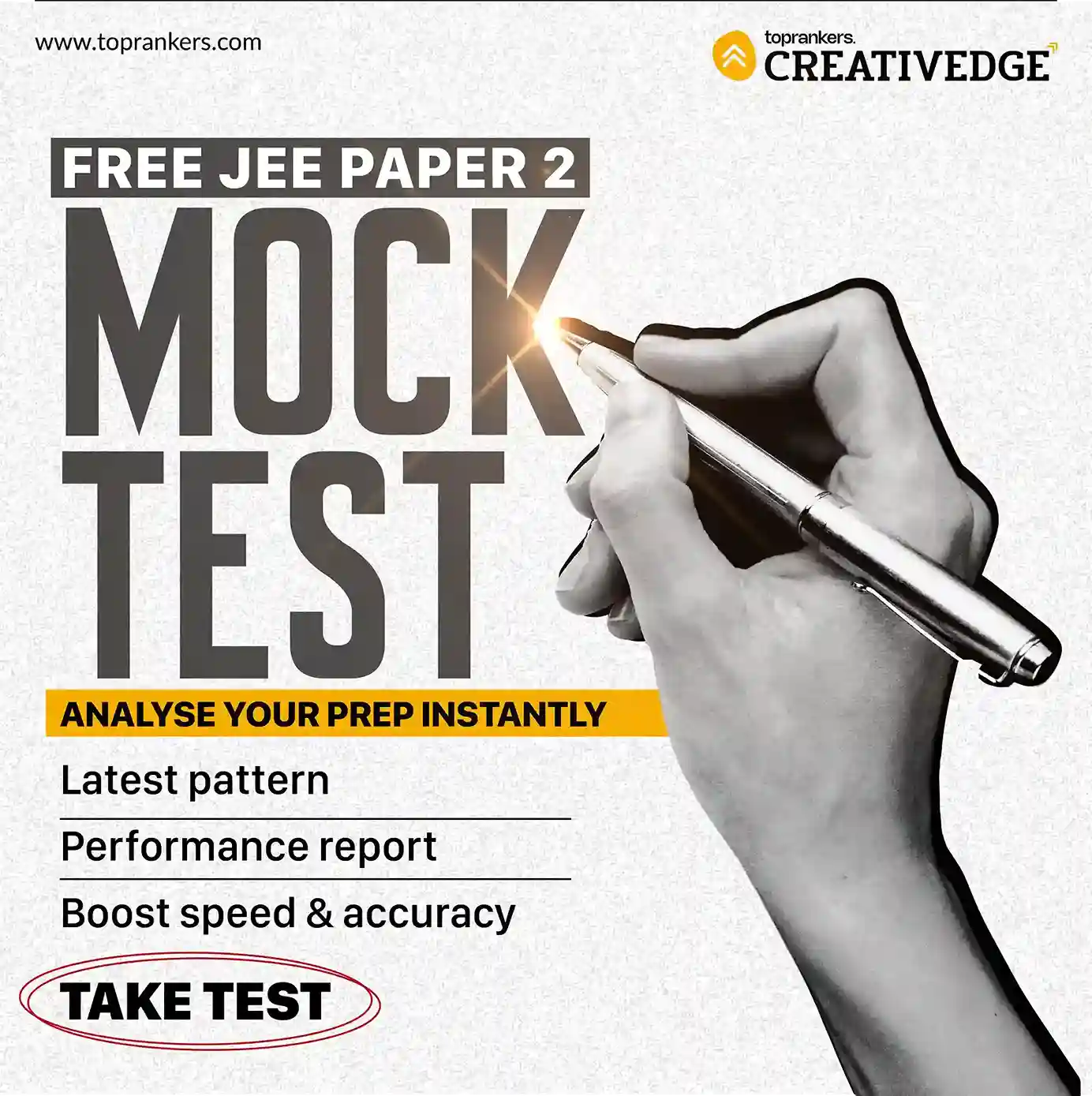
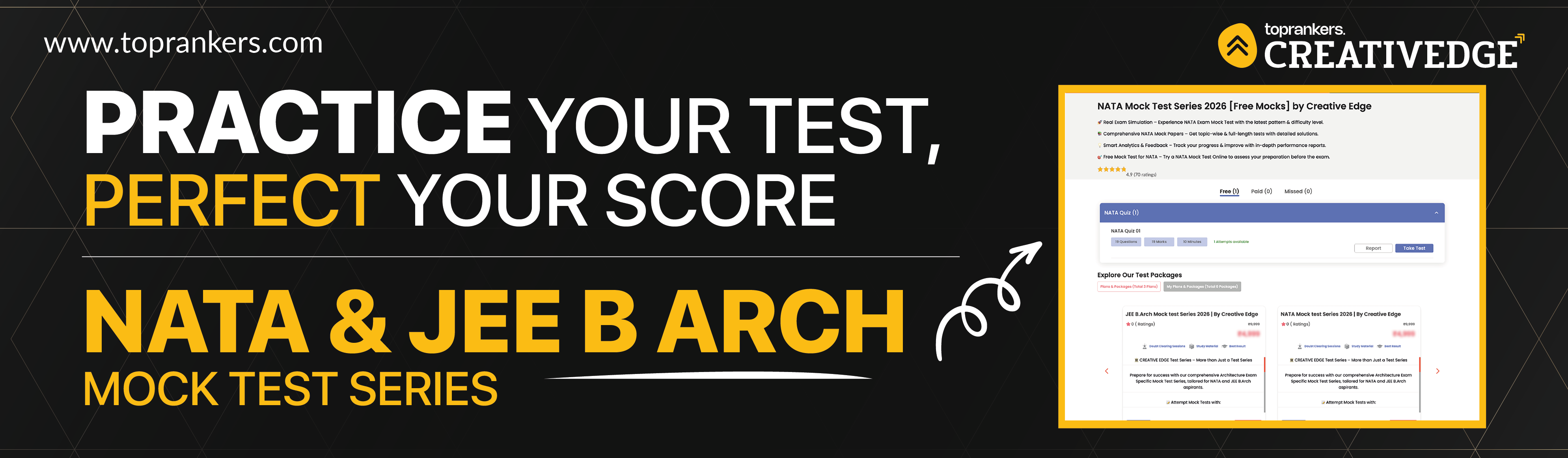
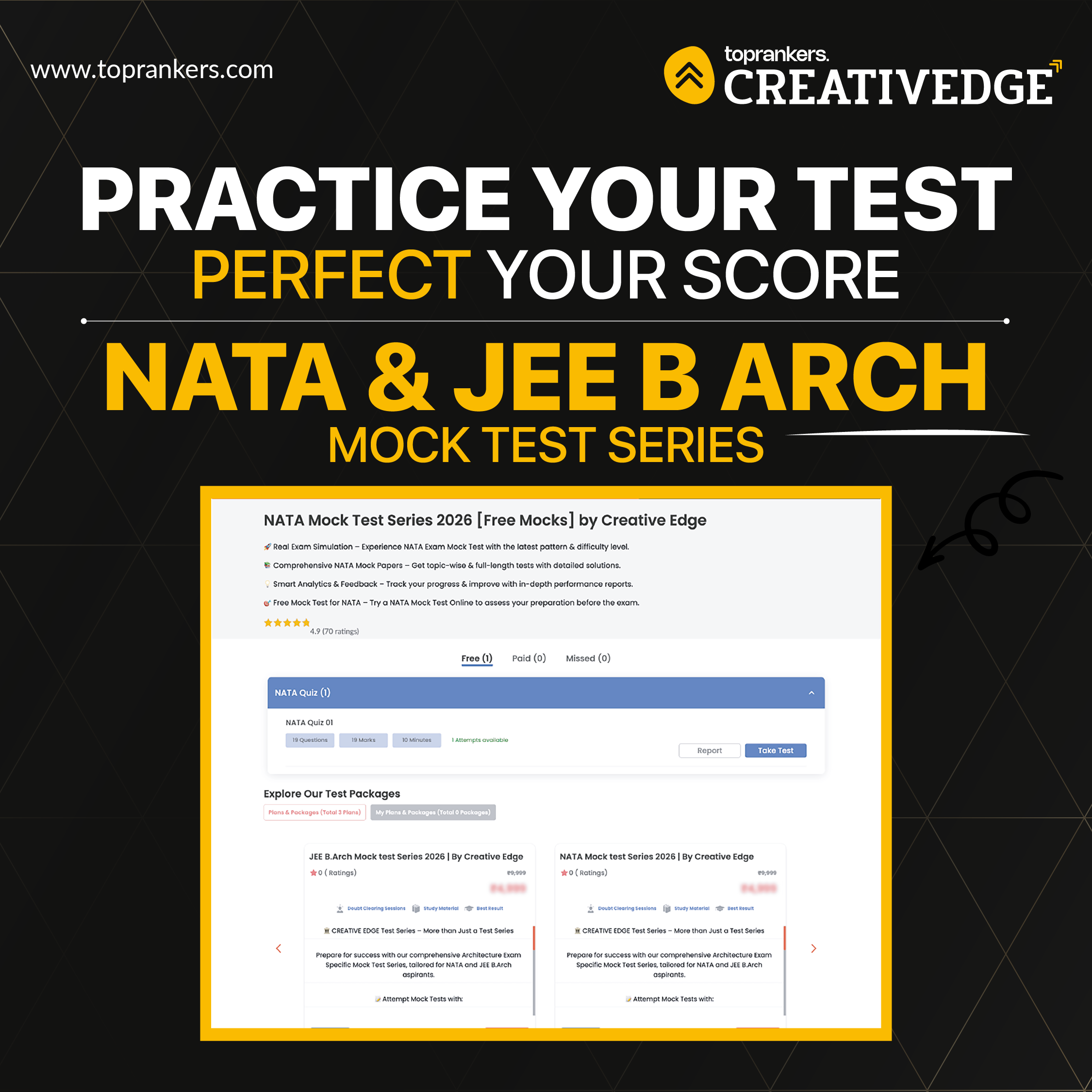
Attempt a Free JEE B.Arch Mock Test
Fill your details
Frequently Asked Questions
What is the best JEE Main Paper 2 study material?

Where can I download JEE Main Paper 2 study material PDF free?
What is the best aptitude book for JEE B.Arch?
Is NCERT enough for JEE Main Paper 2 Maths?
How should I prepare for the drawing section?
How should I prepare for the drawing section?
Are previous year papers enough for JEE Main Paper 2?
Which study material is best for JEE B.Planning?
Vineeta Agrawal
Communications Executive
SHARE