


Bihar APO Book 2026: Best Books for Bihar APO Exam Preparation (Subject-wise)
October 28, 2026
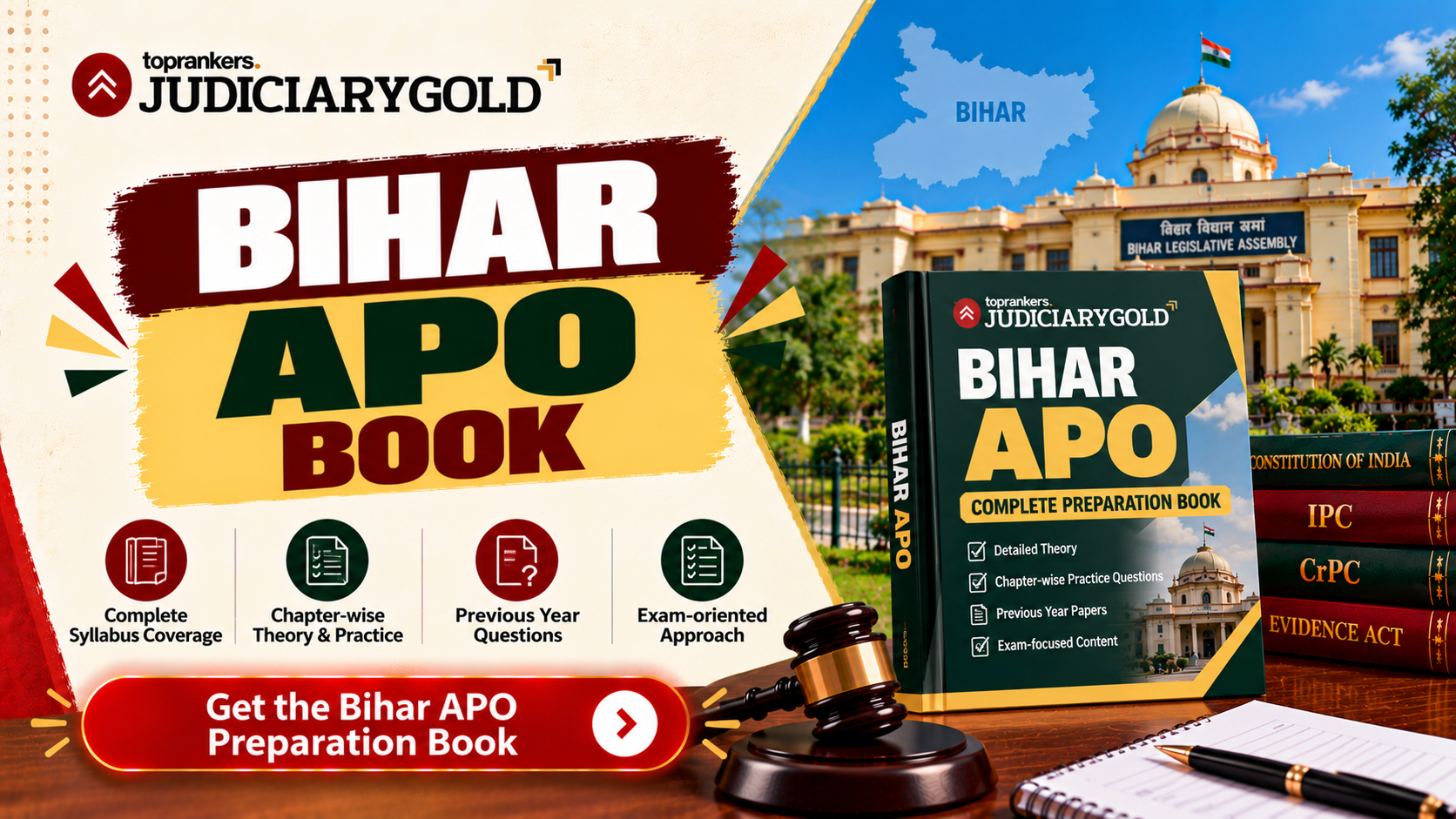
The Bihar APO books for 2026 are one Bare Act plus one standard textbook for each paper are P.S.A. Pillai for the BNS, R.V. Kelkar for the BNSS, Batuk Lal for the BSA, C.K. Takwani for the CPC and J.N. Pandey for Constitutional Law.
For General Studies, use Lucent’s General Knowledge with a Bihar GK book, and practise with BPSC’s own 2026 question papers.
- This book list follows the Bihar APO syllabus under BPSC Advertisement No. 13/2026.
- BPSC notified 300 Assistant Prosecution Officer posts in the Directorate of Prosecution, Home Department, Bihar.
- The Prelims was held on 15 July 2026 and BPSC released the final answer key on 12 October 2026.
Best Bihar APO Books 2026: Subject-wise List for Prelims & Mains
We have listed the best books for all subjects according to the Bihar APO syllabus 2026. These books will help you prepare in the right direction and clear concepts better.
| Paper | Best Bihar APO Book to Start With |
|---|---|
| BNS (Mains Paper 4) | Bare Act + Criminal Law – P.S.A. Pillai |
| BNSS (Mains Paper 6) | Bare Act + Criminal Procedure – R.V. Kelkar |
| BSA (Mains Paper 5) | Bare Act + Law of Evidence – Batuk Lal |
| CPC (Mains Paper 6) | Civil Procedure with Limitation Act – C.K. Takwani |
| Constitutional Law (Mains Paper 7) | Constitutional Law of India – J.N. Pandey |
| Other Laws (Mains Paper 8) | Bare Acts of NDPS, POCSO, PC Act, SC/ST Act, Bihar Prohibition and Excise Act, and others |
| General Studies | Lucent’s General Knowledge + Know Your State Bihar |
| Hindi / English (Qualifying) | Adhunik Hindi Vyakaran aur Rachna; Wren & Martin |
| Practice | BPSC 2026 Prelims papers + solved papers (2009–2021) |
Bihar APO Syllabus 2026 Overview
The Bihar APO 2026 exam is conducted by the Bihar Public Service Commission (BPSC) in three stages: an objective Prelims, a descriptive Mains and an interview. Prelims only qualifies you for the Mains, and the final merit list is based on Mains and interview marks.
Knowing which paper carries how many marks helps you decide where each Bihar APO book fits in your preparation.
| Stage | Papers | Marks |
|---|---|---|
| Prelims | Paper I: General Studies; Paper II: Law | 100 + 150 |
| Mains | General Studies; Hindi; English; BNS; BSA; BNSS + CPC; Constitutional Law; Other Laws | 100 each for General Studies, Hindi and English; 150 for each law paper (BNSS: 75 + CPC: 75) |
| Interview | Personal interview | 100 |
Bihar APO Books for Criminal Law: BNS, BNSS and BSA
The three new criminal codes carry three full Mains papers (450 marks) and most of the Prelims Law paper in the Bihar APO exam 2026. Read each from its Bare Act first, then use one textbook to understand the principles and case law behind the sections.
Bharatiya Nyaya Sanhita, 2023 (BNS) – Mains Paper 4, 150 Marks
The Bharatiya Nyaya Sanhita, 2023 replaced the Indian Penal Code and is tested in a full 150-mark Mains paper and in the Prelims Law paper. The best Bihar APO books for the BNS combine the Bare Act for section wording with P.S.A. Pillai for concepts and case law.
| Book | Author / Publisher |
|---|---|
| Bharatiya Nyaya Sanhita, 2023 (Bare Act) | Universal / LexisNexis or EBC |
| Criminal Law | P.S.A. Pillai (LexisNexis) |
| The Bharatiya Nyaya Sanhita | Ratanlal & Dhirajlal (LexisNexis) |
Bharatiya Nagarik Suraksha Sanhita, 2023 (BNSS) – Mains Paper 6, 75 Marks
The Bharatiya Nagarik Suraksha Sanhita, 2023 replaced the Code of Criminal Procedure and shares Mains Paper 6 with the CPC, carrying 75 marks. For BNSS preparation, read the Bare Act alongside R.V. Kelkar’s Criminal Procedure, the standard book for this paper.
| Book | Author / Publisher |
|---|---|
| Bharatiya Nagarik Suraksha Sanhita, 2023 (Bare Act) | Universal / LexisNexis or EBC |
| Criminal Procedure | R.V. Kelkar, revised by K.N. Chandrasekharan Pillai (EBC) |
Bharatiya Sakshya Adhiniyam, 2023 (BSA) – Mains Paper 5, 150 marks
The Bharatiya Sakshya Adhiniyam, 2023 replaced the Indian Evidence Act and has its own 150-mark Mains paper. The best Bihar APO books for the BSA are the Bare Act with either Batuk Lal or Avtar Singh for explanations and leading judgments.
| Book | Author / Publisher | Use It For |
|---|---|---|
| Bharatiya Sakshya Adhiniyam, 2023 (Bare Act) | Universal / LexisNexis or EBC | Section-wise revision of relevancy, admissions, confessions and burden of proof |
| Law of Evidence | Batuk Lal (Central Law Agency) | Simple explanations; good first read |
| Principles of the Law of Evidence | Avtar Singh (Central Law Publications) | Deeper treatment and case law for Mains answers |
Refer: BPSC Bihar APO Question Paper 2026
Bihar APO Books for CPC, Constitutional Law and Other Laws Papers
The CPC shares Mains Paper 6 with the BNSS (75 marks), while Constitutional Law has a full 150-mark paper and also appears in the Prelims Law paper. Before you pick a book, match its chapters against the topics listed in the Bihar APO Mains syllabus.
| Subject | Book | Author / Publisher |
|---|---|---|
| Code of Civil Procedure, 1908 | Civil Procedure with Limitation Act | C.K. Takwani (EBC) |
| Code of Civil Procedure, 1908 | CPC Bare Act | Any current edition |
| Constitutional Law of India | Constitutional Law of India | J.N. Pandey (Central Law Agency) |
| Constitutional Law of India (Reference) | Indian Constitutional Law | M.P. Jain (LexisNexis) |
| Constitution for Prelims MCQs | Indian Polity | M. Laxmikanth (McGraw Hill) |
Books for the Other Laws Paper (Mains Paper 8, 150 Marks)
The Other Laws paper is the one most book lists skip, yet it carries the same 150 marks as the BNS paper. These are short special statutes, so the Bare Act is the main book.
Read each Act in full, then make a one-page note of its offences, punishments and procedural safeguards.
| Act | What to Focus On |
|---|---|
| Narcotic Drugs and Psychotropic Substances Act, 1985 | Small and commercial quantity, search and seizure safeguards, bail restrictions |
| Protection of Children from Sexual Offences Act, 2012 | Offence definitions, special court procedure, presumptions |
| Prevention of Corruption Act, 1988 | Offences by public servants, sanction for prosecution |
| SC/ST (Prevention of Atrocities) Act, 1989 | Offences, special courts, anticipatory bail bar |
| Arms Act, 1959 and Explosives Act, 1908 | Licensing offences, punishments, sanction |
| Information Technology Act, 2000 (Chapter XI) | Cyber offences and penalties |
| Bihar Prohibition and Excise Act, 2016 (with rules) | Prohibition offences, confiscation and procedure; this Act is specific to Bihar and widely used in local prosecutions |
| Bihar Police Act, 2007 | Structure and duties of police, provisions relevant to investigation |
Bihar APO Books for General Studies
General Studies is worth 100 marks in Prelims Paper I and another 100 marks in the Mains. The syllabus covers general science, current events, Indian and Bihar history, geography and the Indian political system, so a Bihar-specific source is not optional.
| Area | Book or Source |
|---|---|
| Static GK (All Subjects) | Lucent’s General Knowledge (Lucent Publications) |
| Indian Polity | Indian Polity – M. Laxmikanth |
| Modern Indian History | A Brief History of Modern India – Rajiv Ahir (Spectrum) or NCERT Class 12 |
| Geography and Science Basics | NCERT Classes 6–10 |
| Bihar GK | Know Your State Bihar (Arihant) |
| Bihar Economy | Bihar Economic Survey (Finance Department, Government of Bihar), summary chapters only |
| Current Affairs | One national newspaper plus one monthly current-affairs magazine |
Bihar APO Books for Hindi and English
Hindi and English in the Mains are qualifying papers: you need at least 30 marks in each, and the marks do not count towards merit. The Hindi paper is set at the level of Bihar School Examination Board Matriculation Hindi.
| Paper | Book | Author / Publisher |
|---|---|---|
| Hindi | Adhunik Hindi Vyakaran aur Rachna | Vasudev Nandan Prasad (Bharati Bhawan) |
| Hindi | Samanya Hindi | Brij Kishore Prasad Singh |
| English | High School English Grammar and Composition | Wren & Martin |
| English | Objective General English | S.P. Bakshi (Arihant) |
One grammar book per language and ten timed essay and précis practice answers are usually enough.
Previous Year Question Papers for Bihar APO 2026
Candidates can use previous year question papers for IPC, CrPC and Evidence Act section numbers only. When you solve them, write the matching BNS, BNSS or BSA section beside each answer; it doubles as revision of the new codes. Once you have a score from a full paper, look at the previous Bihar APO cut-off marks to see how far you are from the qualifying range.
- The 2026 Prelims papers with BPSC’s final answer key – This is the most current and official practice set; note that BPSC deleted Law Q55 and Q97 and five GS questions in the final key. If you took the exam, you can match your responses using the steps in our Bihar APO answer key and OMR sheet.
- Bihar APO Preliminary Examination Solved Papers – Samarth Agrawal Publications, for the older pattern and recurring questions.
How the Best Bihar APO Books Improve Your Preparation?
The quality of study material directly influences the quality of preparation. The Bihar APO syllabus is extensive and includes both objective and descriptive components. Therefore, it's necessary to choose only the best books and relevant resources for your prep.
Here's how the best Bihar APO books improve your preparation efficiency:
- Syllabus-oriented Preparation: Books aligned with the latest BPSC Bihar APO syllabus ensure that you focus only on relevant subjects and topics.
- Clear Your Legal Concepts: Standard commentaries and textbooks explain legal provisions in a simplified manner, making complex subjects easier to understand.
- Support Answer Writing Practice for Mains: Books containing illustrations, case laws, and explanations help candidates frame structured answers in descriptive papers.
- Better Revision Efficiency: Studying from fewer but reliable books makes multiple revisions possible, which is essential for retaining legal provisions and important facts.
How to Choose the Best Bihar APO Books & Resources for 2026?
It's crucial that your preparation resources are updated and cover all the subjects included in the BPSC APO syllabus 2026.
Here's how you can choose the best books to prepare for Bihar APO 2026.
- Pick the Latest Editions - Always use the most recent editions of books and Bare Acts, especially for BNS, BNSS, and BSA. Updated editions incorporate amendments and ensure alignment with the latest Bihar APO syllabus.
- Make Sure It's Relevant to the Syllabus - Before buying any book, compare its contents with the official Bihar APO syllabus. Choose resources that are exam-oriented and cover only the prescribed topics to avoid unnecessary study material.
- Do Not Miss on Bare Acts and Previous Year Papers - Bare Acts are indispensable for law subjects because they help candidates understand the exact statutory language. Along with this, solving previous year's papers (PYQs) helps identify important topics, understand question trends, and improve answer-writing skills.
- One Book for Each Subject is Enough - Studying from too many books often creates confusion and makes revision difficult. It is better to follow one standard textbook, the relevant Bare Act, and previous year's papers for each subject.
Multiple revisions of limited resources are far more effective than reading many books.
How Many Bihar APO Books Are Enough?
For most aspirants, 10–14 books are enough for the entire Bihar APO Exam preparation:
- Core law subjects: 1 concept book + 1 MCQ book (per major subject)
- Bare Acts: IPC/CrPC/Evidence/Constitution/Contract/Specific Relief/Limitation (as required)
- GS: 1 static GK + 1 Bihar GK + current affairs source
More books usually mean less revision.
How to Make Notes from Bihar APO Books
- Use the Bare Act as your skeleton. Write notes under section numbers so you can revise in the order the exam quotes them.
- Keep an old-to-new section table. One page mapping key IPC/CrPC/Evidence sections to BNS/BNSS/BSA saves confusion when reading older case law.
- Write ingredients, not paragraphs. For each offence, list the ingredients, punishment and one leading case.
- Maintain an error log. Record every wrong MCQ with the correct section and why you missed it.
Take Free Demo Classes For Bihar APO Exam
90-Day Study Plan Using the Bihar APO Book List 2026
The plan assumes about six study hours a day and starts once you have the Prelims result or decide to begin Mains preparation early. For subject-wise tips beyond books, read the Bihar APO preparation strategy.
Days 1–30: Core criminal law
The first month covers the BNS, BNSS and BSA because these three papers carry 450 of the law marks in the Bihar APO Mains. Building them early also gives you more time to revise the sections that repeat across papers.
- BNS, BNSS and BSA: Bare Act reading plus textbook chapters, about 4 hours daily.
- GS: 1 hour daily on Bihar GK and current affairs.
- Write two Mains answers a day from the chapter you finished.
Days 31–60: CPC, Constitution and Other Laws
The second month completes the syllabus with the CPC, Constitutional Law and the Other Laws paper. Other Laws Acts are short, so you can finish one every two days while keeping your criminal law revision going.
- CPC (Takwani) and Constitution (J.N. Pandey) on alternate days.
- One Other Laws Act every two days, with a one-page note.
- One full-length descriptive paper each week, checked against the Bare Act.
Days 61–90: Revision and answer writing
The final month moves you from reading to writing under exam conditions. Timed full papers help you finish each 3-hour Mains paper and show which Bare Act sections you still need to revise.
- Revise notes and Bare Acts paper by paper.
- Three timed full papers per week, including one Hindi and one English paper to secure the qualifying 30 marks.
- Last ten days: Bare Acts and error log only.
Key Takeaways
The best Bihar APO books for 2026 are one Bare Act and one standard textbook for each paper in BPSC Advt. No. 13/2026. Here is the full guide in brief:
- BPSC selects Assistant Prosecution Officers through a qualifying Prelims (GS 100 + Law 150 marks), a descriptive Mains and a 100-mark interview.
- For criminal law, read P.S.A. Pillai for the BNS, R.V. Kelkar for the BNSS, and Batuk Lal or Avtar Singh for the BSA, each with its Bare Act.
- Use C.K. Takwani for the CPC and J.N. Pandey for Constitutional Law, with M. Laxmikanth for Prelims MCQs.
- Prepare the 150-mark Other Laws paper from Bare Acts of NDPS, POCSO, PC Act, SC/ST Act, Arms, Explosives, IT Act and the Bihar Prohibition and Excise Act.
- Lucent’s General Knowledge, Laxmikanth, NCERTs and Know Your State Bihar cover the 100-mark GS papers.
- Hindi and English are qualifying Mains papers, so one grammar book each and timed practice for the 30-mark minimum are enough.
- Solve BPSC’s 2026 Prelims papers with the final answer key, then the 2009–2021 solved papers, mapping old IPC sections to the BNS.
- About 15 books and Bare Acts cover the full syllabus; buy editions updated for the 2023 criminal codes.
- Build notes on the Bare Act structure and follow the 90-day plan: criminal law first, then CPC, Constitution and Other Laws, then timed answer writing.
If you want a structured guidance, take a free demo online class or talk to a Judiciary Gold counsellor about the Judiciary APO Coaching 2026.

Frequently Asked Questions
Which is the best book for beginners preparing for Bihar APO 2026?

Are Bare Acts enough for Bihar APO 2026 Exam preparation?
How many books should I buy for Bihar APO 2026?
Is Bihar APO Book list different for Prelims and Mains?
Which GS book is best for Bihar APO 2026?
Are Hindi and English marks counted in the Bihar APO final merit?
Do I need new books after the BNS, BNSS and BSA replaced the IPC, CrPC and Evidence Act?

Nancy Mahavir Sharma
Legal Writer
SHARE