



Mascot and Character Design Questions for NID DAT 2027 PDF With Solutions
November 26, 2026
Mascot and character design questions for NID are not usually standalone questions - they are a design skill the NID DAT tests indirectly, through prompts like poster design, comic strips, storyboarding and scene creation, where you often choose to invent a mascot or character to communicate the given message.
A mascot represents a brand, event or cause and must be simple and instantly recognizable, while a character carries personality and expression inside a story or scene.
You’re marked on how well the character fits the brief, its originality, appeal, personality and clarity - not on photorealistic drawing. These skills are tested in the drawing/creative-ability part of the Prelims and, more deeply, in the Studio Test for shortlisted B.Des and M.Des candidates.
Key Highlights - Mascot and Character Design Questions for NID 2027
| Point | Detail |
|---|---|
| Are they standalone questions? | Rarely – they appear inside poster, comic strip, storyboard & scene questions |
| What’s tested | Idea generation, design thinking, appeal, personality, execution |
| Where it appears | NID DAT drawing/creative-ability section & Studio Test (Mains) |
| Mascot vs character | Mascot = brand/event symbol and character = story/scene personality |
| What earns marks | Fit to the brief → originality → appeal → expression → clarity |
| Colour | Usually not allowed in NID, check each question’s specific instructions |
| Biggest mistake | Copying known mascots / drawing before thinking |
If you’re preparing for NID DAT 2027 or 2028, this is the one skill that if you practice for, will help you score across several question types at once, and most candidates never train it deliberately.
What Is the Difference Between a Mascot and a Character in NID?
Students use these words interchangeably, but NID briefs treat them differently, and knowing which one you’re being asked for changes your whole answer.
A mascot is a face for something – a brand, a festival, a campaign, a city. It has to be instantly readable, simple enough to work on a badge or a poster, and it must stand for the thing it represents. A recycling mascot should feel eco, friendly, and energetic the moment someone sees it.
A character is built to live in a story, game, comic or animation. It needs depth - a personality you could describe in three words, expressions that change with emotion, and a design that would still read in different poses. Range matters more than instant simplicity.
| Aspect | Mascot | Character |
|---|---|---|
| Purpose | Represents a brand/event/cause | Lives in a story/game/animation |
| Must-have | Instant recognisability, simplicity | Personality depth, expression range |
| Reads at | Small sizes (badge, logo, sticker) | Multiple poses & emotions |
| Marks reward | On-brief symbolism, memorability | Believable personality, consistency |
| Shows up in | Poster, campaign, branding prompts | Comic strip, storyboard, scene prompts |
When a poster or branding prompt needs a single memorable symbol, a mascot will add meaning and simplicity.
When a comic, storyboard or scene needs a figure that acts and emotes across panels, that’s where you require to come up with a suitable character – personality and range. Reading which one the question needs is the first mark you earn.
Regular practice with NID sketching questions builds more than enough skill for these answers.
NOTE: This video is for 2026, but is relevant for 2027 exams as well.
Does NID Ask Direct Mascot and Character Design Questions?
This is the misconception worth clearing up first, because it changes how you prepare. If you scan actual NID DAT past papers, you’ll rarely - if ever - find a question that simply says “design a mascot.”
NID tests mascot and character design indirectly. The skill becomes your tool for answering the questions NID does ask - a poster that must carry a message, a comic strip that needs a lead figure, a storyboard that follows a character, or a scene you have to visualize & illustrate.
Instead of expecting a mascot question, get good enough at inventing a character on demand that, the moment a poster or comic prompt lands, you can reach for a mascot or character as fast as you can for sketching a memorable answer. That’s where the marks are.
Where Do Mascot and Character Design Questions Appear in NID DAT?
They surface inside the drawing / creative-ability section of the NID DAT Prelims, mostly through poster and illustration prompts and far more in the Studio Test (Mains), where comic strips, storyboards and scene creation all reward a strong invented character.
The Prelims is a qualifying round, while the Studio Test and interview decide B.Des admission (weighted 60% studio test and 40% interview). NID DAT 2027 registration is underway with the prelims expected in January 2027, so 2027 and 2028 aspirants should fold mascot and character practice into their drawing routine now rather than in the final weeks.
For the full exam structure, see our NID exam pattern guide.
How Do Mascot and Character Design Questions for NID Actually Appear?
Mascot and character design in NID lives inside four common question types. In each, a strong invented character is often the most effective – and most original – way to solve the brief.
| NID question type | How a mascot/character helps | Example brief |
|---|---|---|
| Poster design | A mascot delivers the message faster than text | “Design a poster to promote water conservation.” |
| Comic strip | A consistent lead character carries the panels | “Create a 4-panel comic on road safety.” |
| Storyboarding | A recurring character makes the sequence read | “Storyboard a short ad for a children’s cereal.” |
| Scene / illustration creation | Characters give the scene life and focus | “Illustrate a busy market scene.” |
In a poster prompt, you usually get to choose how to convey the message and a friendly mascot is often far more memorable than a photograph or plain type.
In comic strips and storyboards, the character isn’t optional - a clear, consistent, expressive figure is what makes the sequence readable. Our guide to NID storyboard and comic strip questions shows the full question types these skills plug into.
Previous Year Mascot and Character Design Questions (with Solutions)
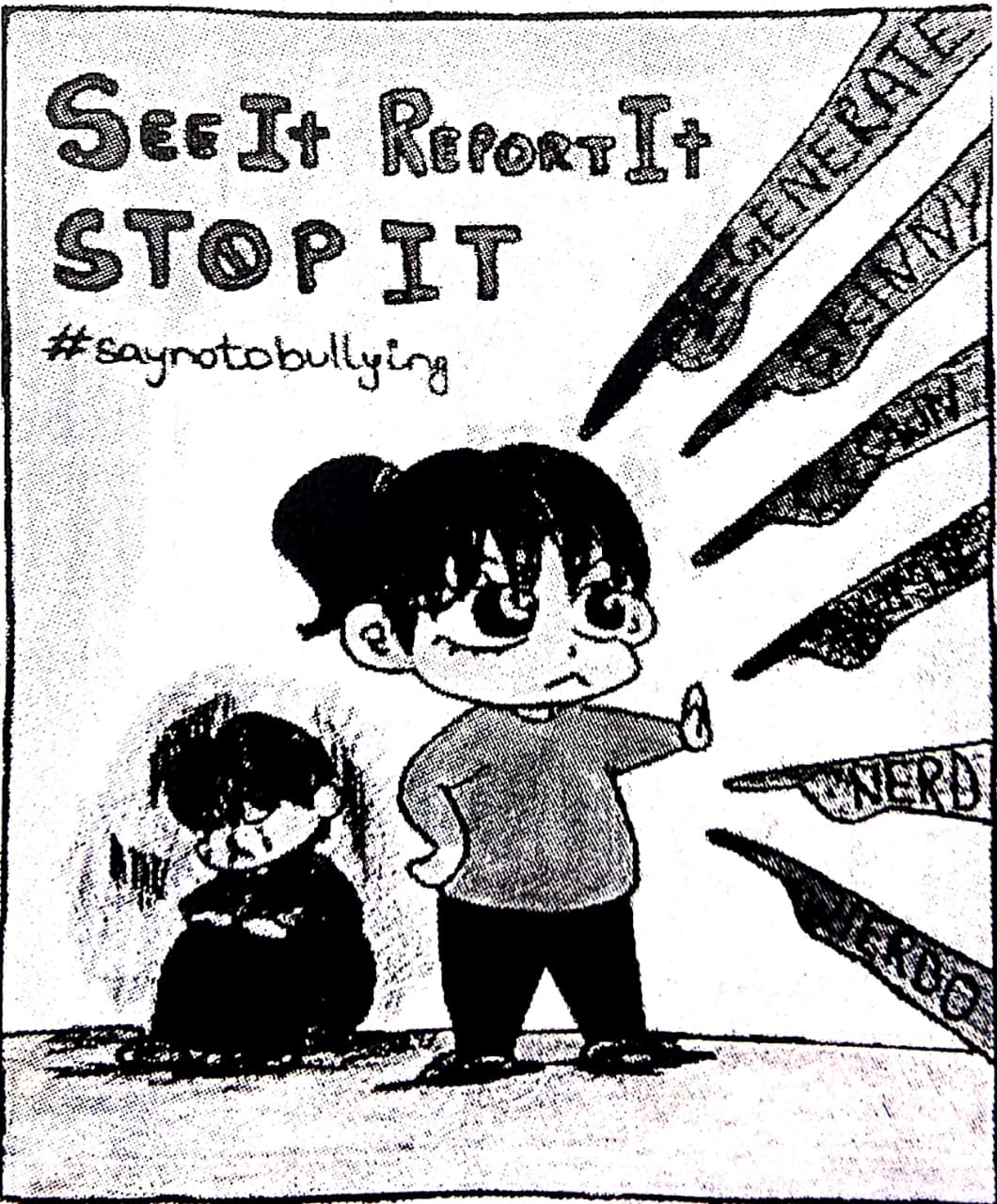
Q) A student at your school has been bullied. So an anti-bullying campaign is arranged to raise awareness regarding this issue. Make a poster to spread awareness to combat bullying. Write a short explanation about your thoughts in the poster.
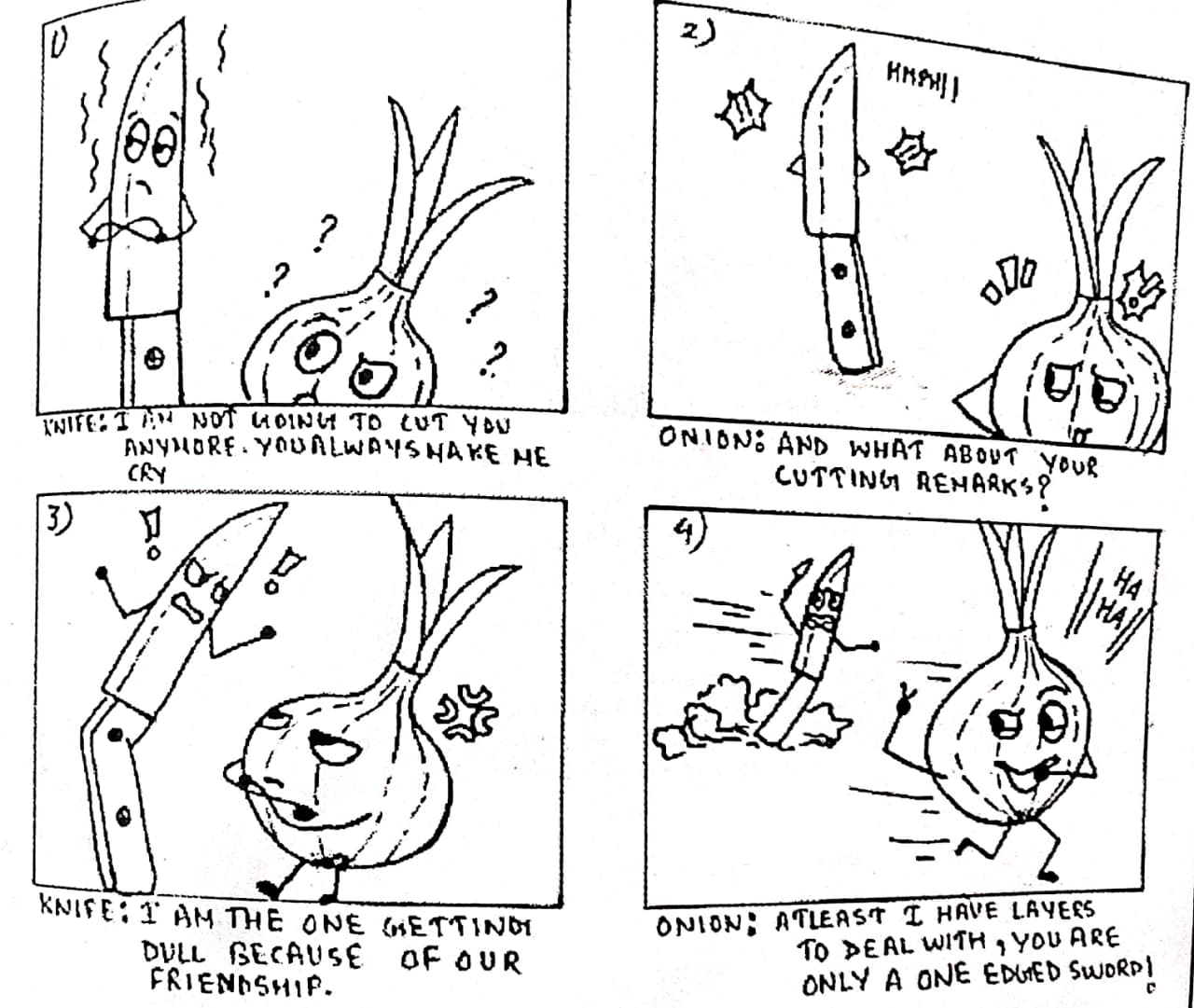
Q) Show a humorous conversation between knife and an onion in 4 frames below.
Q) Design a poster in black and white on the topic - Infant Mortality
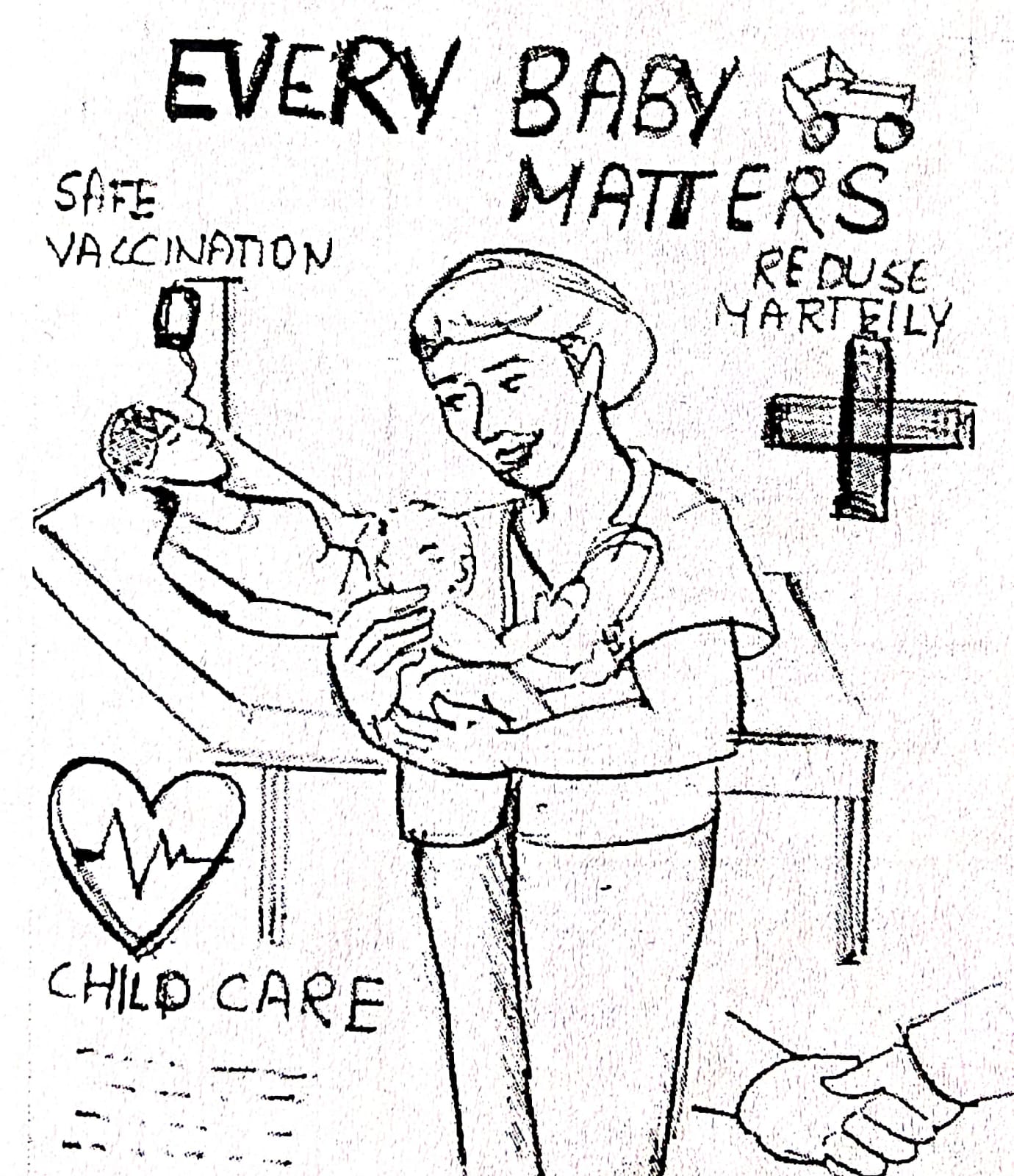
To rehearse under real exam pressure, pair these with full-length NID mock tests that recreate the Studio Test timing.
How to Approach Mascot and Character Design Questions for NID (Step-by-Step)
Here’s the method we teach at Creative Edge – it works for any mascot or character prompt and keeps you from the classic trap of drawing before thinking.
Step 1 - Decode the brief (2-3 min)
Underline the purpose, the audience, and any constraint. For example - “Mascot for a children’s dental-care campaign” tells you: friendly, kid-facing, tooth/health theme. Write the three words you want people to feel.
Step 2 - Thumbnail ideas, don’t commit (4-5 min)
Sketch 3–4 tiny rough options exploring different directions - an animal, an object-character, a human-ish figure. Pick the one that’s most on-brief, not the one that’s prettiest.
Step 3 - Choose your shape language (1 min)
Decide the dominant shape before you render - round for friendly, square for strong/stable, triangular for dynamic or mischievous. This single decision does most of your personality work.
Step 4 - Build the form (8-10 min)
Construct from simple shapes, keep proportions deliberate (a larger head reads younger/cuter), and give it a clear silhouette.
Step 5 - Add personality (5 min)
This includes planning eyes, expression, a pose for their actions that makes them feel alive and recognizable. For a character, add different expressions based on the story frames (happy, surprised) to show range. For a mascot, show it once, clean and confident.
Step 6 - Finish and justify (4-5 min)
Add color if allowed (usually not allowed in NID), keep it to 2-3 purposeful colors, and write a one-or-two-line rationale - what it is, and why it fits the brief.
The same habits - clean proportion, controlled light and confident linework - carry straight over to the NID object and still-life drawing questions you’ll also face in the exam.
A Worked Example: Using a Mascot to Solve a Poster Question
Because mascot work usually appears inside a bigger prompt, let’s walk a realistic one – “Design a poster to encourage people to use public transport.” You’re free to solve it any way and a mascot is often the strongest choice.
1. Decode: Purpose = promote public transport; audience = city commuters; feeling-words = friendly, easy, eco.
2. Ideation: Instead of drawing a plain bus, invent a cheerful bus-mascot. Personify the vehicle so the object becomes a character the poster can build around. This will look more original than a basic crowd scene, and instantly convey the message.
3. Shape language: You can plan a rounded body for the bus mascot with dot eyes and a smile so that it comes off as friendly and approachable.
4. Compose the poster: Next step is putting everything together. Place the mascot as the hero in the lower two-third space, add a short catchy headline above like – “Hop on, the city’s greener this way”, and keep the background clean so the character gets highlighted.
5. Personality + finish: Give the mascot a welcoming wave and a forward lean (line of action = motion) and add a one-line rationale explaining the choice.
That answer wins marks on the poster question and on character design at once – the idea is on-brief, original, and the mascot does the communicating. This is exactly why the skill is worth training even though NID won’t ask for a mascot on its own.
The more you drill this sequence, the faster it gets - our set of NID drawing practice questions gives you plenty of prompts to run it on.
More Practice Questions for Mascot & Character Design for NID 2027
Practice these under timed conditions (30 minutes each). Each is framed the way NID actually asks – a real question type where a mascot or character is your best route to the answer.
Q1. Design a poster for a national cleanliness campaign using an original mascot.
How to Solve:
- First create a simple mascot (e.g., a smiling dustbin, broom, or dust particle) with a memorable personality.
- Make the mascot the focal point and use it to interact with the surroundings instead of just standing.
- Keep the message readable from a distance with a bold headline, minimal text, and strong visual hierarchy.
Q2. Create a 4-panel comic strip on road safety with one consistent lead character.
Solution Tips:
- Keep the same character consistent in appearance across all four panels.
- Build a clear sequence= problem → mistake → correct action → positive outcome.
- Use expressions, motion lines, and simple backgrounds so the story is easy to understand without excessive dialogue.
Q3. Design a poster for cyber security.
Solution:
- Choose one cyber threat (phishing, weak passwords, OTP scams, etc.) instead of covering everything.
- Use simple icons (shield, lock, laptop, hacker) to support the message visually.
- Create a strong headline and limit supporting text to 2–3 short safety tips.
Q4. Invent a helpful character for a city metro and show it guiding a lost passenger (3-frame scene).
Solution:
- Design a mascot inspired by the metro (ticket, train, map, token, etc.) with a friendly personality.
- Show a clear progression - confused passenger → guidance → successful destination.
- Keep the character's proportions and design consistent across all three frames.
Q5. Create a poster for a brand that sells gardening tools using a friendly plant-character.
Solution:
- Design a cute plant mascot that naturally interacts with the gardening tools.
- Arrange the poster with a clear focal point, brand name, product, and slogan.
- Use expressive poses and simple props to communicate the brand's friendly nature.
Q6. Storyboard a short ad for a junior football league with a recurring mascot.
Solution:
- Create one memorable football mascot that appears in every frame.
- Structure the storyboard like an advertisement - grab attention → encourage participation → finish with a call-to-action.
- Keep each frame focused on one action with expressive body language.
Q7. Create a nervous, clumsy robot character and draw three expressions (happy, scared, proud).
Solution:
- Design the robot only once and maintain the same proportions in all three sketches.
- Change emotions mainly through eyebrows, eyes, mouth, posture, and arm gestures rather than redesigning the character.
- Add small action cues (sweat drops, spark, chest out, etc.) to strengthen the expressions.
Q8. Design a poster for a save-the-tigers drive using an original tiger mascot.
Solution:
- Create a friendly tiger mascot that attracts attention while supporting the conservation message.
- Use the tiger as the main focal point and reinforce the message with simple supporting visuals like trees or paw prints.
- Finish with a memorable slogan and a clear call-to-action, avoiding excessive text.
Map this practice into your NID study plan so it becomes a weekly habit rather than a last-minute scramble.
What Do NID Examiners Actually Look for in Mascot / Character Design Questions?
A strong mascot or character answer wins on these, roughly in this order of weight:
| Criterion | What it means | Why it matters |
|---|---|---|
| Concept relevance | Does it genuinely fit the brief? | A beautiful off-brief mascot still fails |
| Originality | Is it your idea, not a known mascot? | Copies are penalised hard |
| Visual appeal | Clean silhouette, pleasing proportion | First-impression memorability |
| Personality / expression | Does it feel alive and on-character? | Separates design from decoration |
| Execution & clarity | Confident lines, readable, finished | Shows craft under time pressure |
| Rationale | A clear “what & why” line | Proves intent, not accident |
A student with average linework but a sharp, on-brief idea and a clear rationale mostly outscores a pretty looking drawing with a generic puppy.
Both skills lean on the same core abilities the NID syllabus lists for its drawing and design-aptitude sections.
Which Design Principles Make a Mascot or Character Appealing?
1. Shape language
The dominant shape sends a personality signal before any detail does.
| Dominant shape | Personality it signals | Good for |
|---|---|---|
| Round / circular | Friendly, cute, safe | Kids’ brands, social causes |
| Square / rectangular | Stable, strong, reliable | Sports, institutions, tech |
| Triangular / angular | Dynamic, edgy, mischievous | Villains, energetic events |
2. Exaggeration and proportion
Real anatomy is boring - design with some features exaggerated to better represent characteristics. For example – a bigger head and eyes read younger and friendlier, longer limbs dynamic. But decide the exaggeration on purpose.
For more tips like these across the full drawing section, keep our NID DAT drawing tips and tricks handy while you practice.
What Are the Most Common Mistakes in Mascot and Character Design Questions for NID?
These are the errors we see cost marks most often – and each has a quick fix.
| Common mistake | Why it hurts | The fix |
|---|---|---|
| Waiting for a “design a mascot” question | It rarely comes and so you ignore practicing for it | Purposely create mascots inside poster/comic/scene answers |
| Drawing before decoding the brief | Off-brief, no concept | Spend 2–3 min decoding first |
| Copying a known mascot (Amul, sports teams) | Originality gets compromised | Invent unique characters yourself – borrow principles, not exact designs |
| No personality / blank expression | Looks flat | Add eyes, pose, line of action |
| Over-rendering, running out of time | Unfinished answer | Keep it clean and prioritize finish over polish |
| No written rationale | Examiner guesses your intent | Always add a one-line “what & why” |
How Much Should You Practice Mascot and Character Design for NID?
Enough that inventing a character becomes automatic, so you can deploy it the moment a poster, comic or scene prompt lands. You can even create a character library for yourself so you can reach for one whenever required.
Aim for 20–30 timed attempts that place a mascot or character inside a real question type – not as isolated doodles. Quality of review matters more than raw count. After each attempt, score yourself or ask for feedback from experts.
| Prep stage | Focus | Weekly target |
|---|---|---|
| Foundation (Week 1) | Shape language, silhouettes, 20 quick thumbnails/day | 3 full attempts |
| Build (Week 2) | Characters inside poster & comic prompts, timed | 4 full attempts |
| Polish (Weeks 3-4) | Mixed prompts, self-review | 5 timed attempts |
If you’re starting from scratch without an art background, our guide on how to prepare for NID DAT without a design background pairs well with this practice plan.
Conclusion
Get good enough at inventing a character on demand, and you’ve armed yourself for every poster, comic and scene NID can throw at you – that’s where the real marks are. Practice inside real question types, review each attempt against the rubric, and start well before NID DAT 2027. Download the free mascot and character design questions for NID pdf below and begin today.
Practice the question types above, download the practice PDF, and work under the clock before NID DAT 2027. For guided drawing practice with mentor feedback on your rendering, explore NID online coaching by Creative Edge.
Attempt a Free NID Mock Test
Fill your details
Frequently Asked Questions
Does NID ask a direct “design a mascot” question?

Where exactly do mascot and character design questions for NID appear?
Is colour allowed when I draw a mascot or character in NID?
Do I need to be good at drawing to score with mascots and characters in NID?
What’s the difference between a mascot and a character for NID?
Where can I get mascot and character design questions for NID pdf?
How long should I take to create a mascot or character in the exam?
Can I use an existing famous mascot as inspiration for NID?
Which is harder in NID - using a mascot or a character?

Vineeta Agrawal
Communications Executive
SHARE