
1723534562.png)

CEED 2023 Question Paper PDF Download + Answer Key & Expert Solutions
August 11, 2026
Preparing for CEED becomes much easier when you understand the type of questions asked in the actual exam. The CEED 2023 Question Paper is a valuable resource for aspirants who want to analyse the exam pattern, question difficulty, design aptitude topics, and overall paper structure.
By solving the CEED 2023 question paper, you can identify important topics, improve your problem-solving approach, and practise managing time under exam-like conditions. It also gives you a clear idea of how questions from visualization, logical reasoning, creativity, observation, and design aptitude are presented in the exam.
Key Highlights of CEED 2023 Question Paper
- Conducting Institute: IIT Bombay
- Exam Duration: 3 Hours (Part A: 1 Hour + Part B: 2 Hours)
- Total Marks: 200 Marks (Part A- 100; Part B- 100)
- Part A Question Types: Numerical Answer Type (NAT), Multiple Select Questions (MSQ), and Multiple Choice Questions (MCQ)
- Part A Structure: 41 Questions (8 NAT + 10 MSQ + 23 MCQ)
- Part B Structure: 5 Mandatory Questions carrying 20 marks each
- Difficulty Level: Moderate to Difficult, with a strong emphasis on design thinking rather than rote knowledge.
- Most Valuable For: CEED aspirants looking to understand IIT Bombay's latest evaluation criteria and improve their sketching, creativity, visualization, and problem-solving skills.
CEED 2023 Question Paper PDF Download
Looking for the official CEED 2023 Question Paper PDF, answer key, and brochure? Use the table below to access all the important CEED 2023 resources in one place.
|
Resource |
Download Link |
|
CEED 2023 Question Paper PDF |
|
|
CEED 2023 Final Answer Key PDF |
|
|
CEED 2023 Information Brochure |
Source: CEED Official Website
Tip: Before checking the solutions, attempt the CEED 2023 Question Paper under actual exam conditions. This will help you accurately evaluate your preparation level, time management, and design aptitude skills.
What is the CEED 2023 Question Paper?
The CEED 2023 Question Paper is the official entrance exam paper conducted by IIT Bombay for admission to M.Des programs at top design institutes in India.
It consists of Part A (Design Aptitude) and Part B (Sketching & Design Thinking), testing creativity, visualization, logical reasoning, problem-solving, and visual communication skills.
For CEED 2027 and CEED 2028 aspirants, solving the CEED 2023 paper is one of the best ways to understand the latest exam pattern, identify important topics, assess difficulty level, and practice real exam-level questions.
CEED 2023 Question Paper Overview
|
Particulars |
Details |
|
Exam Name |
CEED 2023 |
|
Conducting Institute |
IIT Bombay |
|
Total Duration |
3 Hours |
|
Total Marks |
200 Marks (Part A - 100, Part B - 100) |
|
Part A Question Types |
NAT, MSQ & MCQ |
|
Part B Sections |
Sketching, Creativity, Visual Sensitivity, Form Sensitivity & Problem Identification |
|
Difficulty Level |
Moderate to Difficult |
|
Ideal For |
CEED 2027 & 2028 Preparation |
CEED 2023 Exam Pattern
The CEED 2023 exam pattern consisted of two parts: Part A (Objective) and Part B (Subjective). Part A tested design aptitude, logical reasoning, visualization, and observation skills, while Part B evaluated sketching, creativity, communication, and problem-solving abilities.
The total duration of the exam was 3 hours, with Part A carrying 100 marks and Part B carrying 100 marks.
Part A Structure
|
Question Type |
Number of Questions |
Total Marks |
|
Numerical Answer Type (NAT) |
8 |
24 |
|
Multiple Select Questions (MSQ) |
10 |
30 |
|
Multiple Choice Questions (MCQ) |
23 |
46 |
|
Total |
41 |
100 |
Marking Scheme:
- NAT: +3 for correct answer, no negative marking
- MSQ: +3 for all correct options selected, -0.2 for incorrect attempts
- MCQ: +2 for correct answer, -0.5 for incorrect answer
Check: Complete CEED Syllabus for 2027 (Part A + Part B)
Part B Structure
|
Question Type |
Skills Tested |
|
Sketching |
Perspective, composition, proportion, line quality, anatomy |
|
Creativity |
Original thinking, ideation, uniqueness, visual storytelling |
|
Form Sensitivity |
Product visualization, form development, design language |
|
Visual Sensitivity |
Visual communication, branding, aesthetics, composition |
|
Problem Identification |
Observation skills, user understanding, design thinking |
|
Total: 5 Questions × 20 Marks |
100 Marks |
Check: CEED Eligibility 2026- Age Limit & Educational Qualification
_(1)1764330056.webp)
CEED 2023 Part A Analysis
CEED 2023 Part A was one of the most balanced papers in recent years.
Rather than relying heavily on mathematics or pure aptitude, the paper tested a broad spectrum of skills expected from a design aspirant: observation, visual reasoning, spatial ability, design awareness, problem-solving, mechanical understanding, ergonomics, creativity, and pattern recognition.
Section-wise Distribution
|
Section |
Question Type |
No. of Questions |
Focus Area |
What Was Asked? |
Difficulty Level |
|
Section I |
NAT |
8 |
Logical reasoning, visual counting, geometry, puzzles |
Guard placement puzzle, sliding number puzzle, triangle counting, cube dissection, ratio & proportion, 3D surface counting, typography observation, rolling disc mechanism |
Moderate to Difficult |
|
Section II |
MSQ |
10 |
Spatial visualization, design thinking, mechanisms, user-centered design |
Pyramid cutting, sanitizer dispenser mechanism, series & repetition concepts, straw mechanism, motif rotation, UX research stakeholders, typography construction, motion mechanisms, drawing machine trajectory, 3D object rotation |
Difficult |
|
Section III |
MCQ |
23 |
Design awareness, ergonomics, visualization, materials, color theory, observation |
Smartphone ergonomics, orthographic projections, material selection, logical deduction, colour theory, paper folding, kitchen ergonomics, scaling mechanisms, dial rotation, stackable furniture, Venn diagrams, observation puzzles, sustainability, reflections, shadow analysis, pattern recognition |
Moderate to Difficult |
Check: CEED 2027 Expected Cut-off
Topic Weightage Analysis: Highest Weightage Areas
|
Topic |
Approx Questions |
|
Spatial Visualization |
12–14 |
|
Mechanical Reasoning |
6–8 |
|
Observation & Pattern Recognition |
5–6 |
|
Design Awareness |
4–5 |
|
Ergonomics |
2–3 |
|
Mathematics |
2–3 |
Overall Assessment
CEED 2023 Part A heavily favoured visual-spatial intelligence, observation skills, and product-mechanism understanding over traditional mathematics.
Nearly half of the questions required candidates to mentally visualize objects, rotations, movements, or transformations, making it one of the most design-oriented CEED papers in recent years.
Also Check: CEED Books 2027
CEED 2023 Sample Questions:
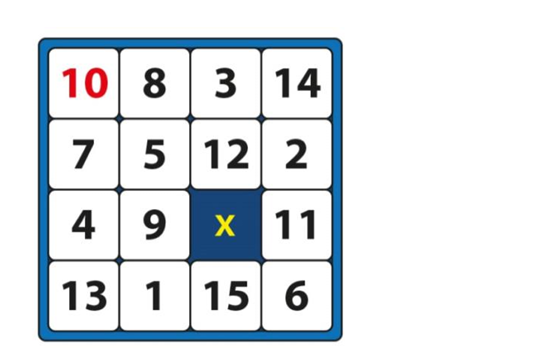
1. Shown below is a number puzzle. Only one piece can be slided horizontally or vertically in one move. What is the least number of moves required to bring the piece with number 10 to the empty position x?
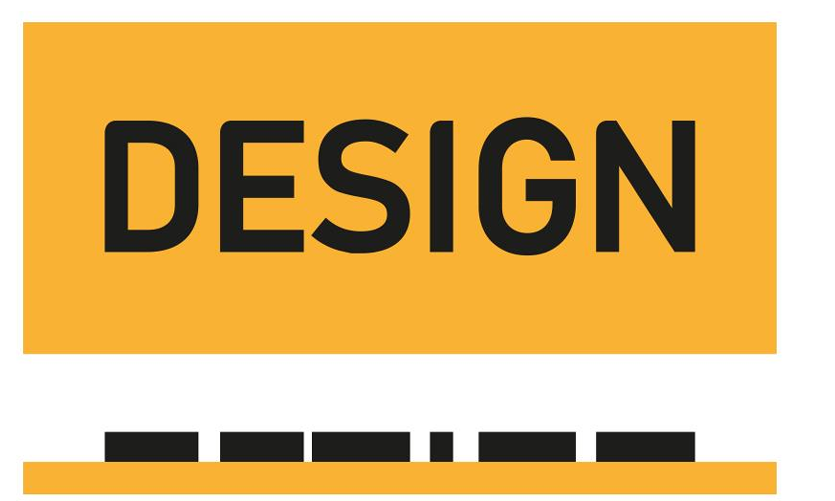
2. How many surfaces are there in the letters of the word sign ‘DESIGN’? Two views of the sign are shown below.
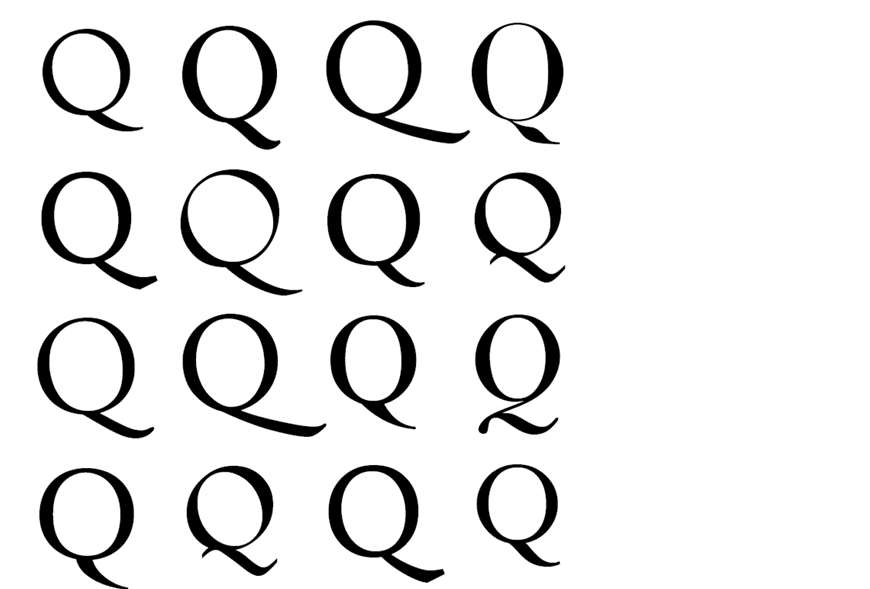
3. How many fonts have been used to write the letter Q in the image shown below?
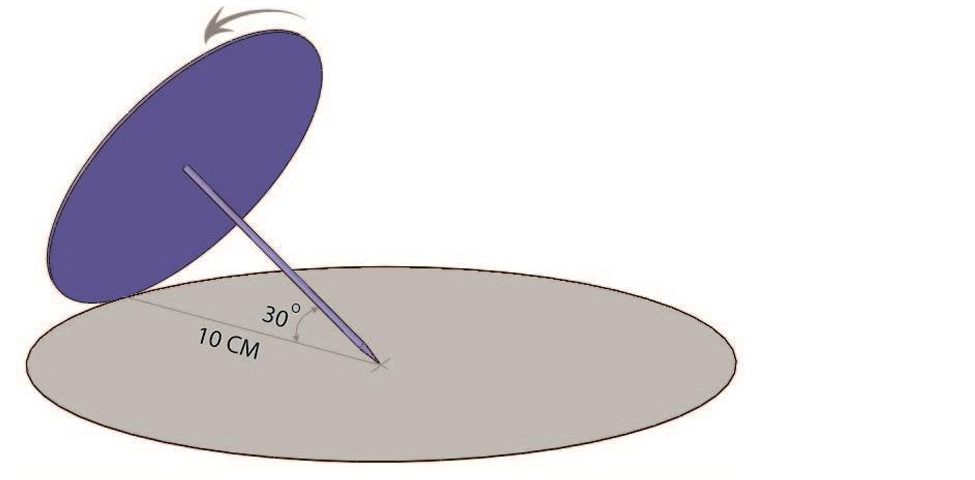
4. A pin is connected perpendicular to the centre of a circular disk as shown. A little push will make it roll over a grey circle. How many turns does it take to come back to its original position?
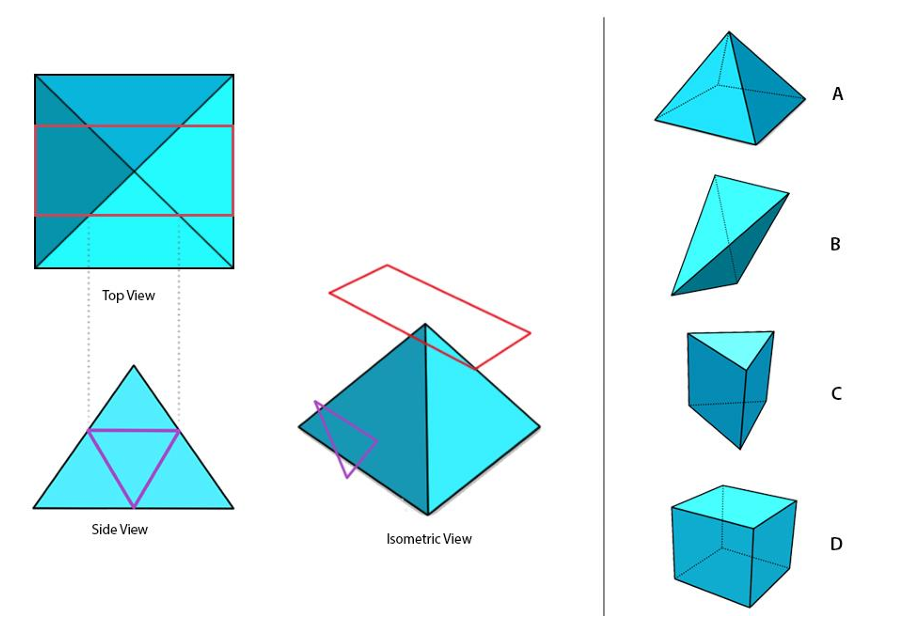
5. The figure shows a square pyramid that will be cut into multiple solids by extending the purple and red shapes. Select the solids that will result from the cuts.
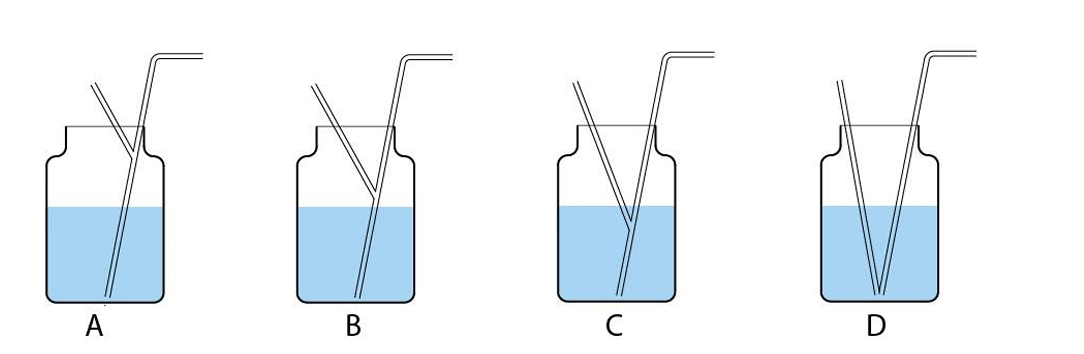
6. Which of the straw(s) will draw the liquid?
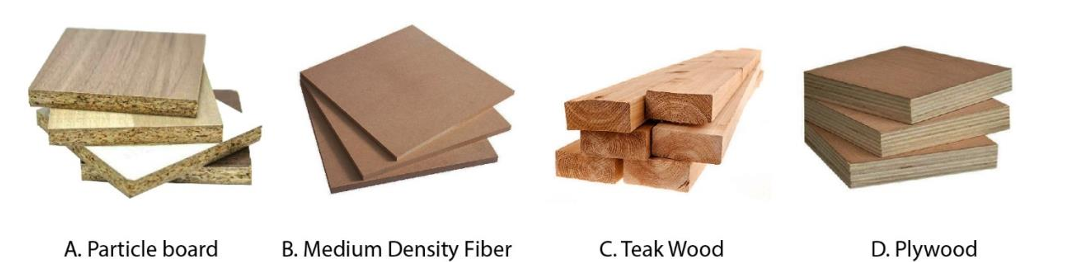
7. Which one of these materials would make a furniture lightest for the same design?
Toprankers CEED Preparation Tips 2026: Check Step Wise Preparation Strategy & Toppers tips
CEED 2023 Part B Analysis
Unlike Part A, which focused on aptitude and reasoning, CEED 2023 Part B evaluated core design abilities through sketching, creativity, visual communication, form development, and problem identification.
The paper was highly practical and closely aligned with real-world design challenges, requiring candidates to demonstrate both creative thinking and effective visual expression.
CEED 2023 Part B: Section-wise Analysis
|
Question |
Skill Area |
What Was Asked? |
Key Skills Tested |
Difficulty Level |
|
Q1 |
Sketching |
Draw a family selfie scene from the perspective of a ceiling-mounted digital camera in a room. |
Perspective, anatomy, composition, observation, imagination |
Moderate to Difficult |
|
Q2 |
Creativity |
Create unique images using given visual elements and title prompts such as Walk, Pull, Cover, and See. |
Ideation, originality, visual storytelling, lateral thinking |
Moderate |
|
Q3 |
Visual Sensitivity |
Design a new visual identity and logo for the Indian Women's Hockey Association (IWHA). |
Branding, visual communication, typography, concept development |
Moderate to Difficult |
|
Q4 |
Form Sensitivity |
Design a child-friendly cutlery set inspired by a given abstract 3D form. |
Product design, form development, design language, functionality |
Difficult |
|
Q5 |
Problem Identification |
Identify and illustrate five design problems in a crowded bus-stop scenario. |
Observation, user empathy, design thinking, problem-solving |
Moderate |
Must-know: What is the Difference Between UCEED and CEED?
CEED 2023 Overall Difficulty Level Analysis
The CEED 2023 Question Paper was moderate to difficult, with a stronger emphasis on visual-spatial reasoning, observation skills, design thinking, and creativity than on traditional aptitude or mathematics.
While Part A challenged candidates through complex visualization, mechanisms, and pattern-recognition questions, Part B focused on perspective drawing, branding, product design, and real-world problem identification.
Difficulty Breakdown
|
Section |
Difficulty Level |
Key Challenges |
|
Part A – NAT |
Moderate to Difficult |
Triangle counting, cube dissection, rolling disc visualization |
|
Part A – MSQ |
Difficult |
Spatial reasoning, mechanisms, product thinking, negative marking |
|
Part A – MCQ |
Moderate |
Visualization, ergonomics, design awareness, logical reasoning |
|
Part B – Sketching |
Moderate to Difficult |
Perspective from a ceiling-mounted camera viewpoint |
|
Part B – Creativity |
Moderate |
Originality and idea generation under time pressure |
|
Part B – Visual Sensitivity |
Moderate |
Logo and brand identity development |
|
Part B – Form Sensitivity |
Difficult |
Translating an abstract form into functional products |
|
Part B – Problem Identification |
Moderate |
Observation and design-thinking skills |
Check: CEED Previous Year Question Papers with Solutions
Recommended Good Attempts Strategy for CEED 2023
Rather than attempting every question, candidates should focus on maximizing accuracy.
Attempt Strategy by Section
|
Section |
Attempt Strategy |
Target |
|
NAT |
· Attempt almost all questions. · No negative marking makes intelligent guessing worthwhile.
|
7–8 attempts
|
|
MSQ |
|
6–8 quality attempts
|
|
MCQ |
|
18-22 attempts
|
Check: Year-wise Detailed CEED Exam Analysis
CEED 2023 Part B: Expert Approaches & Solutions
Unlike Part A, Part B does not have fixed answers. The evaluation focuses on creativity, visual communication, observation skills, design thinking, and the ability to present ideas effectively.
Below are expert approaches for each Part B question from the CEED 2023 Question Paper.
Question 1: Family Selfie Sketching
What Was Asked?
Candidates had to draw a family consisting of Mr. Singh, his wife, and two children from the perspective of a digital camera installed at the top corner of a room.
High-Scoring Approach
✅ Start by establishing the camera viewpoint.
✅ Use foreshortening because the family is being viewed from above.
✅ Show expressions clearly to communicate the "selfie moment."
✅ Maintain relative height differences between family members.
✅ Keep the composition balanced and focused on the family.
Common Mistakes
❌ Drawing from eye level instead of the ceiling viewpoint
❌ Incorrect body proportions
❌ Ignoring depth and perspective
Check: CEED 2026 Question Paper
Question 2: Creativity Exercise
What Was Asked?
Candidates had to transform simple visual elements into meaningful images using the prompts:
- Walk
- Pull
- Cover
- See
High-Scoring Approach
Instead of literal interpretations:
|
Prompt |
Average Approach |
High-Scoring Approach |
|
Walk |
Walking person |
Walking mountain, walking shadow, walking city |
|
Pull |
Tug of war |
Gravity pulling planets, magnet pulling ideas |
|
Cover |
Umbrella |
Environmental protection, digital privacy |
|
See |
Eye |
Future vision, AI vision, microscopic world |
Common Mistakes
❌ Predictable ideas
❌ Repeating the same concept style across all four boxes
❌ Overcrowded sketches
Question 3: IWHA Logo Design
What Was Asked?
Create a visual identity for the Indian Women's Hockey Association (IWHA).
High-Scoring Approach
A strong logo would combine:
- Hockey stick
- Motion and energy
- Women's empowerment
- Indian identity
- IWHA lettering
Common Mistakes
❌ Copying existing sports logos
❌ Overcomplicated designs
❌ Poor readability of IWHA
Also Check: More CEED Sample Questions with Solutions
Question 4: Form Sensitivity
What Was Asked?
Design a fork, bowl, and glass inspired by a given abstract 3D form for children aged 3–6 years.
High-Scoring Approach
✅ First identify the dominant characteristics of the given form:
- Rounded geometry
- Soft transitions
- Organic curves
✅ Apply these features consistently across:
- Bowl
- Glass
- Fork
✅ Ensure usability for young children:
- Easy grip
- Rounded edges
- Stable forms
Common Mistakes
❌ Simply copying the abstract form
❌ Ignoring ergonomics
❌ Creating unrelated products
Question 5: Problem Identification
What Was Asked?
Identify and communicate five design problems in a crowded bus-stop scenario.
High-Scoring Observations
Possible issues include:
- Insufficient seating
- Lack of queue management
- Obstructed pedestrian movement
- Poor shelter coverage
- Safety risks near traffic
- Accessibility issues for elderly users
- Inadequate information display
Common Mistakes
❌ Mentioning the same problem in different ways
❌ Writing explanations without visual communication
❌ Identifying superficial issues rather than critical user problems
Attempt: Exam-like Full-length CEED Mock Tests
CEED 2023 vs CEED 2024 vs CEED 2025 vs CEED 2026 Question Papers
While visualization remains important, the nature of questions has become more application-oriented and multidisciplinary.
|
Parameter |
CEED 2023 |
CEED 2024 |
CEED 2025 |
CEED 2026 |
|
Overall Difficulty |
Moderate to Difficult |
Difficult |
Difficult |
Most Challenging |
|
Part A Focus |
Spatial reasoning, mechanisms, observation |
Visualization + analytical reasoning |
Multi-disciplinary reasoning + design awareness |
Advanced problem solving + design intelligence |
|
NAT Questions |
Moderate complexity |
More calculation-intensive |
Higher visualization complexity |
Highest analytical complexity |
|
MSQ Questions |
Product mechanisms, UX, rotations |
Product understanding, manufacturing, perception |
Design concepts, storytelling, manufacturing |
Complex spatial reasoning and transformations |
|
MCQ Questions |
Design aptitude-focused |
Balanced aptitude and design |
Broader design awareness |
Higher conceptual reasoning |
|
Observation Skills Weightage |
Very High |
High |
High |
High |
|
Spatial Visualization Weightage |
Very High |
Very High |
Very High |
Extremely High |
|
Mathematical Reasoning |
Low |
Moderate |
Moderate |
Moderate to High |
|
Design Thinking Weightage |
Moderate |
High |
High |
Very High |
|
Innovation & Creativity |
High |
High |
Very High |
Very High |
Also Read: CEED Admit Card
How to Use the CEED 2023 Question Paper for Preparation
Simply solving the CEED 2023 Question Paper once is not enough. The real benefit comes from analyzing your performance, identifying weaknesses, and improving your design-thinking and visualization skills through repeated practice.
|
Step |
What You Should Do |
Why It Matters |
|
Step 1: Attempt Under Exam Conditions |
Solve the complete CEED 2023 paper in one sitting (1 hour for Part A + 2 hours for Part B) without referring to solutions. |
Simulates the actual exam environment and helps assess your current preparation level. |
|
Step 2: Analyze Your Mistakes |
Review every incorrect, skipped, or guessed question. Categorize errors into visualization, observation, logical reasoning, design awareness, or sketching. |
Helps identify weak areas that require focused practice. |
|
Step 3: Compare with Official Solutions |
Check the official CEED 2023 answer key, solutions, and response explanations to understand the correct approach. |
Reveals where your reasoning differed from the expected solution. |
|
Step 4: Improve Sketching & Visualization |
Rework difficult Part A visualization questions and redraw Part B answers with better perspective, composition, and presentation. |
Strengthens the most heavily tested CEED skills. |
|
Step 5: Reattempt After 30 Days |
Solve the paper again after a month without looking at previous answers and compare your performance. |
Measures actual improvement and reinforces long-term learning. |
Know More: CEED Fee Structure
Why Solving the CEED 2023 Question Paper is Important for CEED 2027 Aspirants
The CEED 2023 Question Paper is more than just a previous-year paper- it is a valuable resource for understanding how IIT Bombay evaluates creativity, observation, visualization, and design thinking.
For CEED 2027 aspirants, it offers a realistic benchmark to assess preparation and develop exam-ready skills.
|
Benefit |
How It Helps |
|
Understand IIT Bombay's Mindset |
Learn the type of design aptitude, visualization, creativity, and problem-solving skills that IIT Bombay values in CEED candidates. |
|
Identify Recurring Themes |
Recognize frequently tested topics such as spatial reasoning, observation, product design, ergonomics, visual communication, and design thinking. |
|
Improve Speed & Accuracy |
Practicing under timed conditions helps develop faster decision-making and better time management during the actual exam. |
|
Strengthen Sketching & Visualization Skills |
Exposure to Part B questions improves perspective drawing, ideation, product sketching, and visual storytelling abilities. |
|
Build Exam Confidence |
Familiarity with the question format and difficulty level reduces exam-day anxiety and improves overall performance. |
|
Evaluate Your Preparation Level |
Compare your performance with official solutions to identify strengths, weaknesses, and areas requiring improvement. |
|
Develop a Designer's Mindset |
Learn to approach problems through observation, user empathy, creativity, and practical design thinking rather than rote memorization. |
Also Check: Job Opportunities After CEED
Final Takeaway
Beyond helping you practice previous-year questions, CEED 2023 Question Paper can help identify recurring themes, improve time management, strengthen Part B performance, and develop the designer's mindset required to achieve a top rank.
Rather than treating it as just another mock test, use it as a blueprint to understand how successful designers think, observe, and communicate solutions.
If you're serious about cracking CEED, downloading the CEED 2023 Question Paper PDF and thoroughly analyzing it is one of the smartest steps you can take toward your preparation.
Preparing for CEED 2027? We can help you with exact strategic roadmap, study material and crucial feedback required to ace this exam.
Join best CEED Online Coaching by CreativEdge and get expert guidance on all CEED subjects.


Vineeta Agrawal
Communications Executive
SHARE