
1723534562.png)

Abstract Reasoning Questions for NATA 2027 Practice (with Solutions)
May 27, 2026
Quick Answer: Abstract reasoning questions for NATA 2027 are meant to test visual intelligence, pattern recognition, and logical thinking using figures, shapes, and sequences.
Based on NATA past year papers, common question types include cube folding, pattern completion, odd one out, figure assembly, and visual series.
Typically, 3-6 abstract reasoning questions appear in the NATA aptitude section.
Key Highlights: Abstract Reasoning Questions for NATA 2027
- Abstract reasoning is part of the NATA aptitude section
- Questions test visual logic, pattern recognition, and spatial reasoning
- Frequently asked question types include pattern completion, cube folding, odd one out, and figure assembly
- Typically 3-6 abstract reasoning questions appear in NATA generally
- Difficulty level ranges from easy to moderate
- Questions are usually quick to solve (20-30 seconds) and scoring
- No calculations required - purely visual reasoning
National Aptitude Test in Architecture (NATA) is regarded as one of India's most challenging architecture entrance exams, and many of you may be wondering how to prepare for Abstract Reasoning Questions for NATA 2027 exam.
This article will walk you through:
- What are Abstract Reasoning Questions in NATA 2027 exam?
- What are the important question types
- Sample NATA abstract reasoning questions for practice
- Best preparation strategy for abstract reasoning and more.
Table of Contents
What are Abstract Reasoning Questions for NATA 2027?
Abstract reasoning in NATA tests your ability to identify patterns, relationships, and logical rules using shapes, figures, and visual sequences.
In the NATA aptitude section, abstract reasoning questions usually involve recognizing visual patterns, identifying the odd figure, completing sequences, or analyzing 2D and 3D shapes. These questions are typically quick to solve and considered high-scoring if you understand common patterns.
Based on past year NATA papers, abstract reasoning questions commonly include cube folding, pattern completion, odd one out, figure assembly, and visual series questions. These are designed to evaluate how well candidates think logically and visually - a crucial skill for architecture aspirants.
NATA Abstract reasoning questions tend to involve the repetition or change of the following:
- Shape
- Size
- Colour
- Pattern
Where Abstract Reasoning Appears in NATA
- Part B: Aptitude Section
- Question Type: MCQs and Numerical-based questions
- Difficulty Level: Easy to Moderate
- Time Required: 20-40 seconds per question
Also Read: Verbal reasoning questions asked in the NATA exam.
Types of Abstract Reasoning Questions in NATA 2027 (Based on Past Year Papers)
Here are the most common types of abstract reasoning questions along with difficulty level and trends:
|
Question Type |
Description |
Difficulty Level |
Frequency (Past Trends) |
|
Pattern Completion |
Identify the missing figure in a sequence |
Easy |
Very Common |
|
Visual Series |
Find the next figure in pattern progression |
Easy-Moderate |
Very Common |
|
Odd One Out |
Identify the figure that doesn't follow pattern |
Easy |
Common |
|
Cube Folding / Paper Folding |
Identify correct 3D shape from net |
Moderate |
Very Common |
|
Figure Assembly |
Combine shapes to form final figure |
Moderate |
Common |
|
Mirror / Rotation Questions |
Identify rotated or mirrored shapes |
Easy-Moderate |
Common |
|
Embedded Figures |
Find hidden shapes in complex figure |
Moderate |
Occasional |
|
2D to 3D Visualization |
Convert flat shapes into 3D objects |
Moderate |
Very Common |
|
Shape Counting |
Count shapes or surfaces |
Easy-Moderate |
Occasional |
|
Spatial Arrangement |
Identify final arrangement of shapes |
Moderate |
Common |
Key Insights from Past Papers
- Most abstract reasoning questions are visual and logic-based
- Usually no calculations required
- High scoring and less time-consuming
- Typically 5-10 questions appear in NATA aptitude section
NATA Abstract Reasoning Questions - What to Focus on First? (High Scoring Strategy)
Focus first on:
- Pattern Completion
- Visual Series
- Odd One Out
- Rotation & Mirror
- Cube Folding
These topics are:
- Easy to learn
- Frequently asked
- High scoring
- Less time-consuming
Check: Logical Reasoning Questions for NATA


Important Abstract Reasoning Questions for NATA 2027
We have provided a few sample Abstract Reasoning Questions for NATA for your reference, to help you get an idea about the type of questions asked in the actual exam.
These questions are curated from the previous year's question papers for NATA. Practicing these questions regularly will help you perform well in the upcoming NATA 2027 exam.
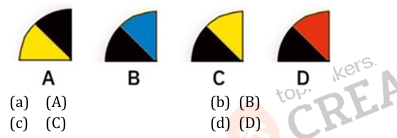
Q.1) Directions (Q.116-Q.117): Carefully observe the given geometric pattern. You can view the image for 45 seconds after which it will disappear. You will then answer two questions based on the image.

Choose the correct color of the beak of the parrot image?
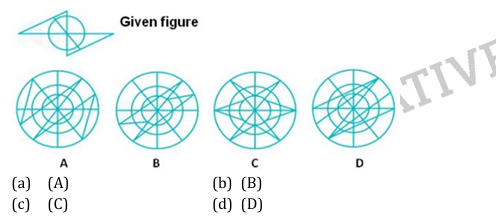
Q.2) In this question the main figure is embedded one of the four option figures. Identify from the options given:
Q.3) Find the appropriate figure from the alternatives given below which best fits into the blank space of the problem figure indicated by a (?)

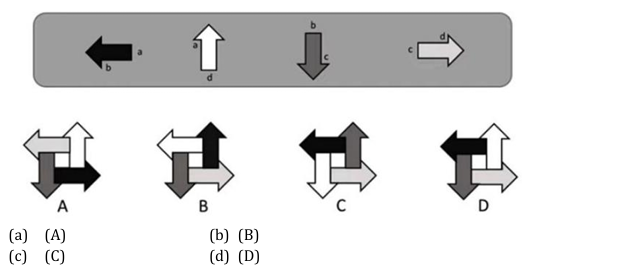
Q.5) Which of the following options happen when the set of elements as given are put together?
How to Prepare for NATA Abstract Reasoning Questions 2027?
Abstract reasoning is one of the fastest scoring sections of the NATA 2027 Exam Pattern if prepared strategically. Based on past year trends, most questions test pattern recognition, spatial ability, and visual logic, not memorization.
Here is a high-scoring preparation strategy for NATA abstract reasoning:
|
Step |
What to Do |
Why It Works |
|
Step 1 |
Learn common pattern types |
80% questions follow repeated patterns |
|
Step 2 |
Practice cube & spatial questions daily |
These appear frequently in NATA |
|
Step 3 |
Solve questions with timer |
Improves speed and accuracy |
|
Step 4 |
Identify pattern shortcuts |
Helps solve in 20-30 seconds |
|
Step 5 |
Practice past year questions |
Understand actual exam difficulty |
|
Step 6 |
Avoid overthinking |
Most questions are logic-based and simple |
Toppers Tips:
- Practice with NATA Mock Test weekly to analyze your strengths and weakness and focus on improving your weak areas.
- Learning is more enjoyable when it is approached as a game. Try to practice the pictorial riddle.
- Practice as many questions as possible from the previous year's papers.
Topic-Wise Study Plan to Prepare for Abstract Reasoning Questions for NATA 2027:
|
Topic |
Preparation Strategy |
Time to Master |
|
Pattern Completion |
Practice 10-15 daily |
2-3 days |
|
Visual Series |
Identify rotation & repetition |
2 days |
|
Cube Folding |
Learn face relationships |
3-4 days |
|
Mirror & Rotation |
Practice visual flipping |
1-2 days |
|
Odd One Out |
Look for small differences |
1-2 days |
|
Figure Assembly |
Practice spatial visualization |
3 days |
|
2D to 3D |
Practice cube & block questions |
3 days |
Read More: NATA Maths Syllabus Section Wise
Use CreativEdge Free Resources 2027 Strategically:
|
Sample NATA Aptitude Questions with Solutions PDF |
|
| NATA Visual Reasoning Questions PDF (with Solutions) | |
| NATA Formula Sheet PDF | |
| NATA Mock Test | |
| NATA Preparation Video 2027 | |
| NATA Books 2027 | |
| NATA PYQs |
Check: How to score well in the NATA examination?
How to Score Maximum in NATA Abstract Reasoning?
Abstract reasoning is one of the highest scoring and least time-consuming sections in NATA syllabus. The key to scoring maximum marks is pattern recognition, speed, and smart elimination.
|
Strategy |
What to Do |
Why It Helps |
|
Start with Easy Questions |
Attempt pattern completion & odd one out first |
Quick marks in less time |
|
Look for Common Patterns First |
Rotation, repetition, shading, size change |
Most questions follow these |
|
Use Elimination Method |
Remove clearly wrong options |
Increases accuracy |
|
Don't Overthink |
First instinct is usually correct |
Saves time |
|
Skip Complex Questions |
Return later if needed |
Prevents time loss |
|
Solve Visually, Not Mathematically |
Focus on shapes & patterns |
Faster solving |
|
Practice Time-Based Solving |
20-30 seconds per question |
Improves exam speed |
Check: All About NATA Marking Scheme
Most Common Pattern Shortcuts (High Scoring Tips)
|
Pattern Type |
What to Check First |
|
Rotation |
90°, 180°, 270° movement |
|
Shape Addition |
Shapes increasing gradually |
|
Shape Removal |
Shapes decreasing |
|
Shading Pattern |
Dark/light changes |
|
Direction Change |
Clockwise / anti-clockwise |
|
Size Variation |
Small to large patterns |
|
Position Movement |
Left to right / top to bottom |
Check: All-in-one Formula Sheet for NATA
Conclusion
To pass the challenging NATA exam, it's important to understand abstract reasoning questions. These questions test your ability to recognize relationships and patterns without relying on language or math. Practice regularly and explore our logical reasoning questions for NATA exam article for more resources and tips to improve your NATA 2027 preparation!
Did You Know?: Abstract reasoning questions for NATA often have time constraints, adding an additional level of pressure to test your ability to think quickly and make logical deductions. So, in order to score well on the NATA exam, you must plan your preparation carefully.
Preparing for NATA 2027? We can help you with exact strategic roadmap, study material and crucial feedback required to ace this exam.
Join Creative Edge NATA Online Coaching and get expert guidance on all NATA subjects.
You can enroll in offline NID batches at your nearest centres also!



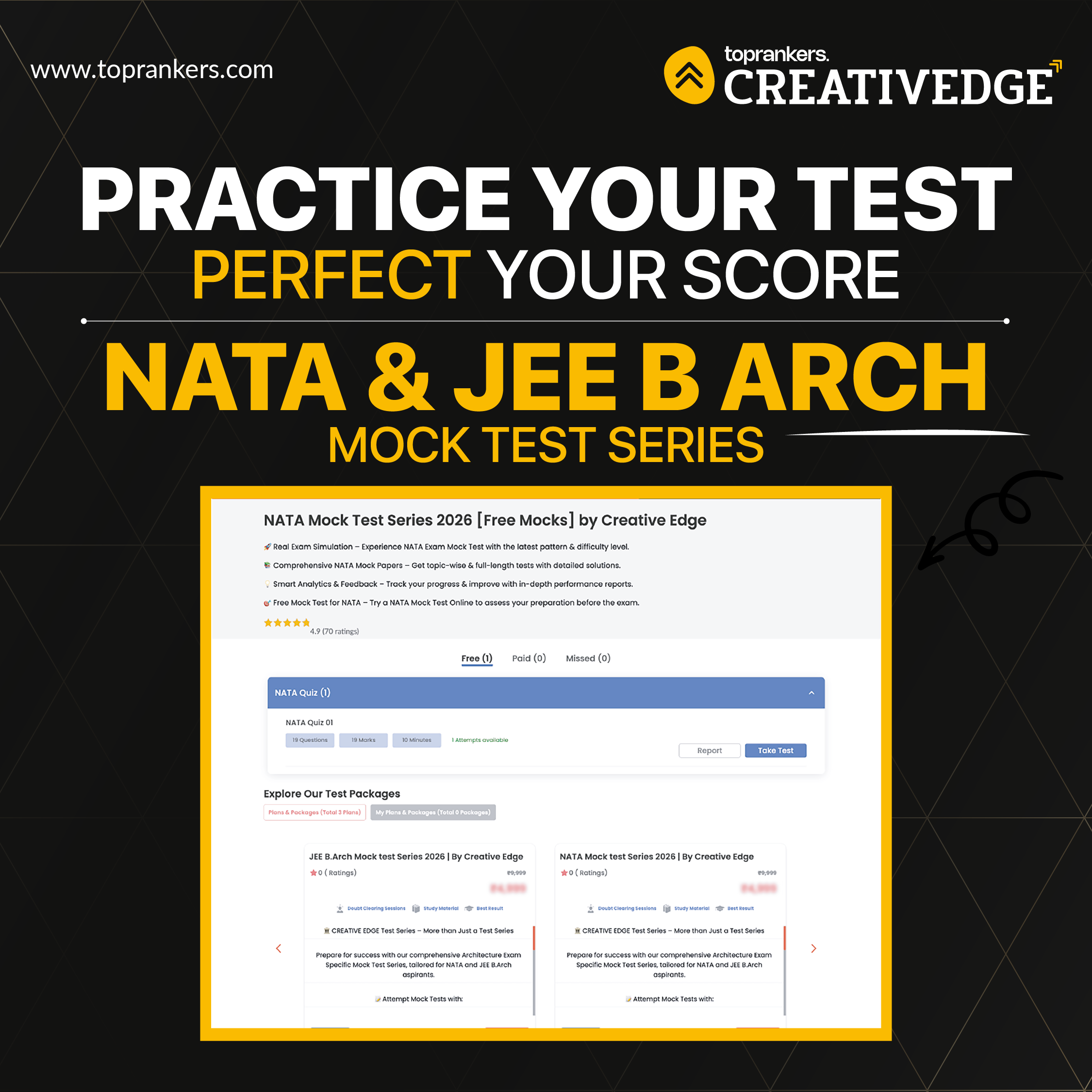
Attempt a Free NATA Mock Test
Fill your details
Frequently Asked Questions
What is the total marks allotted to each section?

What are abstract reasoning questions for NATA 2027?
Are abstract reasoning questions important in NATA 2027?
What types of abstract reasoning questions are asked in NATA?
How can I prepare for abstract reasoning questions for NATA?
Are abstract reasoning questions for NATA 2027 difficult?
Which books are best for abstract reasoning questions for NATA?

Vineeta Agrawal
Communications Executive
SHARE