
1723534562.png)

NLSAT 2026 Toppers Interview ft Dhwani Jain & Pooja Kesavan
May 30, 2026
Overview: There’s something fascinating about the way people imagine an NLSAT topper.
Most aspirants picture someone buried under stacks of GK magazines, solving mocks for 12 hours a day, and memorising every current affairs event from the last decade. But when you actually listen to NLSAT toppers, the reality is surprisingly different.
The stories of Dhwani Jain and Pooja Kesavan completely challenge the “perfect topper” stereotype.
One is a final-year Economics student from Miranda House, moving directly from academics into law school. The other spent ten years working in London’s intense investment banking and M&A ecosystem before deciding to pivot toward law.
Different lives. Different journeys. Different timelines.
And yet, both cracked one of the toughest law entrance exams in the country.
Their journeys reveal something powerful about the NLSAT 2026 preparation process: this exam is not just testing memory. It is testing maturity, adaptability, reading ability, articulation, and mental stamina.
If you are preparing for NLSAT 2026, these lessons might completely change the way you look at preparation.
Why NLSAT is Different from Other Law Entrance Exams
Unlike exams that reward pure speed or predictable preparation patterns, the NLSAT is designed to test how you think.
The paper expects candidates to:
- Read dense material quickly
- Analyse arguments
- Write structured opinions
- Handle unfamiliar GK questions
- Stay calm under pressure
- Maintain focus for long durations
That is exactly why candidates from completely different backgrounds can succeed.
The success stories of Dhwani and Pooja prove that there is no “ideal age” or “perfect profile” for the exam.
And honestly, that makes NLSAT one of the most exciting law entrance exams in India.
Lesson 1: Your Previous Career is Not a Disadvantage
One of the biggest fears among aspirants is this:
“What if I’m too late?”
Students who take gap years worry about losing momentum. Working professionals fear they are “out of touch” with academics. Many feel that law school is only for fresh graduates.
Pooja Kesavan’s journey destroys that myth completely.
After spending a decade in London’s investment banking and M&A sector, she decided to pursue law. For many people, leaving a stable corporate career sounds risky. But for Pooja, her professional experience actually became an advantage.
Years spent analysing deals, understanding negotiations, and working in high-pressure environments helped sharpen the exact skills NLSAT values.
What makes her journey even more interesting is that she didn’t blindly jump into preparation. She created a strategic transition.
Before appearing for the exam, she enrolled in the Master of Business Law (MBL) correspondence course at NLS to slowly familiarise herself with legal concepts and case studies.
That small step made a huge difference.
Instead of treating law as a completely new world, she gradually built comfort with legal thinking.
And that is a massive lesson for aspirants.
Your previous experience is not wasted time.
Whether you are:
- an engineer,
- a commerce graduate,
- a working professional,
- a UPSC aspirant,
- or someone restarting academically after years,
Your background can become your strength.
The NLSAT does not reward only textbook learning. It rewards perspective.
As Pooja beautifully put it:
“Age is just a number... NLSAT attracts individuals from all walks of life, different age groups, and different professions.”
That line alone removes pressure from so many aspirants.
Lesson 2: Stop Treating GK Like an Endless Syllabus
If there’s one section that terrifies almost every NLSAT aspirant, it is General Knowledge.
The biggest problem?
There is no finish line.
No matter how much you study, it never feels enough.
Even Dhwani Jain, who scored brilliantly in Part A, admitted that GK felt “infinite.”
And honestly, that is exactly what makes NLSAT tricky.
Unlike many exams that focus heavily on predictable current affairs, NLSAT often asks unconventional questions. The 2024 paper reportedly contained several “non-mainstream” questions that many candidates did not expect.
This shocked students who relied purely on memorisation-based preparation.
But toppers realised something important:
NLSAT rewards awareness, not blind information overload.
That means:
- reading consistently,
- understanding the world,
- forming opinions,
- and building curiosity
matters more than trying to mug up thousands of facts.
This is actually refreshing.
Because preparation then becomes less about panic and more about growth.
Dhwani reflected on this beautifully when she said:
“I felt good coming out of it thinking, you know, this made me more knowledgeable about the world... You come out a smarter person.”
And that mindset changes everything.
Instead of asking:
“How many facts did I memorise today?”
Ask:
“What did I understand today?”
That shift can make NLSAT preparation far less exhausting.
Lesson 3: Offline Mocks Are a Superpower
Most students today prepare online.
Mocks are online.
Reading is online.
Notes are online.
Everything happens on a screen.
But NLSAT introduces a very unexpected challenge.
It is offline.
And that changes the entire exam experience.
Many aspirants underestimate how physically demanding a paper-based exam can feel after years of digital learning.
Toppers repeatedly highlighted this issue.
The actual exam is not just about solving questions.
You also need to:
- fill OMR bubbles,
- manage physical papers,
- handle rough work manually,
- stay organised,
- and deal with constant interruptions inside the exam hall.
This creates what toppers describe as “missing time.”
Technically, the paper gives 150 minutes.
But realistically?
Your effective solving time becomes closer to 130–135 minutes.
That difference is massive.
Students who prepare only through online mocks often struggle with:
- time management,
- bubbling errors,
- fatigue,
- and pacing.
That is why offline mock practice becomes critical.
It helps your brain adapt to:
- physical writing speed,
- concentration endurance,
- and exam-hall pressure.
Another underrated benefit of offline mocks is psychological exposure.
When you sit in a hall full of serious aspirants, you understand the real competition level. It removes the isolation of studying alone at home.
And sometimes, that reality check can sharpen your preparation dramatically.
If there is one preparation hack every topper seems to agree on, it is this:
Write physical mocks regularly.
Not occasionally.
Not “once before the exam.”
Regularly.
Lesson 4: Reading Fiction Can Actually Help You Crack the NLSAT
This advice surprises almost everyone.
Most aspirants think preparation means:
- newspapers,
- legal articles,
- editorials,
- and current affairs compilations.
But toppers suggest adding something unexpected to the mix:
Fiction.
Yes, novels.
At first, it sounds counterproductive. But it actually makes perfect sense.
NLSAT is a reading-heavy exam.
The challenge is not just understanding language.
The real challenge is maintaining focus across long, dense passages for hours.
And in today’s world, our attention spans are collapsing.
Most people struggle to read even two uninterrupted pages without checking notifications.
That becomes dangerous in exams like NLSAT.
This is where fiction helps.
Long-form reading improves:
- concentration,
- retention,
- comprehension stamina,
- emotional engagement with text,
- and reading speed naturally.
You don’t need to read only “serious literature.”
Even enjoyable fiction works.
The goal is simple:
train your brain to stay focused for long durations.
Newspapers like The Hindu and The Indian Express remain essential for analytical reading and current affairs exposure. But fiction develops endurance.
And endurance matters more than people realise.
For non-readers, this habit cannot be built overnight.
It takes months.
Sometimes a year.
But once reading becomes natural, NLSAT preparation feels significantly easier.
Lesson 5: Good Writing Wins Half the Battle
Part B of NLSAT is where many aspirants panic.
Because unlike objective sections, subjective answers expose your thinking directly.
You cannot hide behind guesswork.
Your clarity becomes visible immediately.
For Dhwani Jain, her debating background became incredibly useful here.
Debating trains you to:
- structure arguments,
- think quickly,
- defend positions,
- and communicate clearly under pressure.
But the 2024 exam introduced a twist.
Candidates were assigned sides in arguments instead of choosing their own stance.
That changes the game completely.
Now, preparation is not just about opinions.
It is about flexibility.
You must learn how to argue both sides logically.
And surprisingly, toppers recommend a very simple exercise for this:
Writing diary entries.
It sounds basic, but it works.
When you regularly write about your thoughts, observations, and opinions, you naturally improve:
- articulation,
- sentence flow,
- clarity,
- and speed of expression.
Over time, framing arguments becomes easier.
Your thoughts stop feeling scattered.
That becomes a huge advantage during descriptive sections.
Another major insight from toppers is the importance of feedback.
Most aspirants prepare alone and never get their writing evaluated properly.
But subjective improvement requires external critique.
Mentors help identify:
- weak structuring,
- repetitive arguments,
- unclear expression,
- and lack of depth.
That feedback loop is essential.
As toppers suggest:
“Start writing diary entries... so that you can frame your thoughts well and articulate them well.”
Simple advice.
Massive impact.
What Makes the NLSAT Journey Special
The journeys of Dhwani Jain and Pooja Kesavan remind us that NLSAT preparation is not just about getting into law school.
It changes the way you think.
Some exams reward shortcuts.
NLSAT rewards growth.
It pushes you to:
- read more deeply,
- think more critically,
- manage time better,
- understand the world,
- and communicate clearly.
And perhaps that is why aspirants often describe the preparation journey as transformative, even before the results arrive.
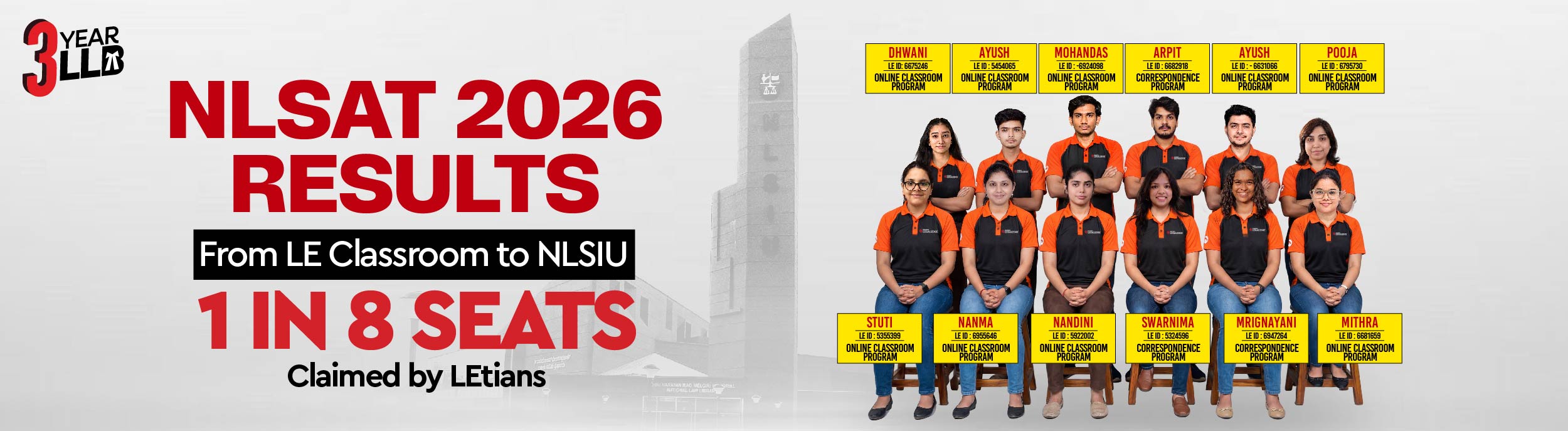
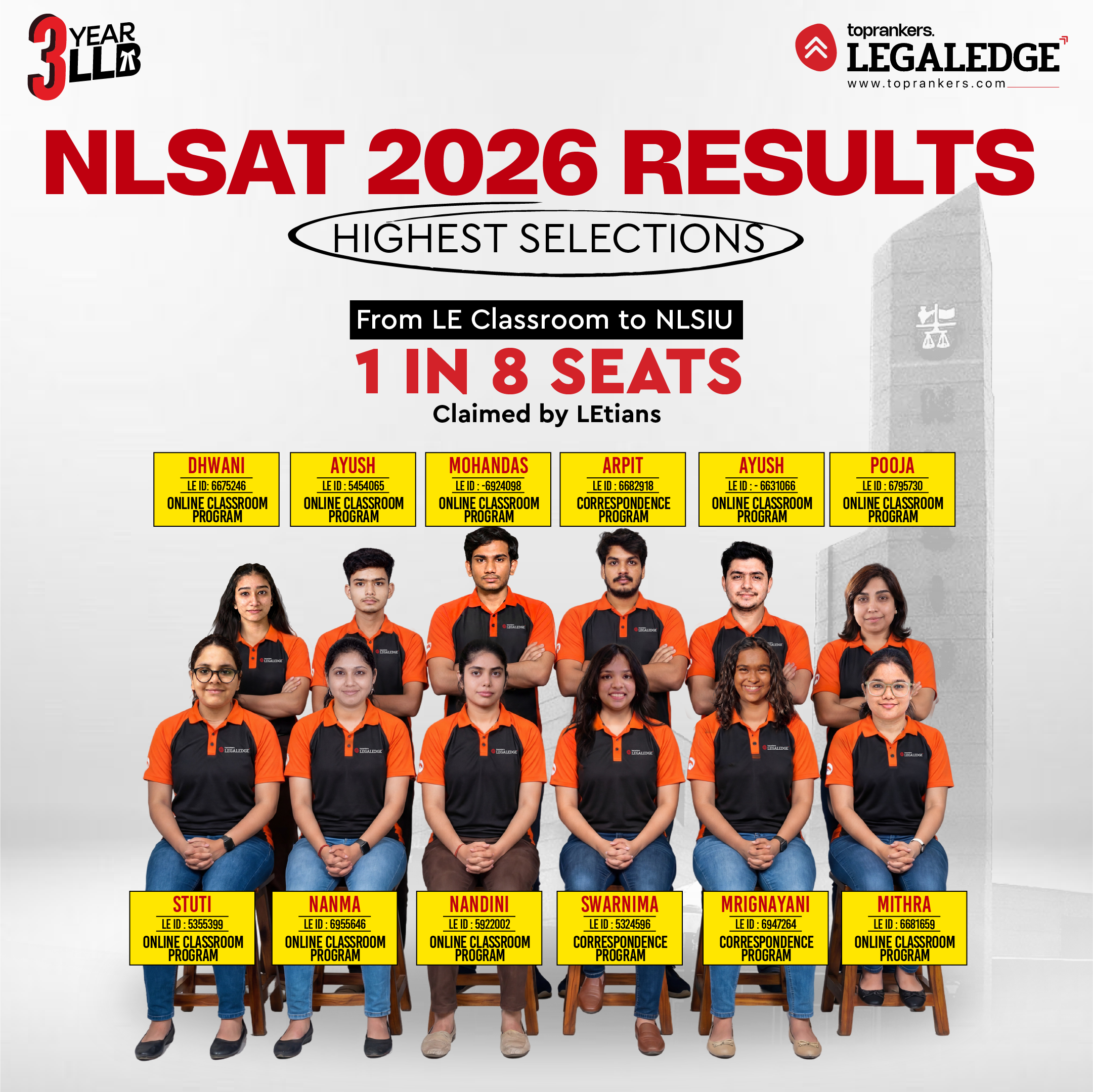
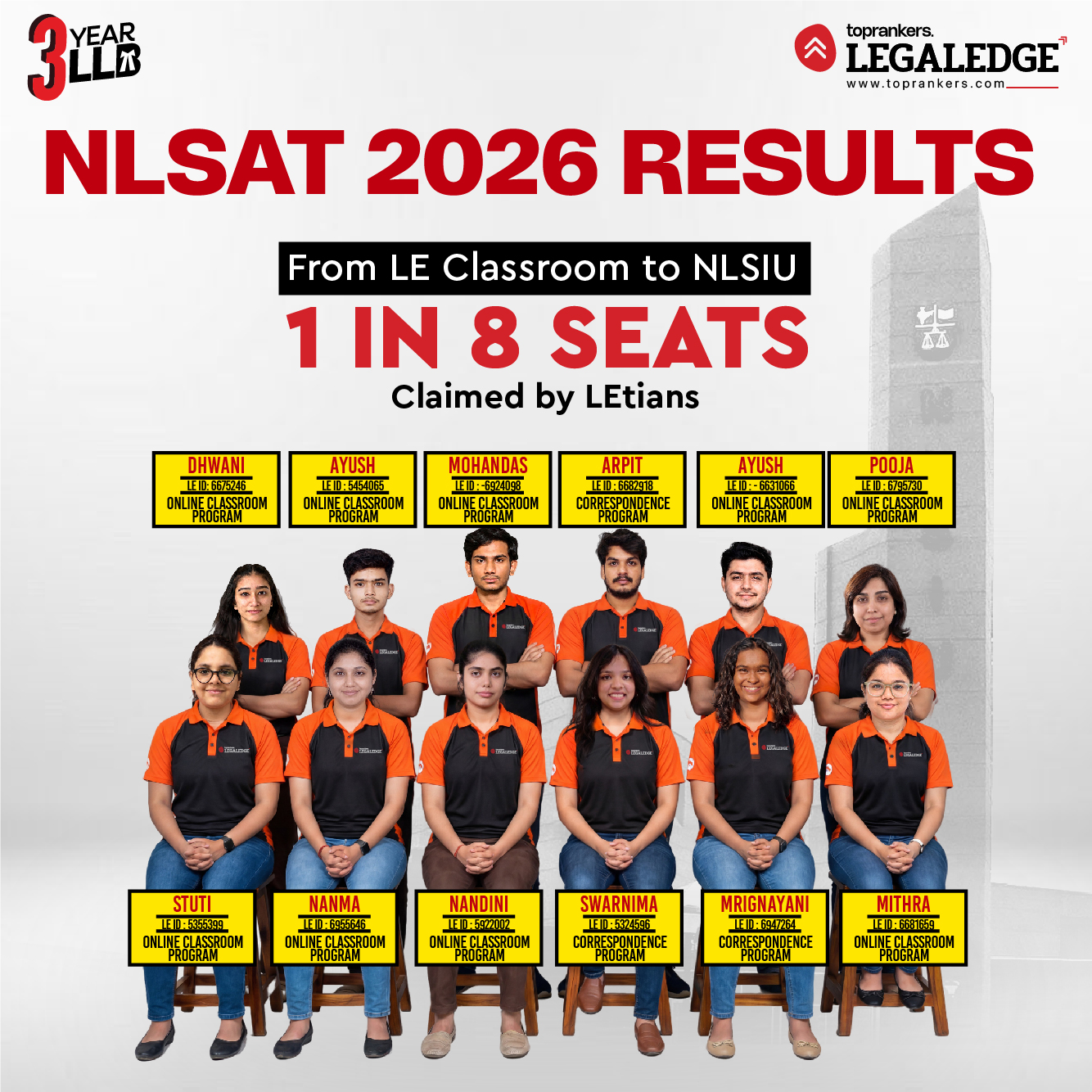
On July 1st, Dhwani and Pooja will begin their new chapter at National Law School of India University, Bengaluru.
But their stories have already offered something valuable to future aspirants.
A reminder that success does not belong to one “type” of student.
You can be:
- young,
- experienced,
- academic,
- corporate,
- unsure,
- restarting,
- or switching careers completely.
There is space for all of it.
Because ultimately, the NLSAT asks one important question:
Are you willing to challenge yourself intellectually and commit to the discipline required for law?
If the answer is yes, your background is not holding you back.
It might actually become your greatest strength.
Download FREE Study Material
Fill your details
Frequently Asked Questions
Is NLSAT only for fresh graduates?

How important is General Knowledge for NLSAT 2026?
Are offline mocks necessary for NLSAT preparation?
Can reading fiction really help in NLSAT preparation?
How can I improve my descriptive writing for Part B?

Samriddhi Pandey
Content Writer
SHARE