
1723534562.png)

How to Become a Law Officer: Qualifications, Exams, Career Path & Responsibilities
January 14, 2026
Becoming a law officer is a highly respected and rewarding career path for those interested in the legal field. If you’re wondering how to become a law officer, you need to understand the necessary qualifications, the skills required, and the steps involved in this journey. Law officers play a vital role in ensuring justice is served, whether in government agencies, corporations, or law enforcement. This profession demands a combination of education, skills, experience, and ethical commitment. In this article, we will guide you through the journey of how to become a law officer, including the qualifications, exams, career progression, and challenges you may face.
What is a Law Officer?
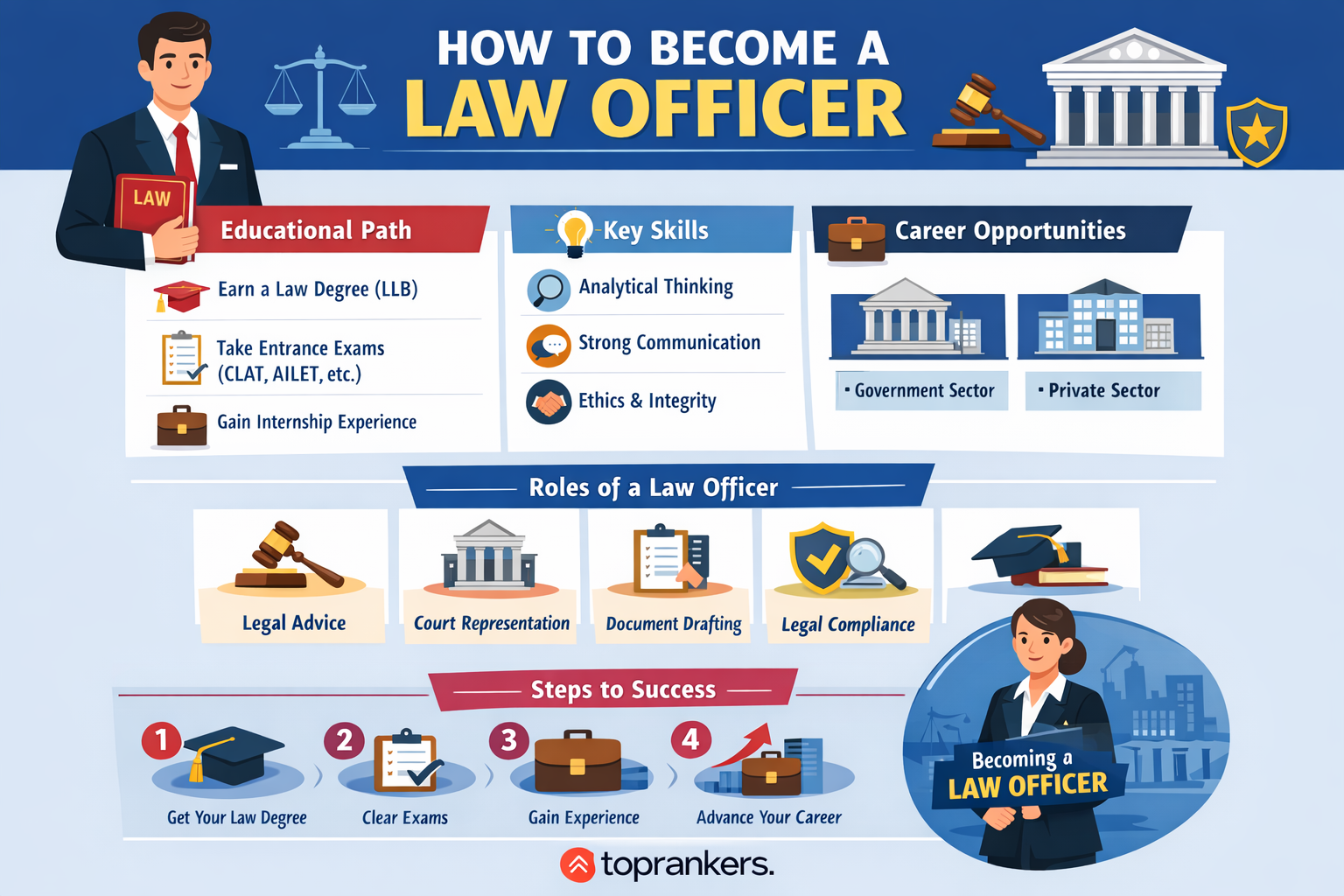
To truly understand how to become a law officer, it’s essential to first know the role you’ll be stepping into. A law officer is an individual responsible for handling legal matters within a governmental body, a private corporation, or even law enforcement agencies. Their primary duty is to provide legal advice, draft documents, manage legal risks, and represent the organisation in legal disputes. Law officers typically work with contracts, legal compliance, criminal investigations, or even employment matters.
Types of Law Officers
1. Legal Officers in Government – These law officers serve various government departments, such as the judiciary, police, or ministries, where they assist in legal procedures, policymaking, and legal enforcement.
2. Corporate Legal Officers – Employed by private corporations, these law officers deal with business contracts, mergers, intellectual property rights, and compliance with laws.
3. Law Enforcement Officers – These officers, often known as police officers or detectives, enforce laws, investigate crimes, and ensure public safety while adhering to the legal framework.
Key Responsibilities of a Law Officer
The following table highlights the key responsibilities of a law officer:
| Responsibility | Description |
|---|---|
| Drafting Legal Documents | Preparing contracts, legal notices, and research materials for legal proceedings. |
| Providing Legal Advice | Offering guidance on the legal implications of decisions or policies. |
| Representing in Court | Law officers may represent clients or organisations in legal proceedings. |
| Managing Legal Risks | Ensuring legal compliance and managing potential liabilities. |
Key Skills and Attributes of a Successful Law Officer
When you decide to pursue how to become a law officer, it’s important to know that it’s not just about academic qualifications. A successful law officer must also possess several key skills and attributes.
- Analytical Thinking – Law officers must be able to interpret laws, analyse legal documents, and provide sound advice based on legal principles.
- Strong Communication – Effective communication skills are crucial, as law officers must be able to explain complex legal concepts clearly, both in writing and verbally.
- Attention to Detail – Legal work demands precision, whether drafting documents or reviewing contracts. A small mistake can lead to significant consequences.
- Negotiation Skills – In legal disputes or agreements, the ability to negotiate effectively is vital.
- Integrity and Ethics – Law officers must maintain high ethical standards, especially when dealing with sensitive cases or confidential information.
- Time Management – Due to the demanding nature of the profession, law officers must be able to manage time effectively, balancing multiple cases or legal matters.
Educational Pathway to Becoming a Law Officer
Step 1: Obtain a Law Degree
If you want to understand how to become a law officer, the first step is obtaining a law degree. You can pursue either a 5-year integrated LLB program after completing your higher secondary education or a 3-year LLB program after earning a bachelor's degree in another discipline.
Educational Institutions
Top law schools in India: National Law Universities (NLUs), Symbiosis Law School, etc.
Online Programs: Some universities offer online law degree programs. Ensure that the program is recognised by the Bar Council of India (BCI) if you are practising in India.
Step 2: Gain Practical Experience Through Internships
When exploring how to become a law officer, it’s essential to gain hands-on experience. Internships provide valuable exposure to real-world legal work. Interning at law firms, government offices, or in courtrooms gives you firsthand experience of legal practices.
- Where to Intern:
- Law firms – Gain experience in contract law, intellectual property, corporate law, etc.
- Government agencies – Learn how the government handles legal matters.
- Courts – Assist in legal proceedings, witness trials, and case preparation.
Step 3: Pursue Specialised Studies (Optional)
While not mandatory, additional qualifications or certifications can make you stand out when considering how to become a law officer. Specialisations in areas like Corporate Law, Criminal Law, or Intellectual Property Law can enhance your career prospects.
Options: Pursue courses, diplomas, or online certifications that focus on specific legal fields.
Entrance Exams for Law Officer Positions
To become a law officer, especially in government or public sector roles, you must appear for relevant entrance exams. Some of the most common exams for law officers include:
- CLAT (Common Law Admission Test) – For admission to National Law Universities.
- AILET (All India Law Entrance Test) – For admission to National Law University, Delhi.
- UGC NET Law – For eligibility in academic positions or legal officer roles in public sector institutions.
- Bank PO Legal Officer Exam – For positions in banks that require legal expertise.
- Public Service Exams – Many government agencies and ministries conduct their own exams for legal officers.
Building a Career as a Law Officer
Step 1: Gain Experience
After completing law school and passing the required exams, entry-level positions as a law officer often involve:
- Working under senior legal officers.
- Handling legal research, contract drafting, or case reviews.
- Starting at lower positions and gradually advancing.
Step 2: Career Progression
As a law officer, career growth depends on gaining experience, further education, and industry expertise. You can progress in the following ways:
- Become a Senior Law Officer: With experience, you may rise to senior positions, handling more complex legal matters.
- Specialise: You can choose to specialise in areas like intellectual property law, criminal law, or corporate law to further advance your career.
- Move into Management: Some law officers eventually take on managerial roles or transition into roles like Legal Counsel or General Counsel for large corporations or government bodies.
Conclusion
So, how to become a law officer? It requires a combination of education, practical experience, specialised training, and dedication. Whether you choose to work in government or the private sector, the role of a law officer offers a wide range of opportunities to make a meaningful impact on society and the legal system. If you’re passionate about law and justice, this career could be the perfect path for you.

Frequently Asked Questions
What are the job prospects for law officers in India?

How can I prepare for the entrance exams for law officer positions?
Is it necessary to specialize in a particular area of law to become a law officer?
Can law officers work internationally?
Can a law officer work in both the public and private sectors?

Admin
Subject Matter Expert
SHARE