
1723534562.png)

Daily Current Affairs- 20th September 2025
September 21, 2025
Daily Current Affairs- 20th September 2025

Oil India, RVUNL to Jointly Develop 1.2 GW Green Energy Projects in Rajasthan
In the News: On September 19-20, 2025, Oil India Limited (OIL) has signed a Joint Venture Agreement (JVA) with Rajasthan Rajya Vidyut Utpadan Nigam Limited (RVUNL) to establish a Joint Venture Company (JVC) for developing 1.2 gigawatts (GW) of renewable energy projects in Rajasthan.
Key Points:
- Capacity & Mix: The projects will consist of 1,000 MW solar power and 200 MW wind power, to be developed within RVUNL’s Renewable Energy Park in Rajasthan.
- Location & Park: The projects will be developed within RVUNL’s Renewable Energy Park in Rajasthan.
- Joint Venture Structure: A Joint Venture Company (JVC) has been formed under the JVA. OIL brings its expertise in energy, while RVUNL brings its experience in power project development.
- Roles & Expertise: OIL brings its energy sector expertise, while RVUNL contributes its experience in power project development. The partnership will cover solar, wind, green hydrogen, and other renewable energy initiatives.
- Beneficiaries: Clean power generated will be supplied to Distribution Companies (DISCOMs) and commercial customers.
- Signatories & Administration: The agreement was signed by Devendra Shringi (CMD, RVUNL) and Ranjan Goswami (ED Business Development, OIL), in the presence of Rajasthan’s Principal Secretary – Energy, and OIL’s Director (Operations).
- Strategic Alignment: This move fits into OIL’s broader clean energy strategy, driven via its subsidiary OIL Green Energy Limited (OGEL), which has been advancing OIL’s portfolio in renewables, compressed biogas, energy storage, and green hydrogen. Also aligns with India’s national goals for renewable energy and net-zero carbon ambitions.
India Finalises DPDP Rules To Host AI Impact Summit 2026
In the News: On September 2025, the Government of India announced that it has finalised the rules under the Digital Personal Data Protection (DPDP) Act and will host the India-AI Impact Summit 2026. The announcement included the unveiling of the summit’s official logo and flagship initiatives by Union Minister Ashwini Vaishnaw.
Key Points:
- The DPDP rules are ready and will be officially notified by 28 September 2025, after extensive consultations involving over 3,000 stakeholders.
- The India-AI Impact Summit 2026 will be held on 19-20 February 2026 at Bharat Mandapam, New Delhi, marking India’s first global AI summit.
- The logo features the Ashoka Chakra at its center, symbolising ethical governance, with neural network flares radiating outward to represent AI’s potential to bridge divides and promote inclusive progress.
- The summit will be guided by the three Sutras: People, Planet, Progress, and organised around seven Chakras: Human Capital, Inclusion, Safe & Trusted AI, Resilience, Science, Democratising AI Resources, and Social Good.
- Flagship initiatives include UDAAN – Global AI Pitch Fest, YuvaAI Innovation Challenge, AI by HER, Global Innovation Challenge for All, Research Symposium, and AI Expo.
- India has launched eight indigenous foundational AI model projects in areas like multilingual systems, healthcare, agriculture, and governance, and has started building a network of 30 Data & AI Labs, with a roadmap for 570 labs across the country.
- The initiatives aim to democratise access to compute power, data, and AI training, positioning India as a Global South leader in responsible and inclusive AI development.

Neeraj Ghaywan’s Homebound Selected as India’s Official Entry to Oscars 2026
In the News: The Film Federation of India (FFI) has chosen the Hindi film Homebound, directed by Neeraj Ghaywan, as India’s submission in the Best International Feature Film category for the 98th Academy Awards, 2026.
Key Points:
- Homebound was selected from among 24 Indian films across various languages. The film stars Ishaan Khatter, Vishal Jethwa, and Janhvi Kapoor.
- It is inspired by a 2020 New York Times essay by Basharat Peer, “A Friendship, a Pandemic and a Death Beside the Highway”.
- Homebound premiered in May 2025 at the Cannes Film Festival in the Un Certain Regard section, where it received a standing ovation. Later, at TIFF 2025, it was second runner-up for the International People’s Choice Award.
- The narrative follows two childhood friends from a rural North Indian village striving to pass the national police exam, facing caste, communal, and social discrimination along the way.
- The film is produced by Dharma Productions (Karan Johar), Adar Poonawalla, Apoorva Mehta, Somen Mishra, with Martin Scorsese as executive producer. Homebound is scheduled for a theatrical release across India on September 26, 2025.
US Sanctions on Chabahar Port — Notes
In the News: The United States has decided to revoke the sanctions waiver previously granted for operations at Iran’s Chabahar Port. The waiver will end from 29 September 2025, exposing Indian and other foreign entities involved in the port to sanctions under the Iran Freedom and Counter-Proliferation Act (IFCA).
Key Points:
- The waiver had been granted in 2018 and permitted India to develop and manage parts of Chabahar Port, especially the Shahid Beheshti terminal, without facing US sanctions.
- With the waiver revoked, entities operating at Chabahar will be under the risk of US penalties. This includes companies, financial institutions, or individuals involved in managing or supplying services to the port.
- India is currently assessing the legal, diplomatic, and economic implications of this decision. The government has publicly “taken note” and is examining how it will impact its strategic and connectivity interests.
- One immediate effect is that trade with Afghanistan and Central Asia via Chabahar—which India has been pushing as a corridor bypassing Pakistan—faces increased uncertainty.
- The US move is seen as aligning with its broader “maximum pressure” policy on Iran. It could affect future investments, infrastructure operations, and bilateral cooperation involving India, Iran, and Afghanistan.
About Chabahar Port:
- Location & Structure: Chabahar is a seaport in Iran’s Sistan and Baluchestan Province, on the Gulf of Oman. It has two main terminals — Shahid Kalantari and Shahid Beheshti — each with multiple berths. India, through its entity India Ports Global Limited, operates the Shahid Beheshti terminal.
- Strategic Role: The port provides India a route to Afghanistan and Central Asia that bypasses Pakistan, which is critical for trade, connectivity, regional diplomacy and economic access. It also factors into India’s plans under the International North-South Transport Corridor and for enhancing its influence in the region.
- History & Agreements: India and Iran first agreed to develop part of Chabahar in the early 2000s; India signed multiple agreements in 2016 for upgrading berths, building container handling facilities, improving connectivity to Afghanistan, and financing components of infrastructure.
With a $100k Price Tag on H-1B Visas — Notes
In the News: On September 19, 2025, U.S. President Donald Trump signed a proclamation that imposes a $100,000 fee for companies sponsoring new H-1B visas (for high-skilled foreign workers). It takes effect from September 21, 2025, for new applicants (especially those outside the U.S.).
Key Points:
- The $100,000 fee replaces much smaller administrative fees (previously approximately $1,500) associated with H-1B visa sponsorship.
- Who is affected: New H-1B visa applicants outside the U.S. in the lottery process after Sept 21, 2025. Those already holding H-1B visas, or whose petitions were filed before the new rule, or those in the U.S. seeking extensions or change of status, are not affected.
- Unclear / vague areas: How often the fee must be paid (every entry / re-entry / annually?), how exemptions will work (e.g. national interest), details of implementation and compliance are not yet fully clear.
- Scale of impact on Indians: Indians have been the largest beneficiaries of H-1B visas (over 70% of approvals in recent years).
- Effect on companies: Tech giants and Indian IT service firms (TCS, Infosys, Wipro etc.) rely heavily on H-1B workers. This new cost could make sponsoring many foreigners prohibitively expensive.
Pakistan-Saudi Arabia Strategic Mutual Defense Pact — Notes
In the News: On 17 September 2025, Pakistan and Saudi Arabia signed a “Strategic Mutual Defense Agreement” in Riyadh, under which any act of aggression against one country would be considered an aggression against both.
Key Points:
- The pact is designed as a defensive arrangement, not offensive; it does not name any specific adversary.
- Pakistan’s Defence Minister Khawaja Mohammad Asif said Pakistan’s nuclear capability “will be made available” to Saudi Arabia under this agreement. This is being interpreted by many as Saudi Arabia coming under Pakistan’s nuclear umbrella.
- The agreement aims to strengthen joint deterrence against threats, deepen defense cooperation, and enhance regional security.
- The agreement comes amid growing regional tensions — particularly after Israeli military actions (e.g. the strike in Qatar) — and concerns among Gulf nations about U.S. reliability as a security guarantor.
- Pakistan has suggested that the framework could be broadened, with other Arab countries possibly joining in similar mutual defence commitments.
- Implications:
- For Saudi Arabia, this pact may serve as a strategic deterrent, especially vis-à-vis Israel, and to balance threats in the Middle East.
- For Pakistan, this formalizes and strengthens its military relationship with Saudi Arabia, including the first public suggestion of provision of nuclear deterrence to an allied state under certain conditions.
- For regional security, this could shift the balance of deterrence, potentially increasing strains with states like India and Israel, and raising concerns about nuclear proliferation or escalation.
- For India, reactions include urging Saudi Arabia to remain mindful of bilateral ties and regional sensitivities. India is monitoring the development’s potential impact.

Arshdeep Singh Becomes First Indian to Reach 100 T20I Wickets
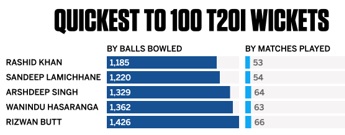
In the News: In the 2025 Asia Cup, during India’s final group game against Oman on 19 September 2025, left-arm fast bowler Arshdeep Singh became the first Indian male bowler to take 100 wickets in T20 Internationals.
Key Points:
- He achieved the feat by dismissing Oman’s Vinayak Shukla in that match. It took Arshdeep 64 matches/T20Is to reach 100 wickets.
- His bowling average in T20Is at that point is about 18.49, and his strike rate is approximately 13.34 balls per wicket.
- Among full member nations’ seamers, he now holds one of the best averages for reaching 100 wicket-milestones.
- Context / Background: Arshdeep Singh made his T20I debut in July 2022 versus England. He is a left-arm medium-fast bowler, known for effective use of swing, death bowling, and variations.

Saurabh Kabra (CLAT)
Saurabh Kabra
SHARE